
Truck Racing Wheels for F-150 and Silverado: 17x8.5 vs 17x10, Beadlock and Backspacing (2026)
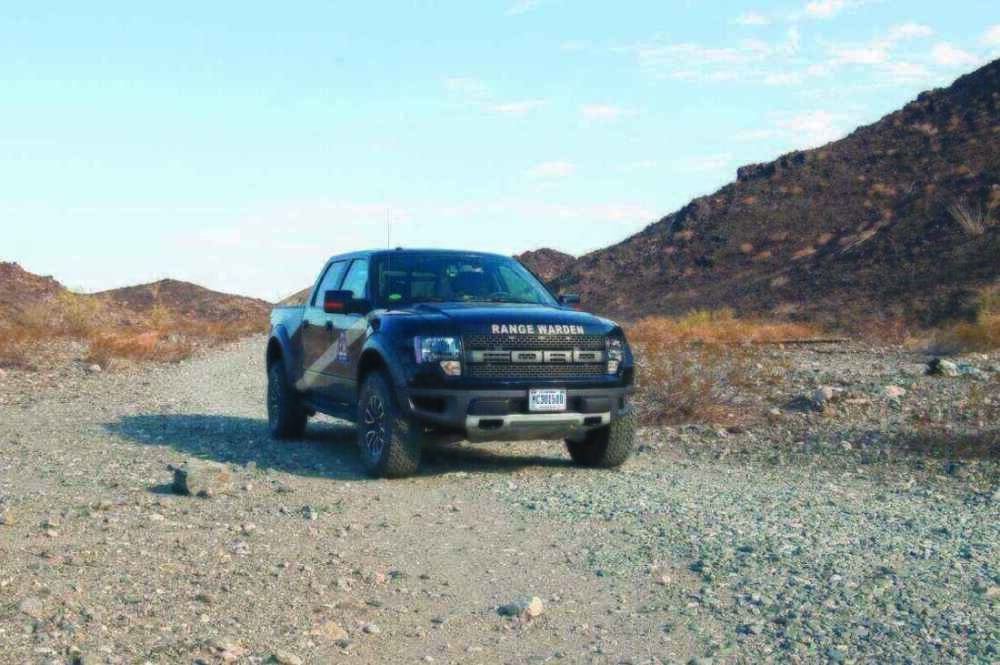
Truck racing wheels for an F-150 or a Silverado come down to three checks: the bolt pattern (6x135 on the F-150, 6x139.7 on the Silverado 1500), a width and backspacing that keep the tire clear of the suspension, and a beadlock ring if you run low pressure. This guide gives the numbers for each, a backspacing table for 17x8.5, 17x9 and 17x10 wheels, and the Weld Racing-style and Belak-style 6-lug designs we forge to order.
It is a buying guide, not a spec sheet for every model year. For year-by-year numbers, use our Ford F-150 fitment page and our Chevrolet Silverado 1500 fitment page; the tables below only quote them.
Key facts: F-150 and Silverado wheel specs for racing builds
- Bolt patterns: the Ford F-150 uses 6x135 with an 87.1 mm center bore, and the Chevrolet Silverado 1500 uses 6x139.7 with a 78.1 mm center bore, so the two bolt circles differ by 4.7 mm and neither truck can use the other's wheels. Sources: Limitless Tire data for the 2015 F-150, the ReRev 6x135 guide, Wheel-Sizes data for the Silverado 1500 and our open fitment dataset.
- Lug thread: both trucks use M14x1.5 lug studs, so the nuts match even though the wheels do not. Sources: Limitless Tire data for the 2020 Silverado 1500 and for the F-150, plus the ReRev guide.
- Backspacing rule of thumb: backspacing in inches equals (wheel width + 1) / 2 plus the offset in millimeters divided by 25.4, so a 17x10 wheel at +42 mm sits at about 7.15 inches, the same figure a retailer lists for a 17x10 F-150 beadlock wheel. Sources: the Wheel-Size offset and backspacing article and that listing.
Truck racing wheels: F-150 and Silverado hub specs side by side
Truck racing wheels for these two pickups are not interchangeable: the F-150 and the Silverado look like the same 6-lug pickup to a wheel shop, but every number that matters for a bolt-on wheel is different. The table puts them next to each other so you can see why a 6x135 wheel will not seat on a Silverado hub.
| Truck | Bolt pattern | Center bore | Lug thread |
|---|---|---|---|
| Ford F-150 | 6x135 | 87.1 mm | M14x1.5 |
| Chevrolet Silverado 1500 | 6x139.7 (6x5.5 in) | 78.1 mm | M14x1.5 |
A 6x135 wheel on a 6x139.7 hub leaves every stud 2.35 mm off center, so the wheel cannot be torqued down evenly. Our guide to 6x139.7 wheel interchange shows which trucks do share the Silverado pattern, and the 6x135 bolt pattern page lists the Fords that share the F-150 pattern.
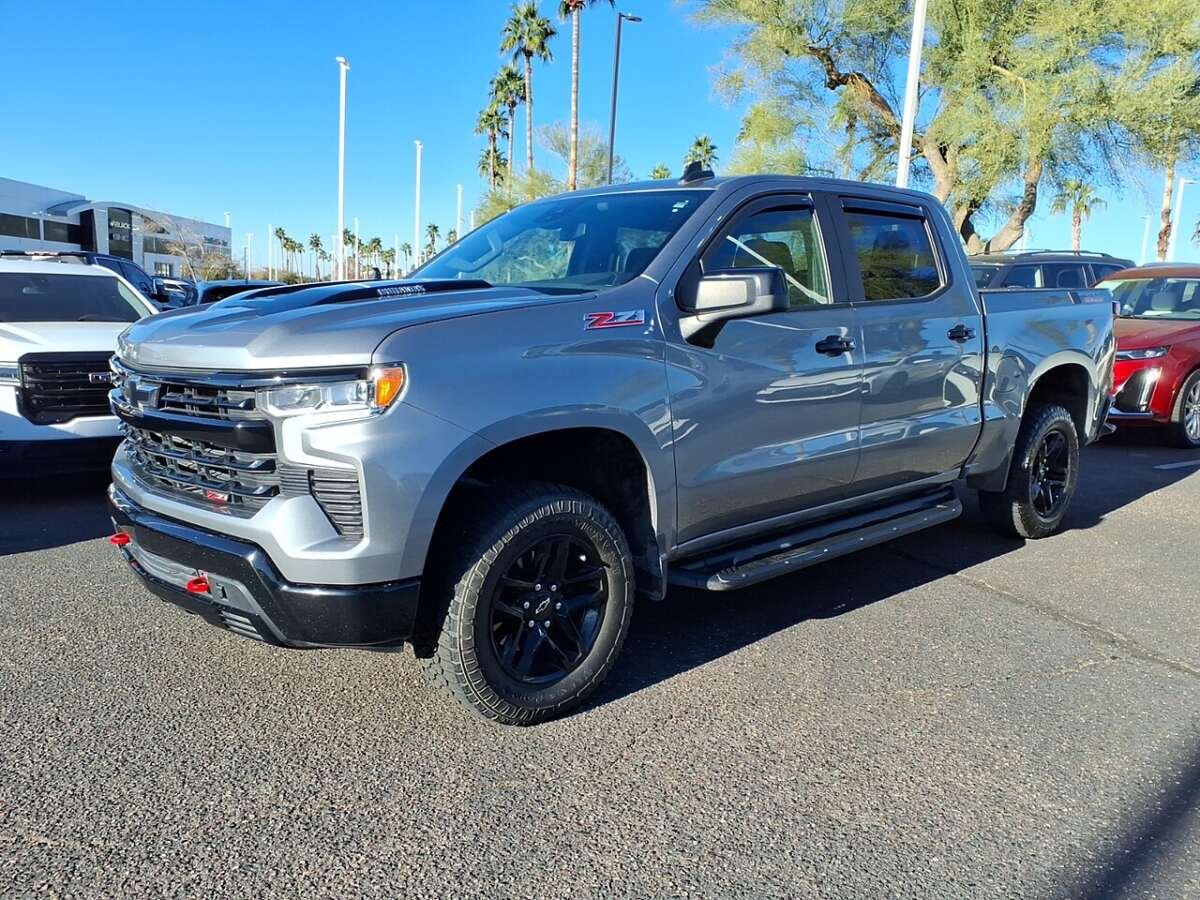
Which width is right for truck racing wheels: 17x8.5, 17x9 or 17x10?
Pick the width of your truck racing wheels from the tire you will run, then check backspacing, because a wider wheel only helps if the extra width has room to go. F-150 beadlock listings span a range: a 17x8.5 beadlock wheel at +34 mm at one end, a 17x10 at +42 mm in the middle and a 17x10.5 rear wheel with a single beadlock at the other.
Seventeen inches is the diameter all three share. Narrower wheels keep the tire closer to the stock track width; wider wheels carry a wider tire but push the tire shoulder toward the shock and the fender. Our offset and backspacing calculator shows how much the tire moves on truck racing wheels in each direction before you commit to a width.
How to convert offset to backspacing for 17-inch truck racing wheels
Backspacing is the distance from the wheel's mounting face to its inner edge, and you can estimate it from the offset with one formula: (wheel width + 1) / 2 + offset / 25.4, in inches. The extra inch is an allowance the formula adds to the stated rim width, which the source ties to tire mounting space, so a nominal 10-inch wheel is calculated as 11 inches wide.
The table applies that formula to the three common widths. Treat the results as estimates: the maker's listed backspacing is the number to trust, and it can differ slightly from this estimate.
| Offset | 17x8.5 | 17x9 | 17x10 |
|---|---|---|---|
| -12 mm | 4.28 in | 4.53 in | 5.03 in |
| 0 mm | 4.75 in | 5.00 in | 5.50 in |
| +12 mm | 5.22 in | 5.47 in | 5.97 in |
| +25 mm | 5.73 in | 5.98 in | 6.48 in |
| +42 mm | 6.40 in | 6.65 in | 7.15 in |
Backspacing grows as the offset gets more positive, because the wheel face moves inward. Our backspacing measuring guide shows how to confirm the number with a straightedge, and the fitment verification checklist lists what to check before you buy.
Do truck racing wheels need a beadlock?
A beadlock is a mechanical device that holds the tire bead on the wheel, and you need one when tire pressure alone cannot do that job, for example at low pressure off road. In the usual clamp-ring design, an outer ring is bolted onto an inner ring with the bead clamped between them. The details are in the Wikipedia beadlock article.
Not every ring with bolt heads is a working beadlock. A simulated beadlock imitates the look but gives no benefit beyond the normal bead seat, and the 17x8.5 beadlock listing above describes its cast aluminum ring as for off-road use only. Ask for the ring construction in writing before you order, and read our guide to beadlock wheels in drag racing for how the rules differ on the strip.
Two other specs sit next to the beadlock decision. The hub-centric versus lug-centric guide explains why the 87.1 mm and 78.1 mm bores matter, and wheel load rating explains why a heavy truck needs a rated wheel, not just one that bolts on.
Weld Racing-style and Belak-style 6-lug wheels we build to order
We forge 6-lug wheels for the F-150 and the Silverado in our truck racing wheel range, drilled to either pattern, and the designs below are the ones that fit this guide. Wheels start from $220 per wheel; production takes 18–22 days and sea freight takes 30–35 days. Send us your truck, tire size and the backspacing you want on the contact page and we will check the fit before anything is cut.
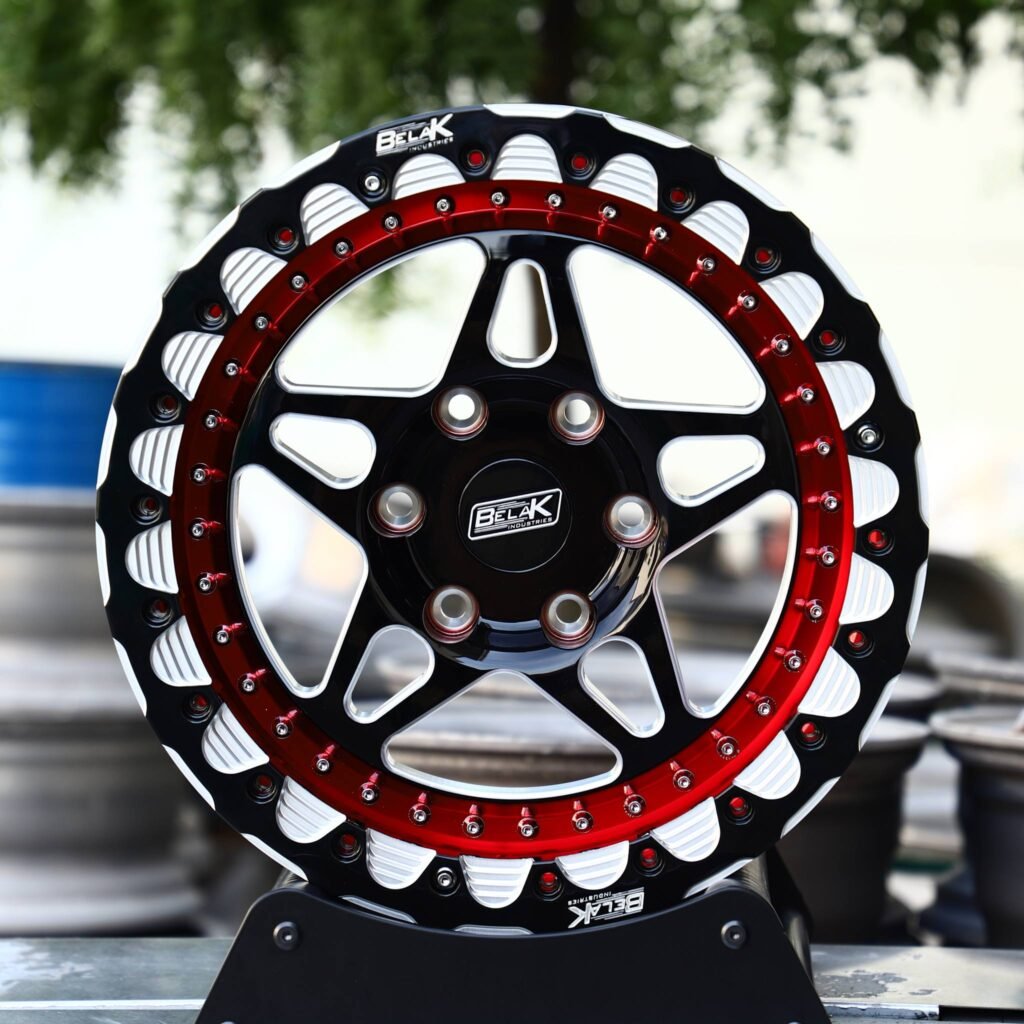
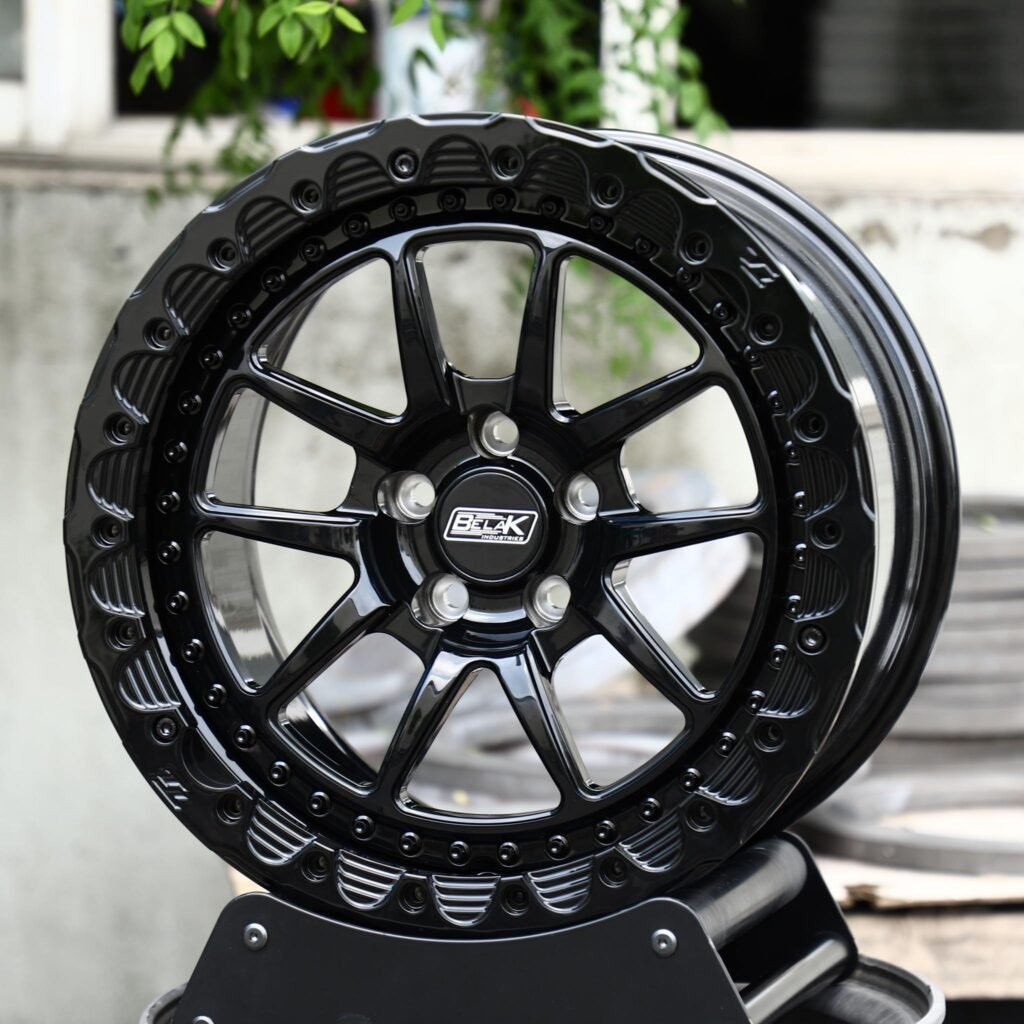
The Belak-style 5-star wheel with a red beadlock ring is the loudest option, and the gloss black 10-spoke beadlock design is the quieter one with a ring in matching black.
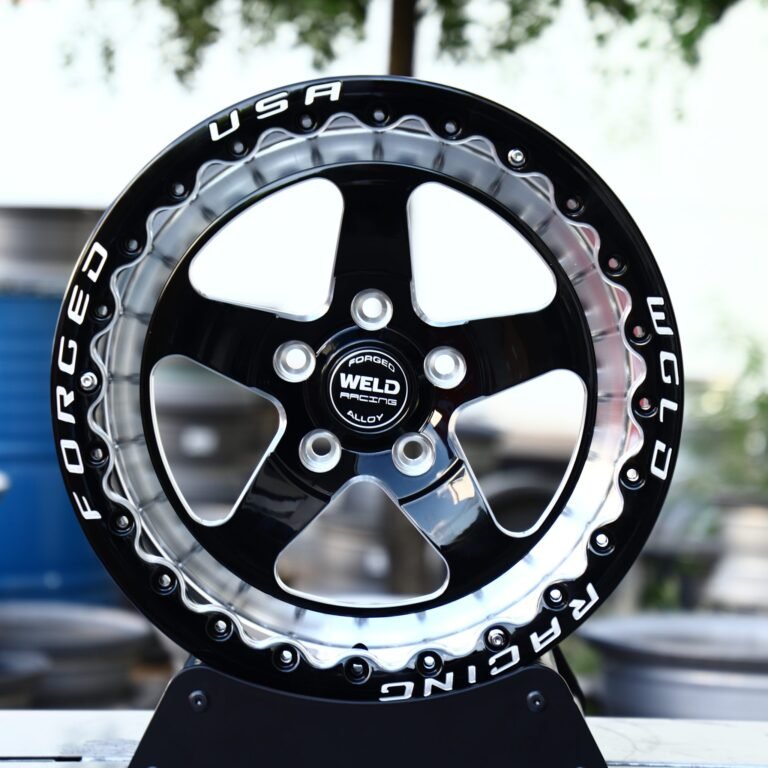
If you prefer a Weld Racing-style look, the gloss black S71-style 5-star beadlock wheel has a machined inner lip, and the bright silver deep-lip wheel skips the ring for a polished face.
Before you order, read our guide to track and race wheel setup to see how offset and tire stretch work together.
Related forged wheels

Belak-style 5-star forged beadlock wheel with red ring (6-lug) – Request a quote
Belak-style gloss black 10-spoke forged beadlock wheel (6-lug) – Request a quote
Weld Racing-style gloss black 5-star forged beadlock wheel (6-lug) – Request a quote
Weld Racing-style bright silver deep-lip forged wheel (6-lug) – Request a quote



Browse the full truck racing forged wheel range or the drag racing wheel category, or see how the sister guide compares 8-lug patterns on heavy-duty trucks.
Frequently Asked Questions
Do F-150 and Silverado wheels interchange?
No. The F-150 uses a 6x135 bolt pattern with an 87.1 mm center bore, and the Silverado 1500 uses 6x139.7 with a 78.1 mm center bore. The circles differ by 4.7 mm, so a wheel drilled for one will not seat evenly on the other, even though both trucks use M14x1.5 lug studs.
What size truck racing wheels fit an F-150?
Listings for F-150 beadlock wheels run from 17x8.5 at +34 mm to 17x10 at +42 mm and 17x10.5 for rear wheels, all on the 6x135 pattern. Choose the width from your tire, then confirm the backspacing with the maker before you order.
How do I convert offset to backspacing?
Use backspacing in inches = (wheel width + 1) / 2 + offset in mm / 25.4. A 17x10 wheel at +42 mm works out to about 7.15 inches. Treat the result as an estimate and use the maker's listed backspacing as the final number.
Do truck racing wheels need a beadlock?
You need a beadlock when tire pressure alone cannot hold the bead on the wheel, for example at low pressure off road. A clamp-ring beadlock bolts an outer ring to an inner ring with the bead between them. A simulated beadlock only copies the look, so ask for the ring construction before you order.
How much do forged truck racing wheels cost and how long do they take?
ANKUSI forged wheels start from $220 per wheel. Production takes 18–22 days and sea freight takes 30–35 days. Send your truck, tire size and target backspacing on the contact page and we check the fit before production.
Need answers from the manufacturing side instead of just sales copy?
Contact ANKUSI through WhatsApp or WeChat for discussions on forged wheel customization, fitment, finishes, and project feasibility.