
Track Day Wheel Setup: How Camber, Tire Stretch and Offset Actually Work Together
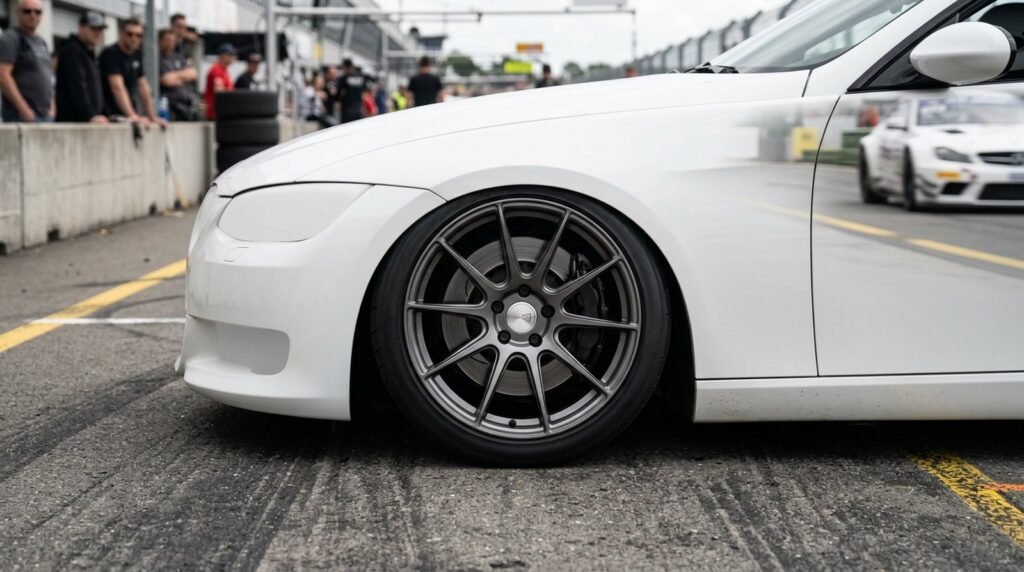
A track-day wheel and tire setup is really three settings working together — camber, offset, and tire width relative to wheel width — and changing one without accounting for the others is the most common way a "flush and aggressive" build ends up rubbing on the first hard lap instead of the driveway.
Camber Does the Work Offset Gets Credit For
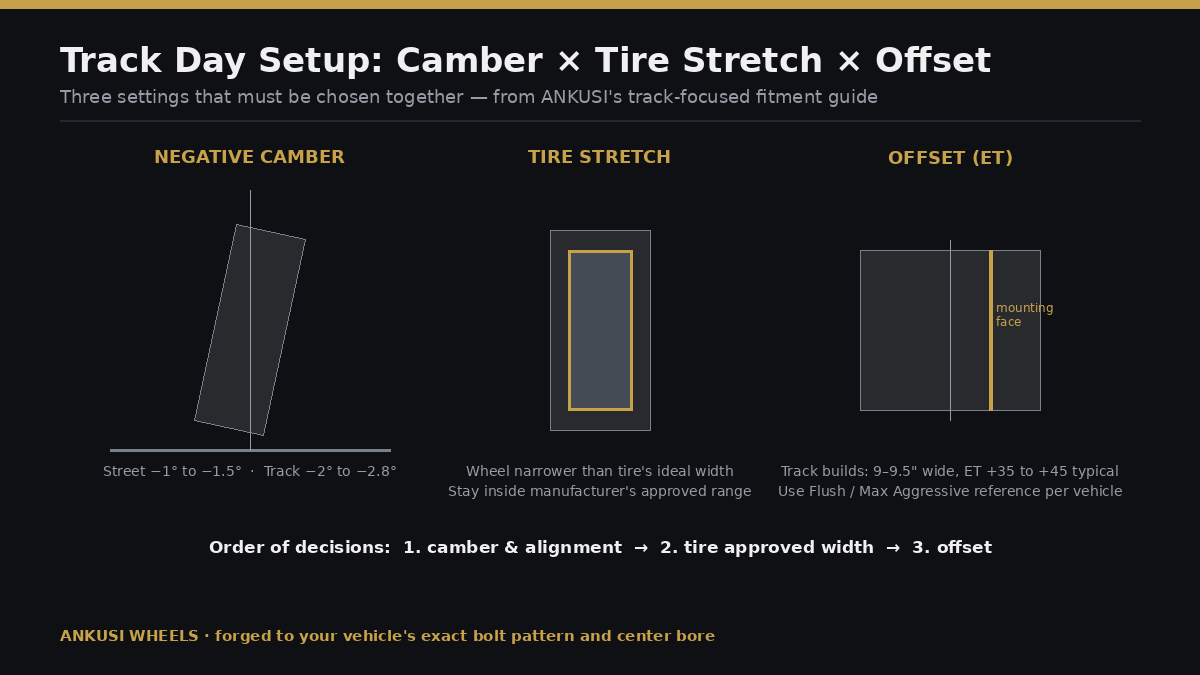
Under hard cornering, body roll compresses the outside suspension and rolls the tire’s contact patch onto its outer shoulder — exactly when you need the most grip. Negative camber counteracts this by tilting the top of the tire inward at rest, so that under load the tread flattens back onto the road instead of standing up on one edge. Street-driven cars typically run −1° to −1.5° of front camber; dedicated track setups commonly run −2° to −2.8°, with the exact number depending on vehicle weight, tire sidewall stiffness, and how much lateral load the track itself generates.
This matters directly for wheel fitment because more negative camber tucks the top of the tire inward at rest — which is part of why a track-oriented setup can often run a slightly more aggressive (lower) offset than the same tire size would tolerate on a car with stock street camber, without the top of the tire fouling the strut or fender liner.
Tire Stretch Is a Sidewall Effect, Not a Wheel-Width Trick
Mounting a tire on a wheel narrower than the tire’s ideal design width pulls the sidewall taut — the visual "stretch" look. Used moderately, this has a real functional side: a tauter sidewall responds faster to steering input and resists rolling under load, which is part of why some setups combine mild stretch with camber intentionally rather than by accident. Push it too far past the tire manufacturer’s approved range, though, and the benefit reverses — contact patch shrinks, the bead seal becomes less secure, and the sidewall loses the flex it needs to absorb impacts. This is a tire engineering limit, not something a wider or narrower wheel offset can compensate for.
Where Offset Fits Into the Equation
Offset determines how far the wheel’s mounting face sits from the true centerline of the wheel barrel, which in turn decides how far the tire sits toward or away from the fender and suspension components. It’s the number most directly tied to scrub radius and steering feel, and it’s why ANKUSI’s fitment guides publish a Flush and a Maximum Aggressive offset reference for every vehicle rather than one generic number — the safe range genuinely changes with wheel width. On wider wheels used for serious track builds (commonly 9–9.5 inches on many platforms), offsets in the +35 to +45 range are typical, though the exact figure depends heavily on the specific suspension geometry and how much camber the car is already carrying.
Bringing the Three Together
None of these settings should be chosen in isolation. A wheel spec that looks perfect at zero camber can rub the moment you dial in track-level negative camber, because the contact patch and sidewall geometry both shift. Likewise, an offset that clears the fender at rest can foul under compression if the tire is stretched past its design range on too narrow a wheel. The practical order is: settle on your target camber and alignment first, confirm your tire’s approved width range from the manufacturer, then choose offset within that context — not the other way around.
ANKUSI’s Track Day & Track-Focused Wheel Fitment Guide lists confirmed OE and reference offsets for GT3, Cup, Clubsport, and other track-oriented trims across dozens of platforms. If your build combines a specific camber target with a wheel width or offset that isn’t already documented, contact ANKUSI with your alignment specs and tire size and we’ll confirm a forged wheel spec built around your actual setup, not a generic street reference.
Need answers from the manufacturing side instead of just sales copy?
Contact ANKUSI through WhatsApp or WeChat for discussions on forged wheel customization, fitment, finishes, and project feasibility.