
Hub-Centric vs. Lug-Centric Wheels: What It Actually Means for Fitment
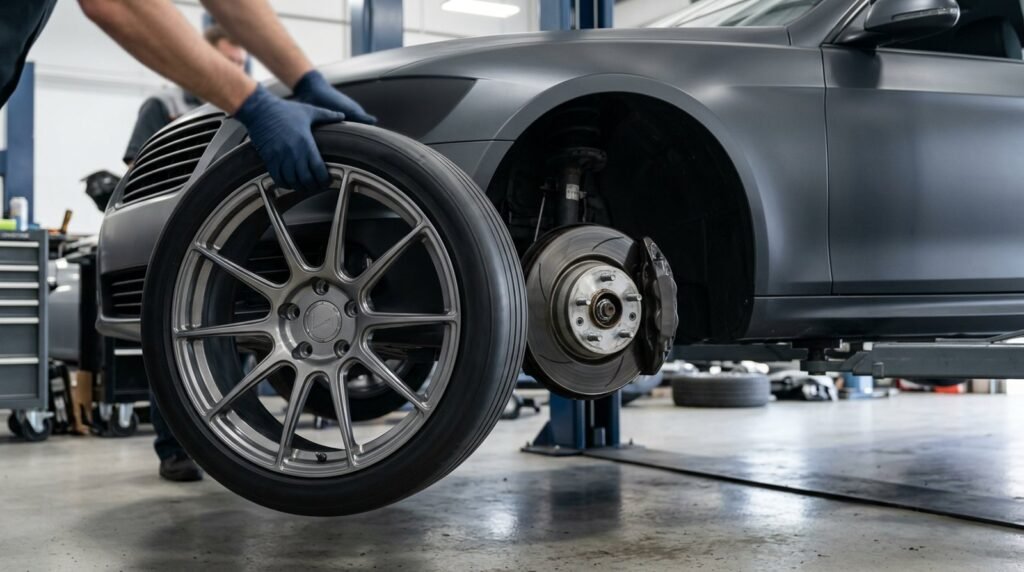
Two wheels can share the exact same bolt pattern and still fit a car in completely different ways. The number that decides which category a wheel falls into is its center bore — and whether it lines up with the vehicle’s hub or relies on the lug bolts to do the centering. Get this wrong and the symptoms range from a faint vibration at highway speed to, in the worst case, a wheel that walks loose over time even when torqued correctly.
Hub-Centric: The Factory Default
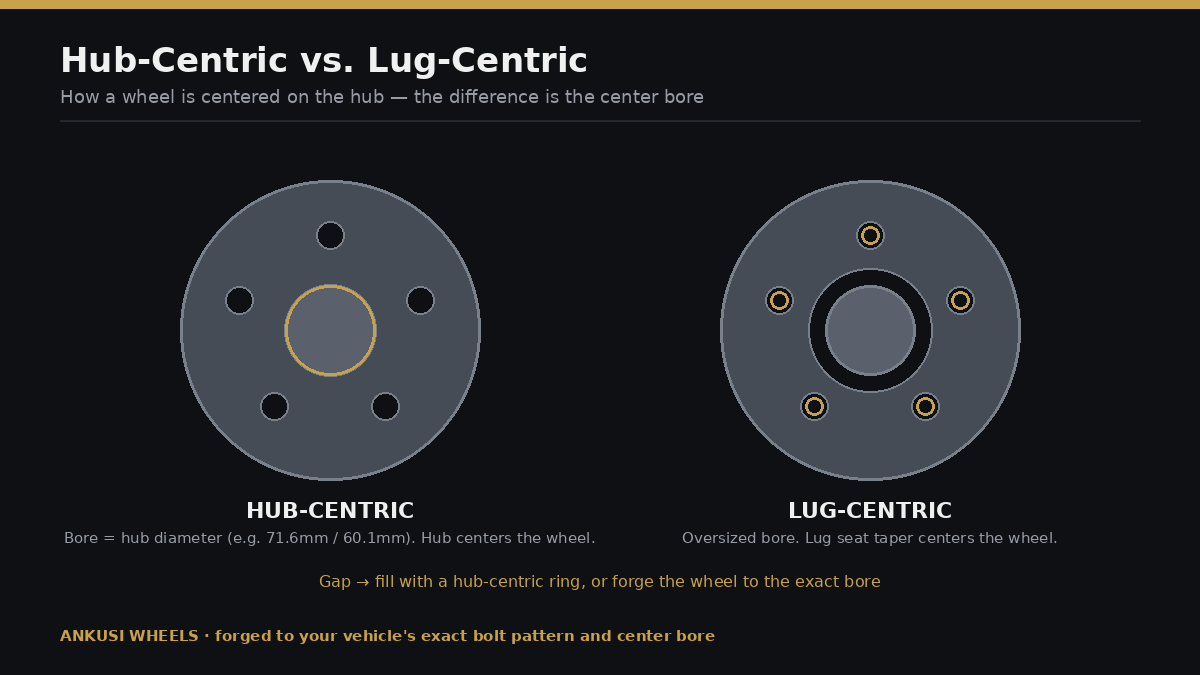
Almost every OEM wheel is hub-centric, meaning the wheel’s center bore is machined to match the vehicle hub’s outer diameter almost exactly — often within a few hundredths of a millimeter. The hub itself carries the wheel’s weight and centers it before a single lug bolt is tightened; the fasteners then simply clamp the wheel in place. This is why a factory wheel almost never needs a hub-centric ring: the fit is already there by design.
On ANKUSI’s fitment guide pages, the center bore figure listed for each vehicle (for example 71.6mm on most current Porsche, BMW and Mercedes-Benz platforms, or 60.1mm on many Toyota and Lexus models) is this hub diameter. Forging a wheel to that exact bore is the simplest way to preserve hub-centric fitment on a replacement or custom wheel.
Lug-Centric: The Universal-Fit Compromise
Most generic aftermarket wheels are cut with a larger, more universal center bore so the same casting can be sold across dozens of unrelated vehicles. On a lug-centric wheel, the bore is deliberately oversized relative to the hub, so the wheel is centered entirely by the taper or seat of the lug bolts or nuts as they’re torqued down. It works, but it puts more of the centering job onto fasteners rather than a machined metal-to-metal hub fit.
Hub-centric rings (small plastic or aluminum sleeves that drop into the oversized bore) can convert a lug-centric wheel back to a hub-centric fit after the fact, and they’re a completely normal, safe solution when a wheel’s bore is larger than the hub. What they cannot do is fix the reverse problem — a bore that is too small to clear the hub at all, which is a hard no-fit rather than a comfort issue.
Why This Matters More on Some Cars Than Others
Vintage and low-volume platforms make the hub-centric question more interesting than it is on a mainstream sedan. The Porsche 356’s factory "Wide-Five" 5x205mm bolt pattern, for instance, was built around a drum-brake hub design that predates the hub-centric convention used on virtually every modern car — it’s a lug-centric fitment by design, not by aftermarket compromise, which is one reason ANKUSI documents it differently from a modern 5×130 Porsche on our classic and vintage fitment guide. The same logic applies to many pre-1970s platforms across other marques: confirm whether the era’s design was hub-centric or lug-centric before assuming a modern forged wheel will center the way a 2020s OEM wheel does.
What This Means When You Order a Forged Wheel
Because ANKUSI forges each wheel to your vehicle’s specific bolt pattern and center bore rather than starting from a universal casting, every wheel we build is hub-centric to your car by default — there’s no oversized bore to fill with a ring afterward. If you’re ordering for a vehicle where the factory design itself is lug-centric (like the 356 above, or certain older trucks and 4×4 platforms), tell us up front so we can confirm the bolt-seat geometry that actually centers the wheel on that specific hub.
Not sure which category your car falls into? Check your model’s page in our Wheel Fitment Guide for the confirmed center bore, or contact ANKUSI with your bolt pattern and we’ll confirm the correct fitment before we cut anything.
Need answers from the manufacturing side instead of just sales copy?
Contact ANKUSI through WhatsApp or WeChat for discussions on forged wheel customization, fitment, finishes, and project feasibility.