
Monoblock vs 2-Piece Forged Wheels: Weight, Cost, Repair and Fitment (2026)
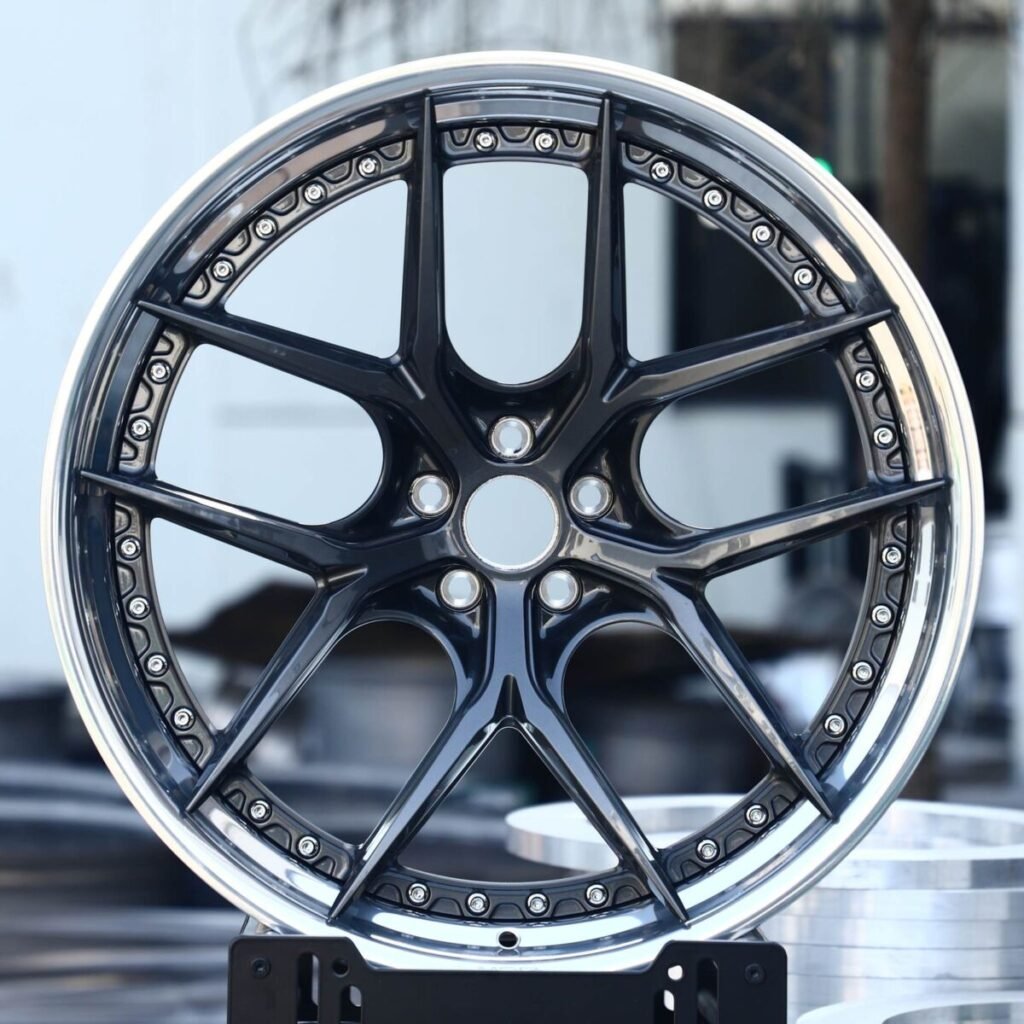
Monoblock vs 2-piece forged wheels comes down to one trade. A monoblock is cut from a single forged piece, so it is the simplest and usually the lightest build. A 2-piece wheel joins a separate lip or barrel to a forged center, so it gives you more control over width, lip depth and offset.
Neither build is automatically stronger or better, because both start from the same forged aluminum. The right choice depends on how the wheel will be used, what you need to adjust, and how likely it is to take a hit.
This guide compares the two on weight, strength, fitment flexibility, cost, repair and upkeep, then lists what to specify when you order either one from a factory. The construction points were checked against reference material and several wheel-maker guides, and we say where a source only speaks in general terms.
What is the difference between monoblock and 2-piece forged wheels?
A monoblock forged wheel is made from one piece of aluminum, with the face and the barrel cut as a single part, so it has no seam, fasteners or sealant. A 2-piece forged wheel has a forged center joined to a separate barrel or lip by bolts, rivets or welding, which allows different widths and lip depths on the same center design.
A 3-piece wheel goes one step further and splits the barrel into an inner and an outer half. This article covers the two builds most buyers compare first, and our 2-piece forged wheels page shows the range we build.
Key facts: monoblock vs 2-piece forged wheels
- Construction: a monoblock forged wheel is one piece with no seam, fasteners or sealant, while a 2-piece wheel joins a forged center to a separate barrel with bolts, rivets or welding. Sources: the Wikipedia alloy wheel article, Engineerfix on monoblock wheels and the ANKUSI engineering team.
- Weight: at the same size, a monoblock is generally lighter and stiffer than a multi-piece wheel, because the joint, the separate barrel and the hardware add material. Sources: Engineerfix and several wheel-maker guides. None of them publish weight figures, so ask for the finished weight of your exact size.
- Fitment: a 2-piece wheel can pair different barrel widths and offsets with one center design, while a monoblock has its width and offset fixed when it is machined. Sources: Engineerfix and the ANKUSI engineering team.
How a monoblock forged wheel is built
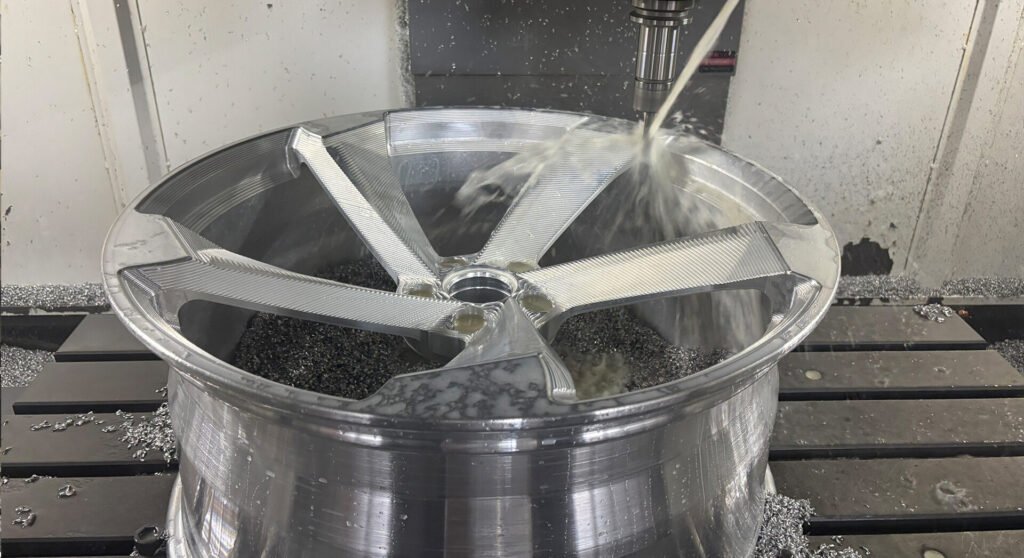
A monoblock starts as a solid 6061-T6 aluminum billet that is heated and pressed in a closed die, then heat treated and machined. At the ANKUSI factory the forging step runs on a 10,000-ton press, and CNC lathes and mills then cut the face, spokes, bolt holes and barrel from that one blank.
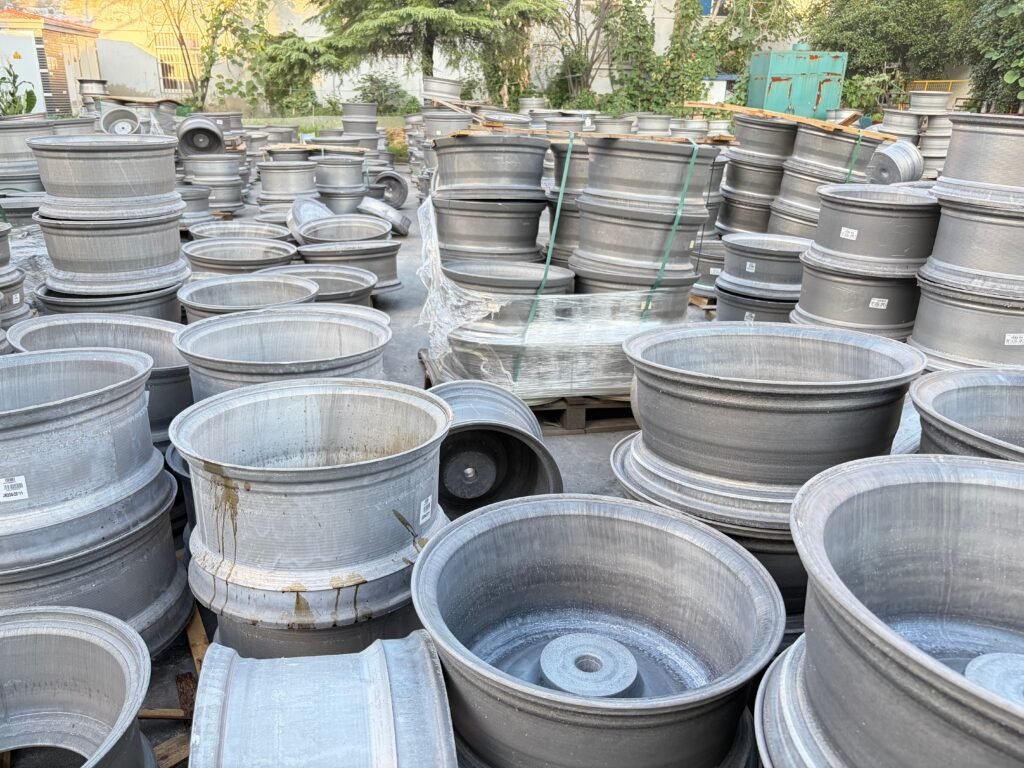
Because the whole wheel comes from one part, there is nothing to loosen and nothing to seal. That is why monoblocks need no hardware checks and cannot leak air through a joint, which our guide to forged vs cast wheels explains from the metal side.
How a 2-piece forged wheel is built
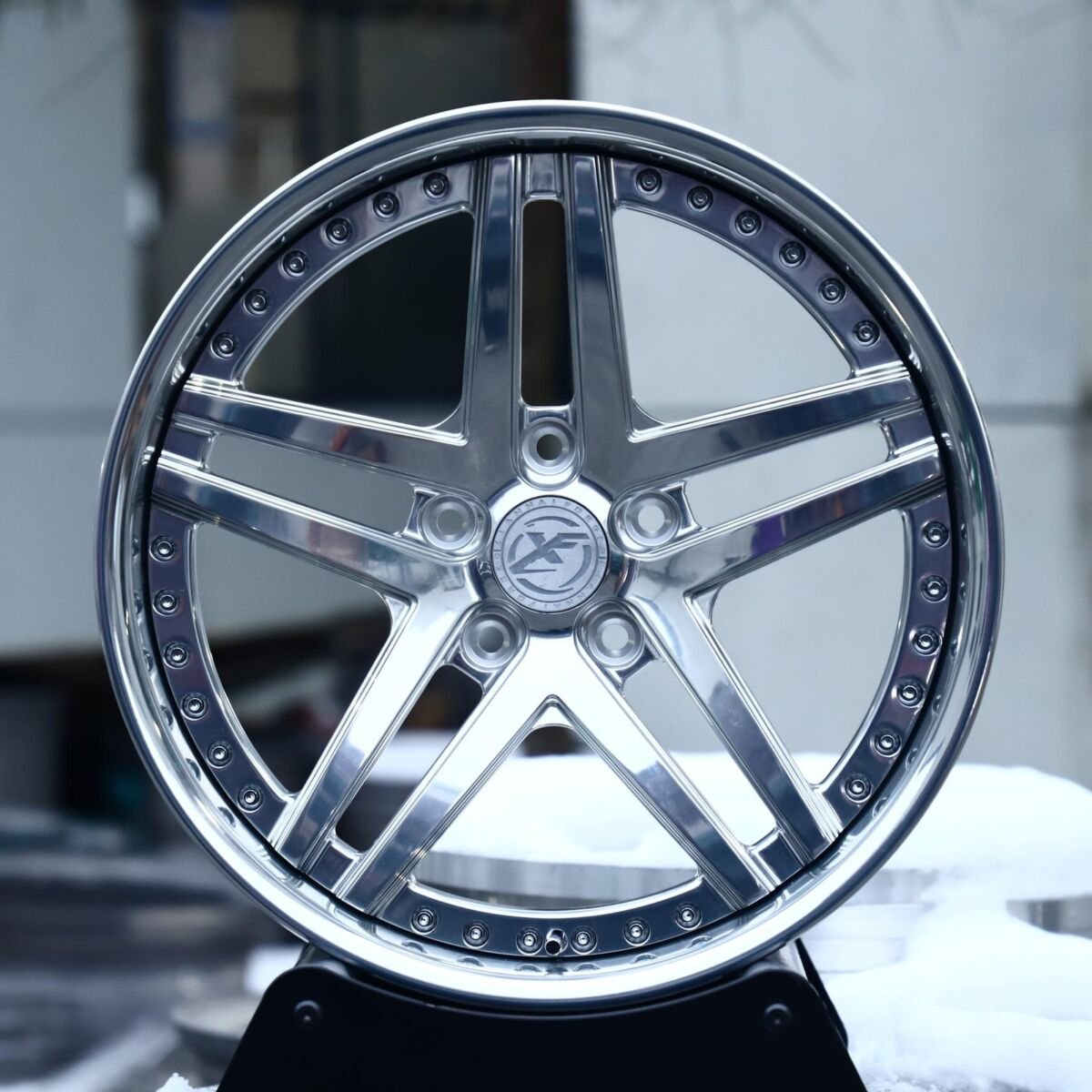
A 2-piece wheel splits the job in two. The center, with the face, spokes and hub, is forged and machined on its own, and the barrel or outer lip is a separate part that is attached with bolts or rivets, or welded in some builds.
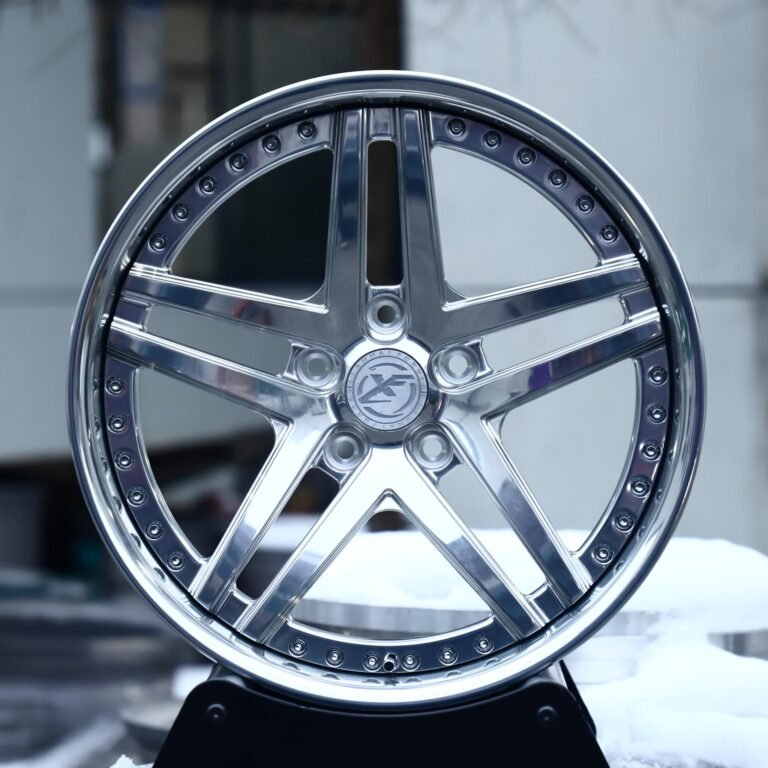
Our mirror polished 5-split-spoke 2-piece wheel shows the idea: the center and the deep outer lip are visibly separate parts, held by a ring of fasteners.
Weight and strength: how much does the joint matter?
A monoblock is generally lighter at the same size, and the reason is simple: a 2-piece wheel carries a joint, a separate barrel and fasteners that a monoblock does not need. How big the gap is depends on lip depth and face design, and the guides we read give no numbers, so we do not quote one.
On strength, a monoblock has no joint to flex or loosen. Reputable guides describe a properly assembled multi-piece wheel as an engineered joint rather than a weak point, and they blame problems on poorly assembled wheels instead. So the build quality of the factory matters more than the label on the wheel.
Whichever you choose, ask for the test paperwork for that exact construction, not only for a different model. Our wheel load rating guide lists what the rating means.
Fitment flexibility: width, lip depth and offset
This is where 2-piece wheels earn their place. The center sets the bolt pattern, bore and face, while the barrel sets width and lip depth, so one center design can be built in several widths and offsets for wide or stepped-lip looks. A monoblock gets one width and one offset per machining program.
| Feature | Monoblock | 2-piece |
|---|---|---|
| Construction | One forged piece | Forged center plus separate barrel or lip |
| Width and lip depth | Fixed when machined | Barrel can change on the same center |
| Offset | Fixed when machined | Adjusted through the barrel and center combination |
| Finish | One finish for the whole wheel | Center and lip can differ, such as a black center with a polished lip |
| Hardware and seal | None | Fasteners and a seal to inspect |
Whatever the build, offset still has to clear your brakes and fenders. Use our wheel offset calculator before you lock a size, and see the custom finishes page for the center and lip colors we can combine.
Not sure which build fits your car? Send us the model, year and the look you want, and we will confirm bolt pattern, bore and offset before we quote. Request a quote.
Cost, repair and upkeep
Forged monoblocks usually sit in the middle to upper part of the price range, and multi-piece wheels tend to cost more because of the extra parts and assembly. Our wheels start from $220 per wheel, and the final price depends on size, construction and finish.
Repair is the other side of the trade. If the outer lip of a 2-piece wheel is bent or scratched, that part can often be replaced or refinished on its own. A badly damaged monoblock usually means replacing the whole wheel, and repair of a monoblock is typically more costly.
Upkeep favors the monoblock. A 2-piece wheel needs its fasteners and seal checked from time to time, and a slow air leak can be a sign that a seal needs attention. Our finish guide covers how the surface treatment affects cleaning.
Which one should you choose?
Pick the monoblock when you want the lightest build with the least upkeep, and pick the 2-piece when you need a specific width, lip depth or two-tone finish that one piece cannot give. The table maps common priorities to the better fit.
| Your priority | Better fit | Why |
|---|---|---|
| Lowest weight at a given size | Monoblock | No joint, barrel or hardware to add mass |
| No maintenance | Monoblock | No fasteners or seal to inspect |
| Wide stance or deep lip | 2-piece | Barrel width and lip depth can change |
| Two-tone or lip-only finish | 2-piece | Center and lip are separate parts |
| Easier repair of a bent lip | 2-piece | The lip can be replaced on its own |
| Simple daily set | Monoblock | Fewer parts and fewer checks |
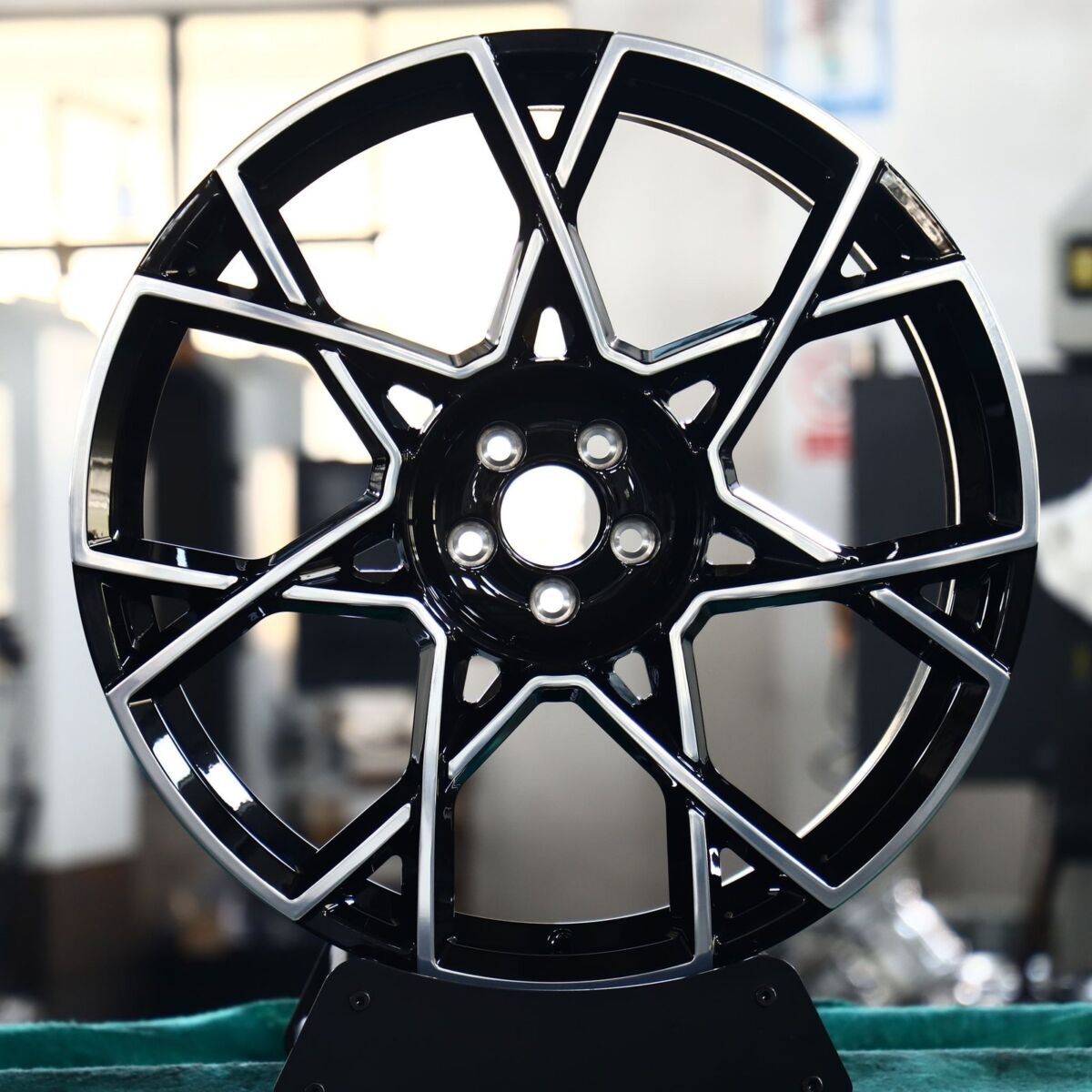
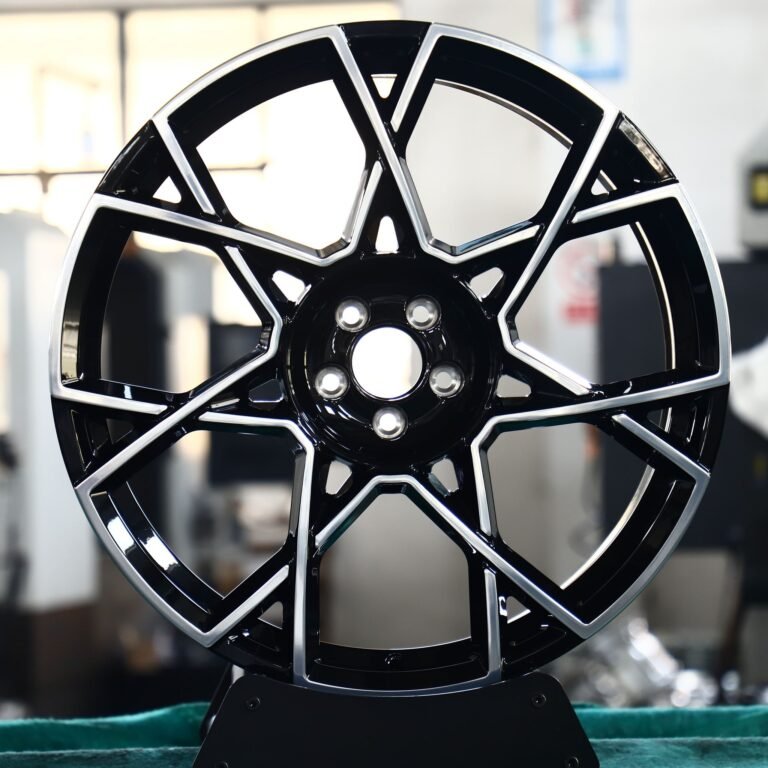
For a clean one-piece look, our gloss black machined 5-star split-spoke monoblock is a 5-lug example. For a deep-lip build, the gloss black 5-split-spoke deep-dish 2-piece wheel has a polished outer lip. Browse both ranges in the one-piece category and the 2-piece category.
What to specify when you order from a factory
Start with the numbers that decide whether any wheel fits: bolt pattern, center bore, diameter, width and offset. Our fitment verification checklist walks through each one before you commit.
For a 2-piece order, also confirm the barrel width, the lip depth, the fastener style, and the finish of the center and the lip. For either build, ask for the finished weight of your exact size and a 3D drawing to approve before production starts.
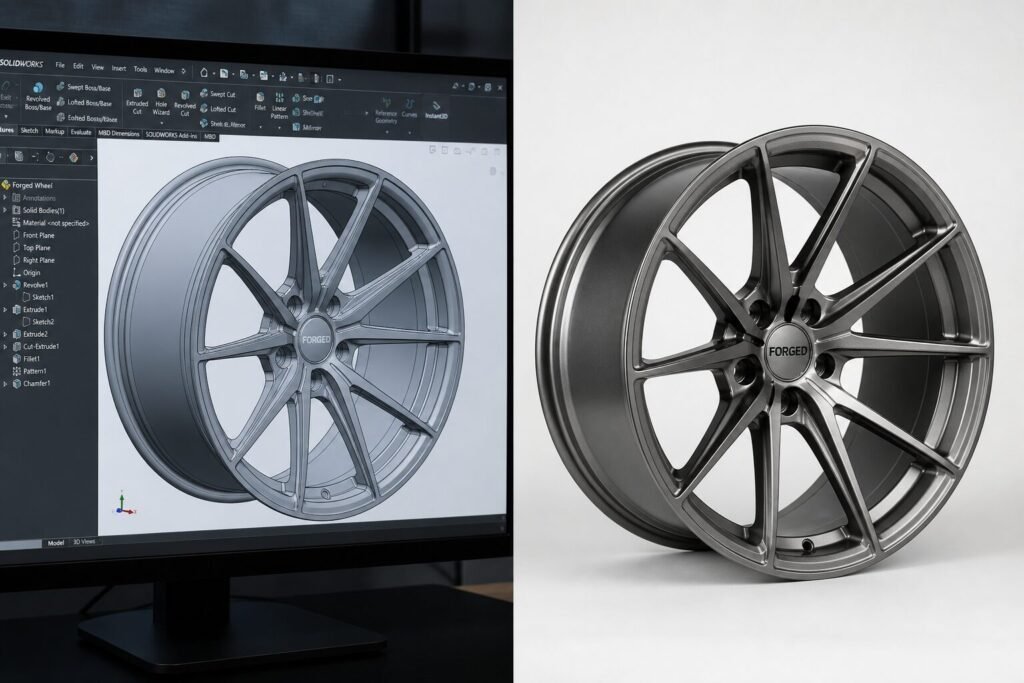
Our buying guide for overseas shops lists the 3D approval step and the payment structure in order. Production takes 20-25 days and sea freight 30-35 days, and our factory quality system is certified to IATF 16949:2016 by TÜV SÜD. Shops ordering several sets can start on our wholesale page.
Related forged wheels

Browse the full forged wheel range by style and finish, or read how the whole process works in how forged wheels are made.
Frequently Asked Questions
Are 2-piece forged wheels as strong as monoblock wheels?
Both are forged from aluminum, so strength depends mostly on build quality. A monoblock has no joint at all, while a properly assembled 2-piece wheel uses an engineered joint that reputable guides do not treat as a weak point. Ask the factory for test paperwork for the exact construction you are buying.
Is a monoblock wheel always lighter than a 2-piece wheel?
At the same size a monoblock is generally lighter, because a 2-piece wheel adds a joint, a separate barrel and fasteners. The gap depends on lip depth and face design, and published guides give no numbers, so ask for the finished weight of your exact size.
Can a 2-piece forged wheel be repaired?
Often yes. A bent or scratched outer lip can usually be replaced or refinished on its own, and the fasteners and seal can be serviced. A badly damaged monoblock usually has to be replaced as a whole wheel.
Do 2-piece wheels leak air?
A well-built 2-piece wheel is sealed and holds air, but the seal and fasteners should be inspected from time to time, and a slow leak can mean the seal needs attention. A monoblock has no joint, so it has no joint-related leak path.
How long does a custom monoblock or 2-piece wheel take from ANKUSI?
Production takes 20-25 days and sea freight takes 30-35 days. You approve a 3D drawing before production starts, and wheel prices start from $220 per wheel, depending on size, construction and finish.
Need answers from the manufacturing side instead of just sales copy?
Contact ANKUSI through WhatsApp or WeChat for discussions on forged wheel customization, fitment, finishes, and project feasibility.