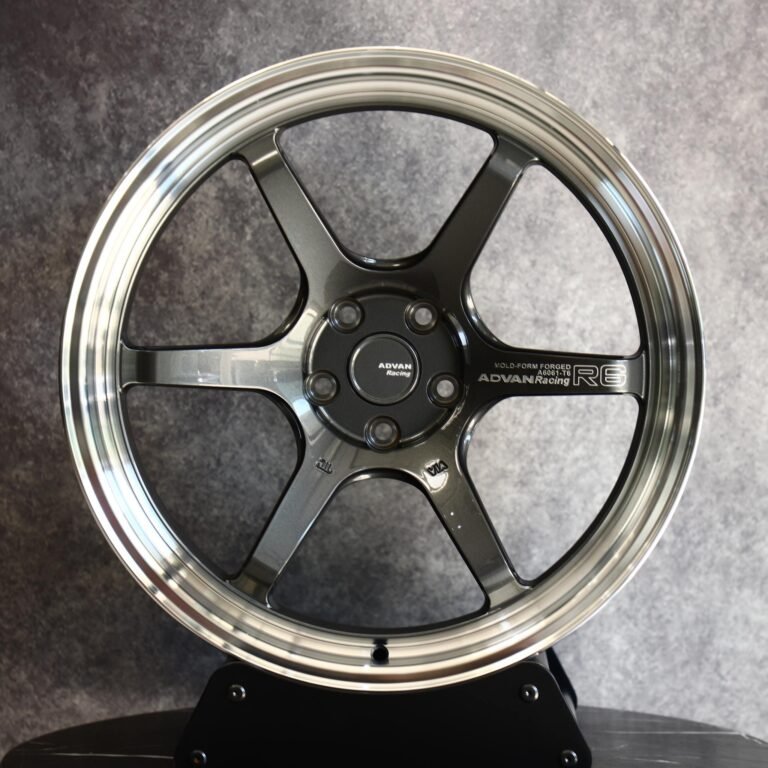
Advan-Style Gunmetal 6-Spoke Polished-Lip Forged Wheels
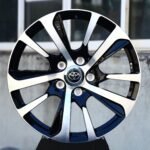
Honda S2000 / Toyota GR86 Fitment · 5-Lug

Toyota RAV4 bolt pattern: 5x114.3. The table below gives the bolt pattern, centre bore and lug nut for each model year from 1996 to 2026; further down is the full 2025 spec sheet with factory rim size and offset range for aftermarket and forged rims.
Quick answer: The 2025 Toyota RAV4 uses a 5x114.3 bolt pattern with a 60.1 mm centre bore and M12x1.5 lug nuts. Factory wheels: 17x7J ET35 (225/65R17), 18x7J ET35 (225/60R18) or 19x7.5J ET40 (235/55R19), front and rear.
Forged wheels for the 2025 Toyota RAV4 — drilled 5x114.3 with a 60.1 mm centre bore, built to the offset you choose. From $220 per wheel, made to order in about 25 days.
Toyota RAV4 has used the 5x114.3 bolt pattern across the model years below. Check your exact year and body style before ordering wheels, then open the full guide for center bore, factory sizes and offset.
| Model year | Version | Bolt pattern | Center bore | Lug nut / bolt | Full guide |
|---|---|---|---|---|---|
| 1996 | All body styles | 5x114.3 | 60.1mm | M12x1.5 Nut | 1996 Toyota RAV4 fitment |
| 2003 | All body styles | 5x114.3 | 60.1mm | M12x1.5 Nut | 2003 Toyota RAV4 fitment |
| 2006 | All body styles | 5x114.3 | 60.1mm | M12x1.5 Nut | 2006 Toyota RAV4 fitment |
| 2009 | All body styles | 5x114.3 | 60.1mm | M12x1.5 Nut | 2009 Toyota RAV4 fitment |
| 2011 | All body styles | 5x114.3 | 60.1mm | M12x1.5 Nut | 2011 Toyota RAV4 fitment |
| 2013 | All body styles | 5x114.3 | 60.1mm | M12x1.5 Nut | 2013 Toyota RAV4 fitment |
| 2016 | Hybrid | 5x114.3 | 60.1mm | M12x1.5 Nut | 2016 Toyota RAV4 fitment |
| 2019 | All body styles | 5x114.3 | 60.1mm | M12x1.5 Nut | 2019 Toyota RAV4 fitment |
| 2019 | Hybrid | 5x114.3 | 60.1mm | M12x1.5 Nut | 2019 Toyota RAV4 fitment |
| 2025 | All body styles | 5x114.3 | 60.1mm | M12x1.5 Nut | This page |
| 2026 | All body styles | 5x114.3 | 60.1mm | M12x1.5 Nut | 2026 Toyota RAV4 fitment |
Generation-level rows are cross-checked against two independent published wheel-specification sources. Always confirm the hub on your own car before ordering.
Toyota RAV4 (2025): 5x114.3 bolt pattern, 60.1mm center bore. Factory wheels: 18x7.0J at ET40 offset, front and rear. Reference fitment ranges.
✓ Data check: the bolt pattern and center bore on this page match an independent fitment reference. Last reviewed September 25, 2026. How we verify
Built to order by ANKUSI — IATF 16949 & ISO 9001 certified forged wheel manufacturer, TÜV/SFI/VIA compliant. See our factory & certifications →
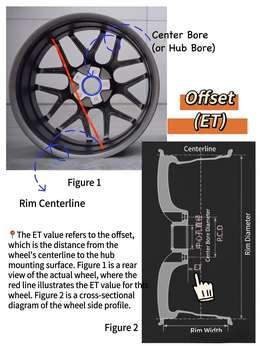
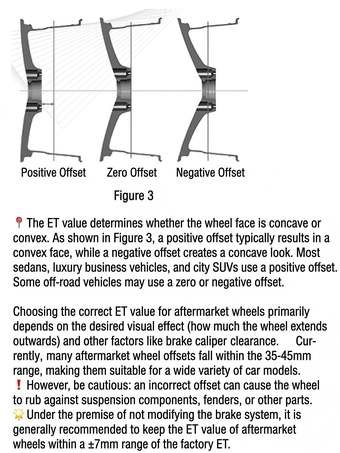
Use these two references before ordering: the left diagram shows where each spec (PCD, center bore, offset, width and diameter) is measured on the wheel; the right diagram shows how positive, zero and negative offset shift the wheel face relative to the hub centerline.
The RAV4's factory wheel is deliberately narrow and tall-sidewall friendly, which protects off-road traction and ground clearance on AWD trims — a case where the right move usually isn't going aggressively wider, it's shedding rotational weight while respecting that same narrow, tall-sidewall geometry. A forged wheel gets there without the compromises a cast wheel forces at the same strength target.
The RAV4 runs a 5x114.3 bolt pattern, 60.1mm center bore, and an 18x7.0J ET40 wheel from the factory, front and rear. Our reference fitment tiers below step up in half-inch increments from that baseline, and every tier is checked against the RAV4's factory ride height and AWD driveline clearance before we call it safe — see the 5-Tier Configuration table for the specific size, offset and estimated cost at each step.
The 2025 Toyota RAV4 uses a 5x114.3 bolt pattern with a 60.1mm center bore. Factory wheels are 17x7J ET35 (225/65R17), 18x7J ET35 (225/60R18) or 19x7.5J ET40 (235/55R19), front and rear.
These are the fifth-generation (XA50) factory sizes, checked against wheel-size.com and tirewheelguide.com. The sixth-generation (XA60) RAV4 has its own wheel sizes, so check your model year and generation before ordering.
ANKUSI builds these wheels — we are the forging factory, not a reseller. For the Toyota RAV4 (2025) we drill the 5x114.3 pattern and cut the centre bore to 60.1mm on our own CNC line, so the wheel hub-centres on the car with no spacer rings, in whatever diameter, width and offset you specify.
Converting these ET figures to backspacing? Use the wheel offset and backspacing calculator.
The figures on this page are part of our open wheel fitment dataset — 10,093 vehicles, free to download, CC BY 4.0.
The Toyota RAV4 is the sales leader in the compact SUV segment, and the 2025 model year balances off-road capability with everyday usability. The factory setup uses a 5x114.3 PCD, 60.1mm center bore, and 18x7.0J ET40 wheel configuration.
Why the factory runs 18x7.0J ET40:
Recommended setup: 18x7.5J ET38 | Off-road impact: Essentially unnoticeable | Best for: Daily driving with occasional light off-roading
Visual score: 8/10 — a slight width increase improves stability while keeping full off-road capability.
Estimated cost: $1,200-1,500 (wheels + tires + install)
Recommended setup: 19x8.0J ET35 | Pair with a light off-road tire tread | Visual score: 8/10
Upgrade cost: $1,000-1,400 wheels + $1,000-1,300 tires + $250 install = $2,250-2,950
Recommended setup: 20x8.5J ET32 | Best paired with a street tread pattern | Visual score: 8.5/10
Note: this size reduces off-road capability and suits owners who stay mostly on paved roads.
Upgrade cost: $1,400-1,900 wheels + $1,200-1,600 tires + $300 install = $2,900-3,800
Recommended setup: 21x9.0J ET28 | Off-road capability: Significantly reduced | Visual score: 9/10
Upgrade cost: $1,900-2,600 wheels + $1,500-1,900 tires + $700 suspension tuning = $4,100-5,200
Recommended setup: 22x9.5J ET22 | Off-road capability: Completely lost | Visual score: 9.5/10
Note: this configuration is not suitable for any off-road use — city/show use only. Total cost $5,000-6,500+.
| Metric | OE | Tier A | Tier B | Tier C | Tier D | Tier E |
|---|---|---|---|---|---|---|
| Wheel Spec | 18x7.0 ET40 | 18x7.5 ET38 | 19x8.0 ET35 | 20x8.5 ET32 | 21x9.0 ET28 | 22x9.5 ET22 |
| Off-Road Capability | Baseline | Negligible | Slightly reduced | Noticeably reduced | Substantially reduced | Not applicable |
| Appearance | 6/10 | 8/10 | 8/10 | 8.5/10 | 9/10 | 9.5/10 |
| Comfort | 10/10 | 9.5/10 | 9/10 | 7.5/10 | 6/10 | 3.5/10 |
| Install Difficulty | — | ★☆☆☆☆ | ★☆☆☆☆ | ★★☆☆☆ | ★★★☆☆ | ★★★★☆ |
| Cost Range | — | $1,200-1,500 | $2,250-2,950 | $2,900-3,800 | $4,100-5,200 | $5,000-6,500+ |
| Best For | Daily + off-road | Daily + off-road | Daily | City / street | Show / street | Show only |
The examples below are compiled from typical ANKUSI customer configurations and are labeled as reference cases.
Case 1: Outdoor Enthusiast (Tier A)
Profile: Frequent weekend hiking trips and dirt roads, needs to retain off-road capability.
Setup: 18x7.5J ET38 + Falken WildPeak A/T
Cost: ~$820
Outcome: Off-road capability fully retained, tougher-looking stance.
Case 2: City Commuter (Tier C)
Profile: Mostly city driving, wants a more stylish look.
Setup: 20x8.5J ET32 + Michelin Primacy Tour
Cost: ~$3,300
Outcome: Large visual upgrade, but some off-road capability is lost.
Case 3: Show Car Owner (Tier E)
Profile: Built specifically as a static display car for a local auto show.
Setup: 22x9.5J ET22 + lowering springs
Cost: ~$5,400
Outcome: Excellent show presence, but not suitable for daily driving or off-road use.
Everything above is reference data. If you want wheels actually built to it, that is what ANKUSI does: we are a forged wheel factory in Guangzhou, China, IATF 16949 and ISO 9001 certified, forging on our own 10,000-ton press and producing over 120,000 wheels a year. Forging blank, CNC machining, finishing, coating and inspection all happen in the same building — nothing is subcontracted and nothing is relabelled from another manufacturer.
Every set is cut to order, so the 5x114.3 pattern and the 60.1mm centre bore are machined for this car specifically rather than shimmed with adaptor rings. Diameter, width, offset, concavity, monoblock or multi-piece construction and the finish are all yours to choose.
Designs we already tool for the 5x114.3 pattern — each one is re-cut to your sizes and offsets:
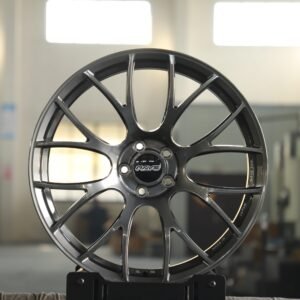 Rays-Style Gunmetal 10 Y-Mesh Forged Wheels – Nissan 370Z / Toyota GR86 Fitment (5-Lug)
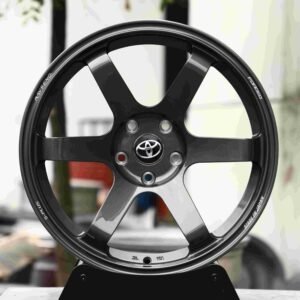 Toyota OEM-Style Matte Silver 6-Spoke Forged Wheels – Toyota GR86 / Supra Fitment (5-Lug)
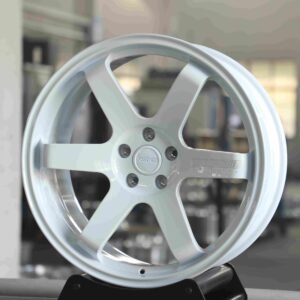 Rays-Style Silver 6-Spoke Forged Wheels – Toyota GR86 / Subaru WRX Fitment (5-Lug)
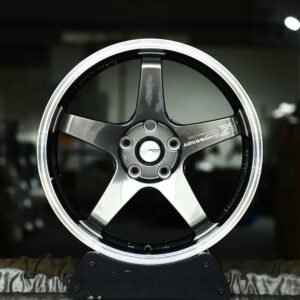 Advan Racing Metallic Gray / Gray 5-Spoke Racing Forged Wheels - Honda S2000 / Toyota GR86 Fitment (5-Lug)
Have another question? Use our Offset & Backspacing Calculator or contact ANKUSI for a custom recommendation.
In our database, 215 other vehicle entries from 19 makes use exactly the same 5x114.3 bolt pattern and 60.1 mm center bore. Factory wheels from these cars bolt on and center on the hub without rings; offset and width still have to be checked.
5x114.3 is used by 20.0% of the vehicle pages in our English fitment guide (1,300 of 6,503); 16.8% of those also use a 60.1 mm center bore.
A wheel with a center bore larger than 60.1 mm needs a hub-centric ring. The most common combinations:
| Wheel bore | Ring size |
|---|---|
| 63.4 mm | 63.4 → 60.1 mm |
| 64.1 mm | 64.1 → 60.1 mm |
| 65.1 mm | 65.1 → 60.1 mm |
| 66.1 mm | 66.1 → 60.1 mm |
| 73.1 mm | 73.1 → 60.1 mm |
ANKUSI forged wheels are bored to exactly 60.1 mm for this vehicle, so no ring is needed.
Data checked against: avtoreference.com.
This record is part of the open ANKUSI Wheel Fitment Dataset (DOI 10.5281/zenodo.23241521, CC BY 4.0).
Other cars on the same factory size: 18x7 wheels · 18 inch wheels.
Compiled by the ANKUSI Wheels engineering team, an IATF 16949 and ISO 9001 certified forged wheel factory in Guangzhou.
Every design below is forged to order, so it can be machined to the Toyota RAV4's 5x114.3 bolt pattern and 60.1 mm center bore, with the width and offset calculated for your setup.
Honda S2000 / Toyota GR86 Fitment · 5-Lug
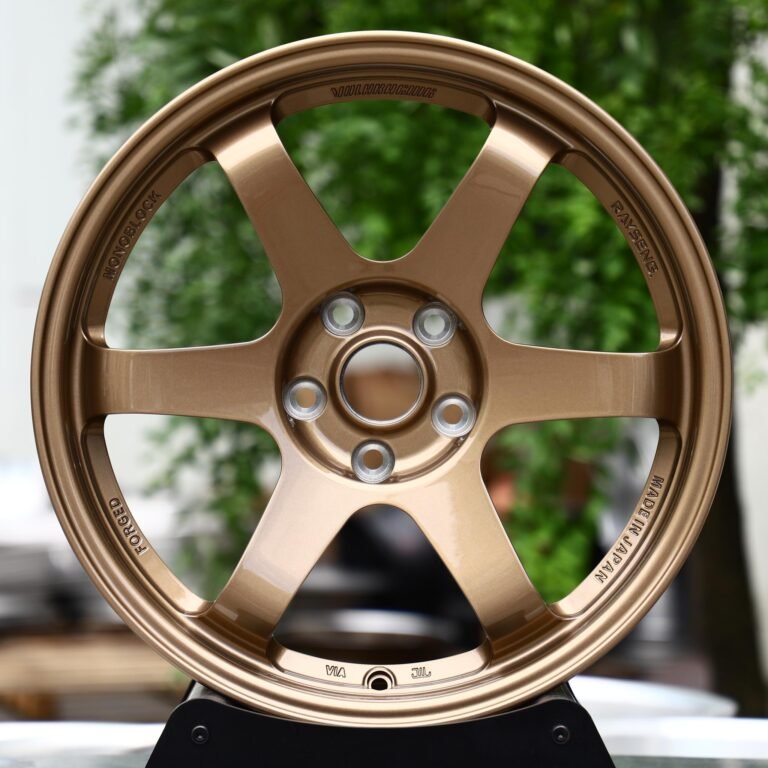
Bronze 6-Spoke · 5-Lug
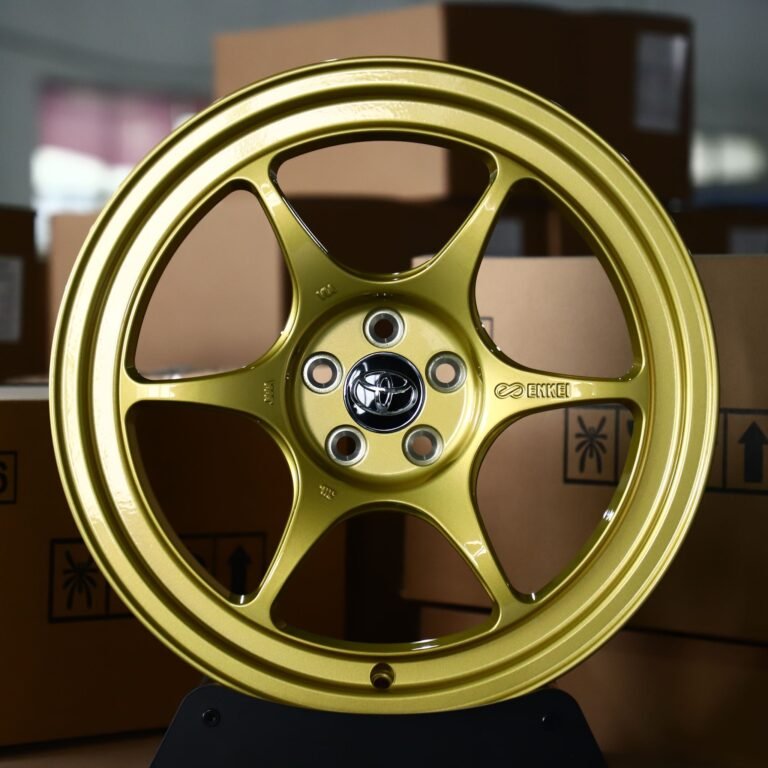
Toyota Camry / Supra Fitment · 5-Lug
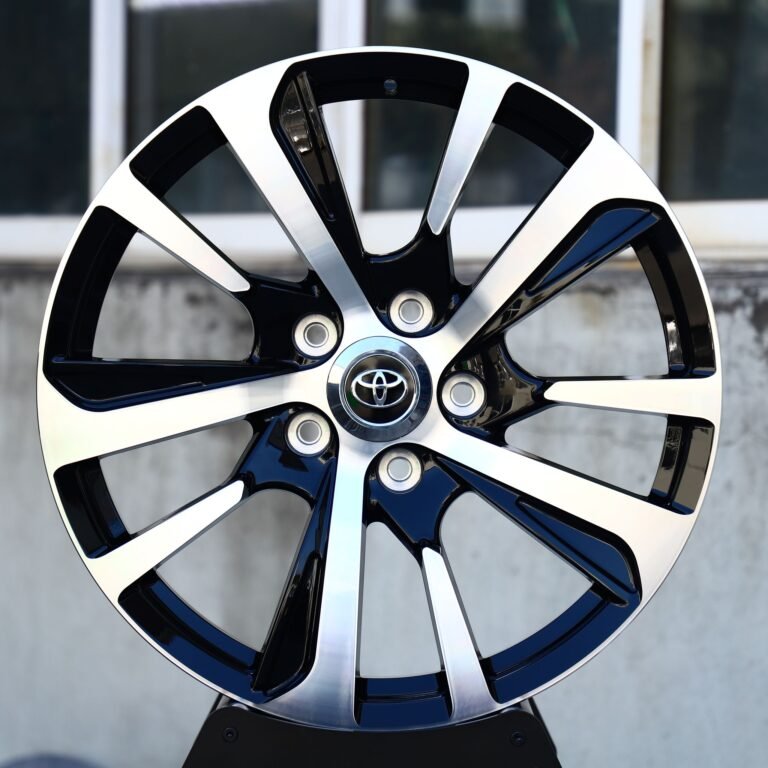
Toyota Camry / Supra Fitment · 5-Lug
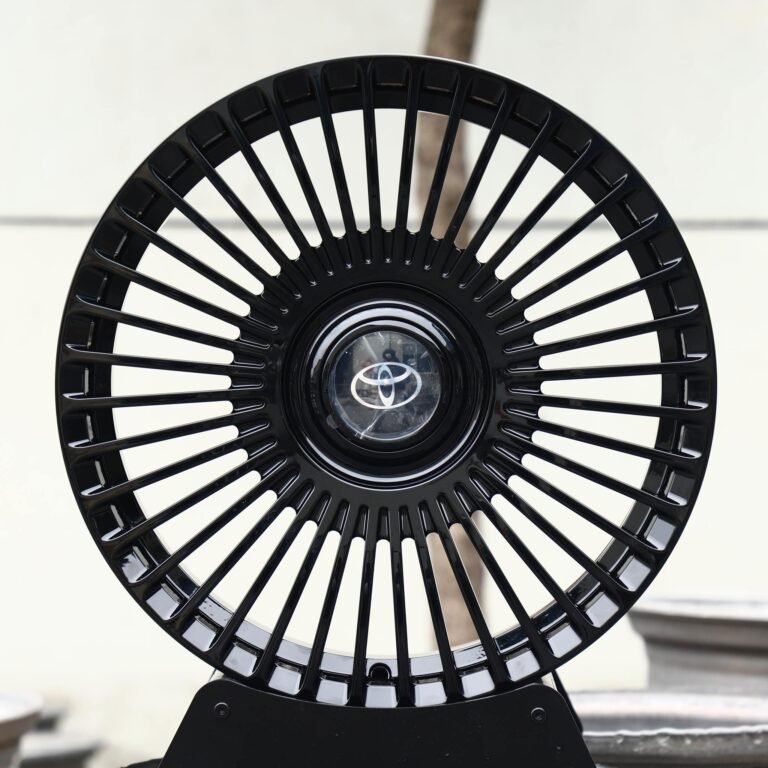
Toyota Camry / Supra Fitment · 5-Lug
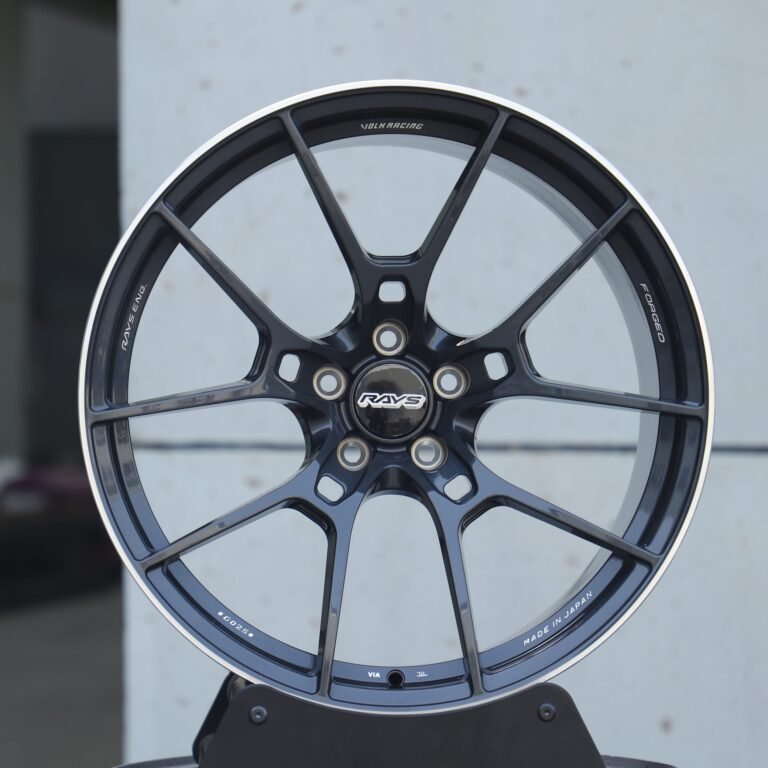
Nissan 370Z / Toyota GR86 Fitment · 5-Lug
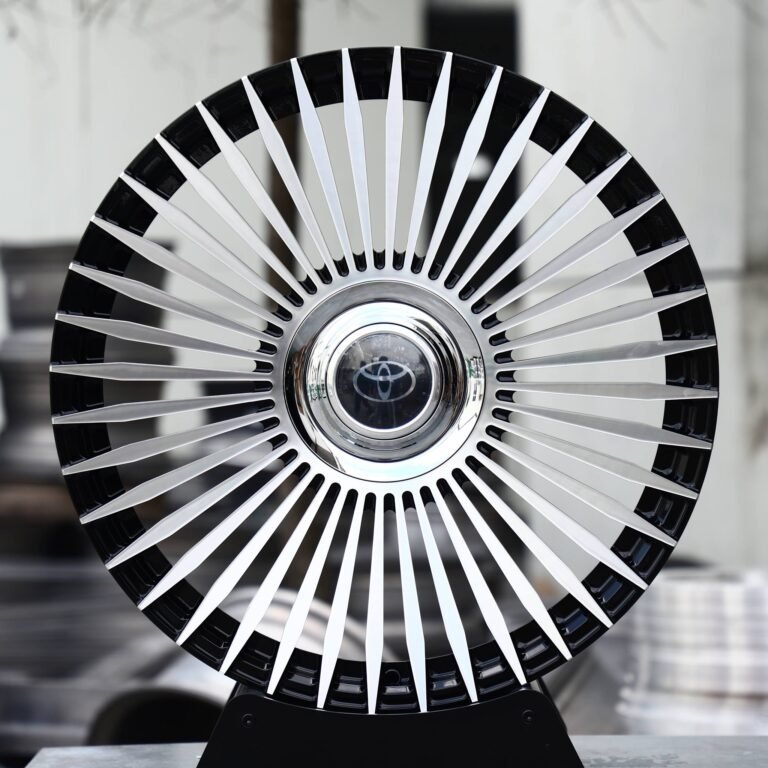
Toyota Camry / Supra Fitment · 5-Lug
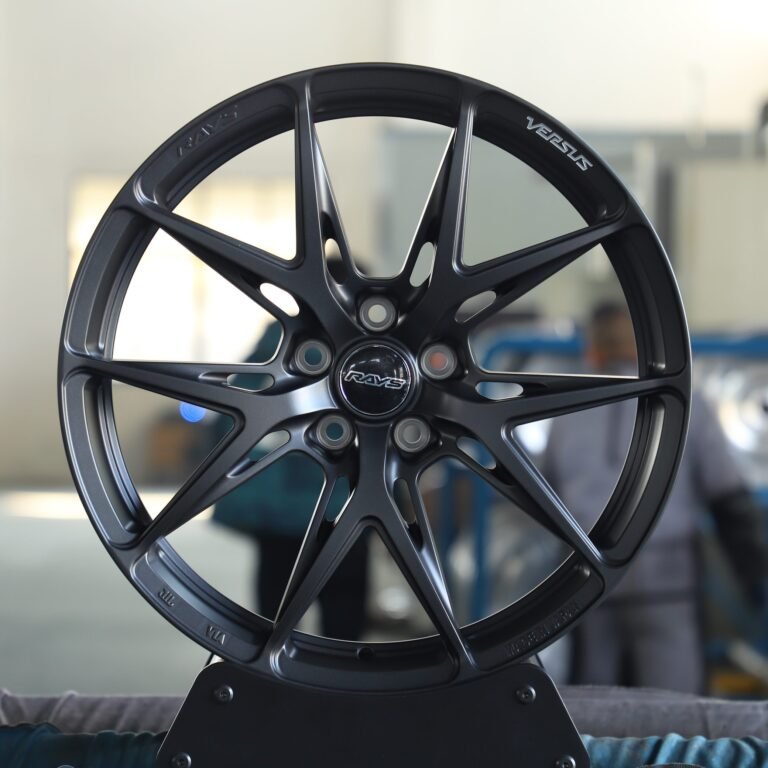
Rays-Style forged wheels featuring the side-milled gloss black 5 Y-spoke design, forged to order at ANKUSI's Guangzhou plant. Bolt pattern, centre bore, diameter, width and offset are machined for your exact vehicle — this listing covers 5-lug applications.
Thread & Fastener: M12x1.5, conical-seat lug nut.
Factory Torque Spec: 103-110 Nm (76-81 ft-lb). Range covers most Toyota passenger cars, crossovers, and light trucks on M12x1.5 studs.
TPMS: TPMS (Tire Pressure Monitoring System) has been federally mandated on all new light vehicles sold in the US since the 2008 model year. If your wheels use OE-style sensors, have them transferred or cloned to the new wheels at installation.
Tire Pressure: Always set tire pressure to the value on your vehicle's tire placard (driver's doorjamb or glovebox), not the max PSI printed on the tire sidewall — this is trim- and tire-size-specific and stays the same reference point when you switch to a different wheel and tire combination.
Reference data compiled from published OEM service specifications and cross-checked against independent repair sources; always confirm against your owner's manual or door-jamb placard before installation.
Bolt pattern and center bore on this page were cross-checked against at least two independent sources before publication. Last reviewed 2026-09-25. Spotted an error? Email info@ankusi.com and we will verify and correct it.