
Golf GTI Wheel Offset & Specs by Generation: Mk1 to Mk8 (1976–2026)
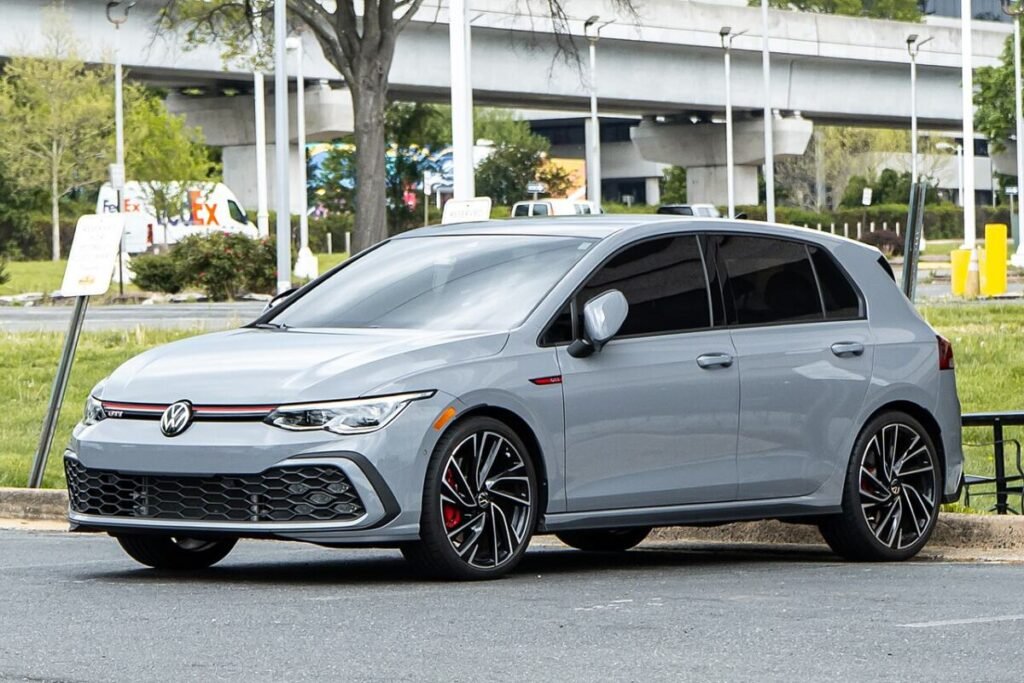
Golf GTI wheel offset is ET51 on a 7.5J wheel for every GTI built since the Mk5 (2004 onward), with 5x112 bolts and a 57.1 mm hub bore. Older cars are different: the Mk1 and Mk2 run 4x100 at ET38, the Mk4 runs 5x100 at ET38–42, and the Mk3 splits between 4x100 and 5x100 depending on the engine.
This guide lists the factory wheel size, offset, bolt pattern and hub bore for all eight generations, then shows exactly how far a flush 8.5J ET45 or 9J ET40 wheel moves the tire compared with stock on a 5x112 car.
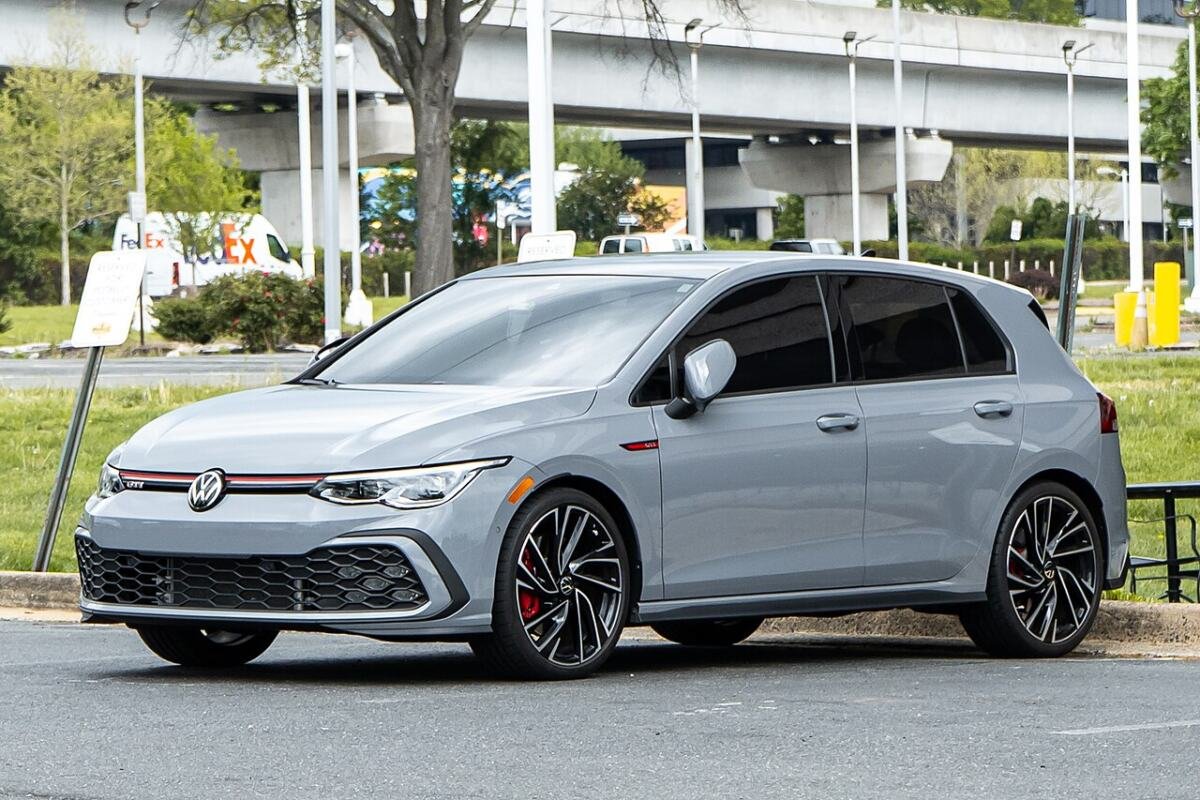
Golf GTI wheel offset and specs by generation (Mk1 to Mk8)
Every Golf GTI since 1976 shares the 57.1 mm hub bore and little else. Bolt pattern changed twice (4x100 to 5x100 to 5x112), factory offset moved from ET38 to ET51, and wheel diameter grew from 13 to 19 inches. Offset (ET) is the distance from the mounting face to the wheel centreline; a higher ET tucks the wheel in.
| Generation | Model years | Bolt pattern | Hub bore | Bolt thread | Factory GTI wheel | Factory offset |
|---|---|---|---|---|---|---|
| Mk1 (Typ 17) | 1976–1983 | 4x100 | 57.1 mm | M12x1.5 | 5.5Jx13 (175/70R13) | ET38 |
| Mk2 (Typ 19E) | 1984–1992 | 4x100 | 57.1 mm | M12x1.5 | 5.5Jx13; 6Jx14 on 16V (185/60R14) | ET38 |
| Mk3 (Typ 1H) | 1992–1998 | 4x100 (2.0 8V); 5x100 (16V, VR6) | 57.1 mm | M12x1.5 / M14x1.5 | 6Jx15 (195/50R15) | ET38 |
| Mk4 (Typ 1J) | 1998–2005 | 5x100 | 57.1 mm | M14x1.5 | 6.5Jx16 (205/55R16); 7Jx17 (225/45R17) | ET42 (16"), ET38 (17") |
| Mk5 (Typ 1K) | 2004–2009 | 5x112 | 57.1 mm | M14x1.5 | 7.5Jx17 (225/45R17); 7.5Jx18 (225/40R18) | ET51 |
| Mk6 (Typ 5K) | 2009–2013 | 5x112 | 57.1 mm | M14x1.5 | 7.5Jx17; 7.5Jx18 | ET51 |
| Mk7 / Mk7.5 (Typ 5G) | 2013–2020 | 5x112 | 57.1 mm | M14x1.5 | 7.5Jx17; 7.5Jx18; 8Jx19 (235/35R19) | ET49 (17"), ET51 (18"), ET50 (19") |
| Mk8 / Mk8.5 (Typ CD1) | 2020–2026 | 5x112 | 57.1 mm | M14x1.5 | 7.5Jx17; 7.5Jx18; 8Jx19 | ET51 (17"/18"), ET50 (19") |
Sources for the table: the European fitment database at koleso.ee, cross-checked against a second US fitment listing for each generation, with the current car confirmed on Volkswagen's official Golf GTI page. Our own Volkswagen Golf GTI fitment page carries the Mk8 numbers and the flush references used below. Wheel bolt torque differs by generation, so take that figure from your owner's manual rather than a forum.
Mk1 and Mk2 GTI: 4x100, ET38 and 13 or 14-inch wheels
The first two GTI generations use a 4x100 bolt pattern, a 57.1 mm bore, M12x1.5 bolts and ET38 on every factory wheel. The Mk1 GTI left the factory on a 5.5Jx13 steel or alloy wheel with 175/70R13 tires. The Mk2 kept the 13-inch wheel on the 8V and moved the 16V to 6Jx14 with 185/60R14, still at ET38.
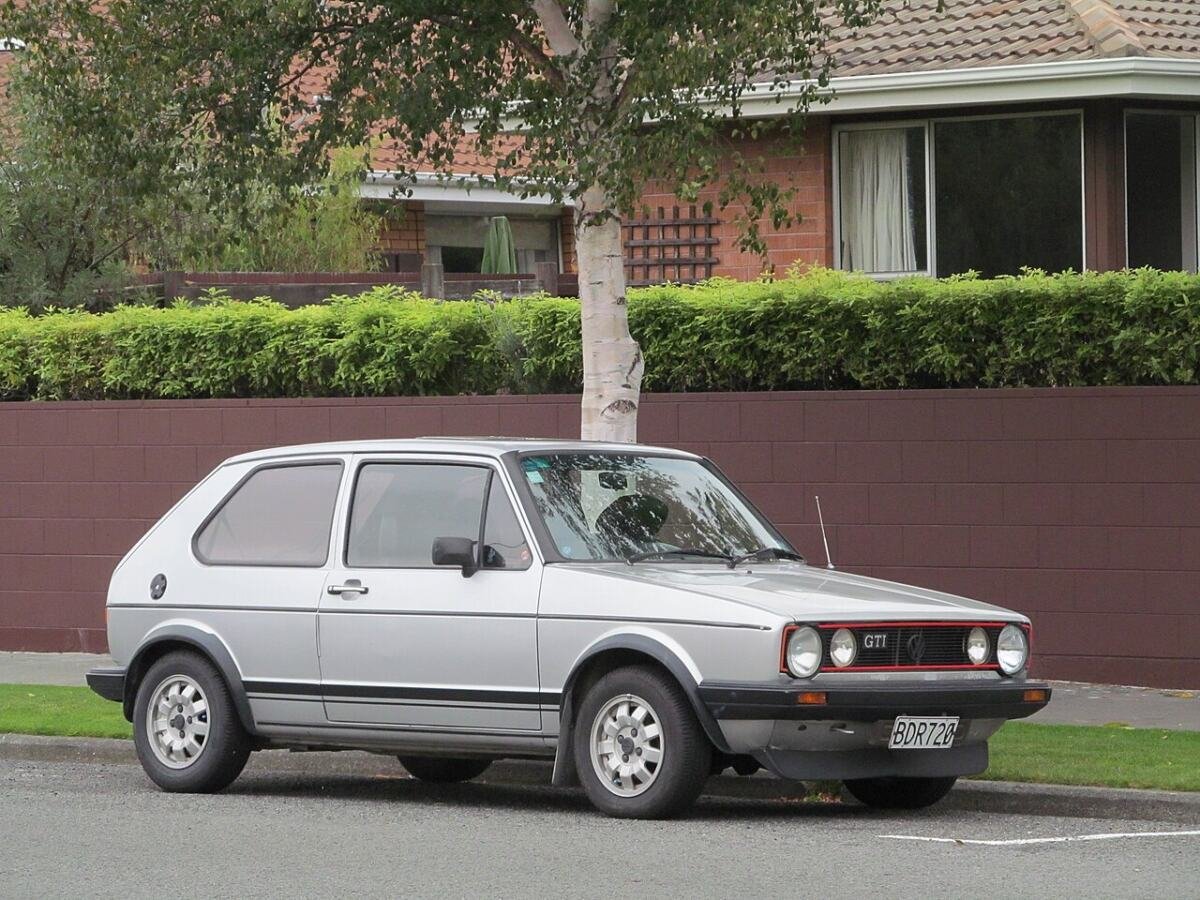
Owners of these cars rarely chase a flush look; the priority is weight and period-correct diameter. A 15x6 or 15x6.5 wheel at ET35–38 keeps the tire clear of the strut and fits under a standard Mk1 or Mk2 arch, and a 4x100 forged wheel at 15 inches keeps unsprung weight close to the original 13-inch steel wheel. The 57.1 mm bore means any VW-pattern hub-centric wheel seats correctly without rings.

Mk3 and Mk4 GTI: the move to 5x100
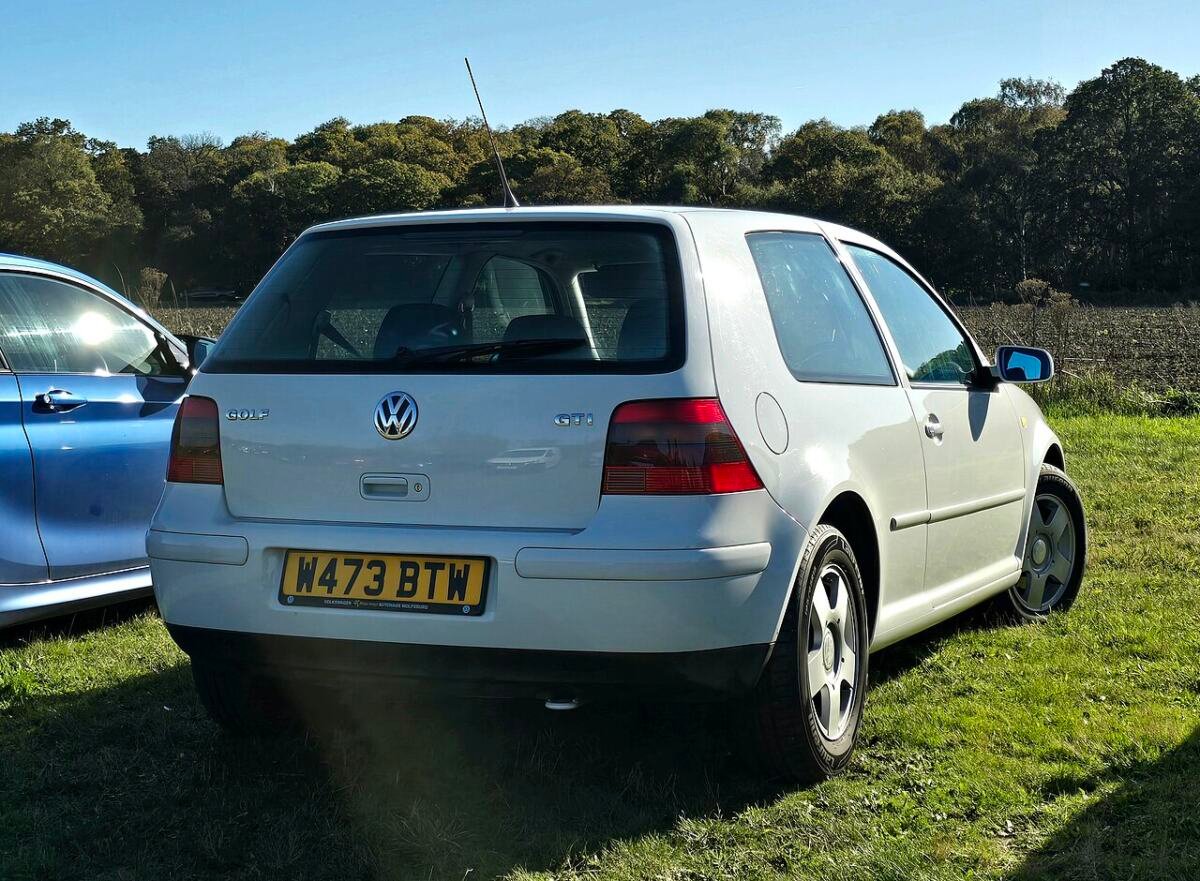
The Mk3 is the only generation where the bolt pattern depends on the engine. The 2.0 8V GTI uses 4x100 with M12x1.5 bolts, while the 2.0 16V and the VR6 use 5x100 with M14x1.5 bolts. Both share the 57.1 mm bore and a 6Jx15 ET38 factory wheel with 195/50R15 tires. Before buying any wheel for a Mk3, count the bolts on your own hub.
The Mk4 GTI standardised on 5x100 for every engine. The common 16-inch factory wheel is 6.5J ET42 with 205/55R16, and the 17-inch option is 7J ET38 with 225/45R17. Because the Mk4 arch is deeper than the Mk3, a 7.5J ET35 wheel moves the tire's outer edge 19.7 mm outboard of the stock 16-inch position and 5.7 mm closer to the strut, which still clears the factory spring perch on a stock-height car. Check our 5x100 wheel fitment page for the full width and offset ranges.
Mk5 to Mk8 GTI: 5x112, ET51 and why the offset never changed
From the Mk5 of 2004 to the Mk8.5 on sale in 2026, every Golf GTI uses 5x112, a 57.1 mm bore, M14x1.5 bolts and a 7.5J wheel at ET51 in 17 and 18 inches. The 19-inch factory wheel on the Mk7 and Mk8 is 8J ET50, and the 17-inch Mk7 wheel is 7.5J ET49.
All of these put the tire's centreline within 2 mm of the same point in the arch, which is why a wheel that fits a Mk5 GTI also fits a Mk8 GTI as long as the brake caliper clears.
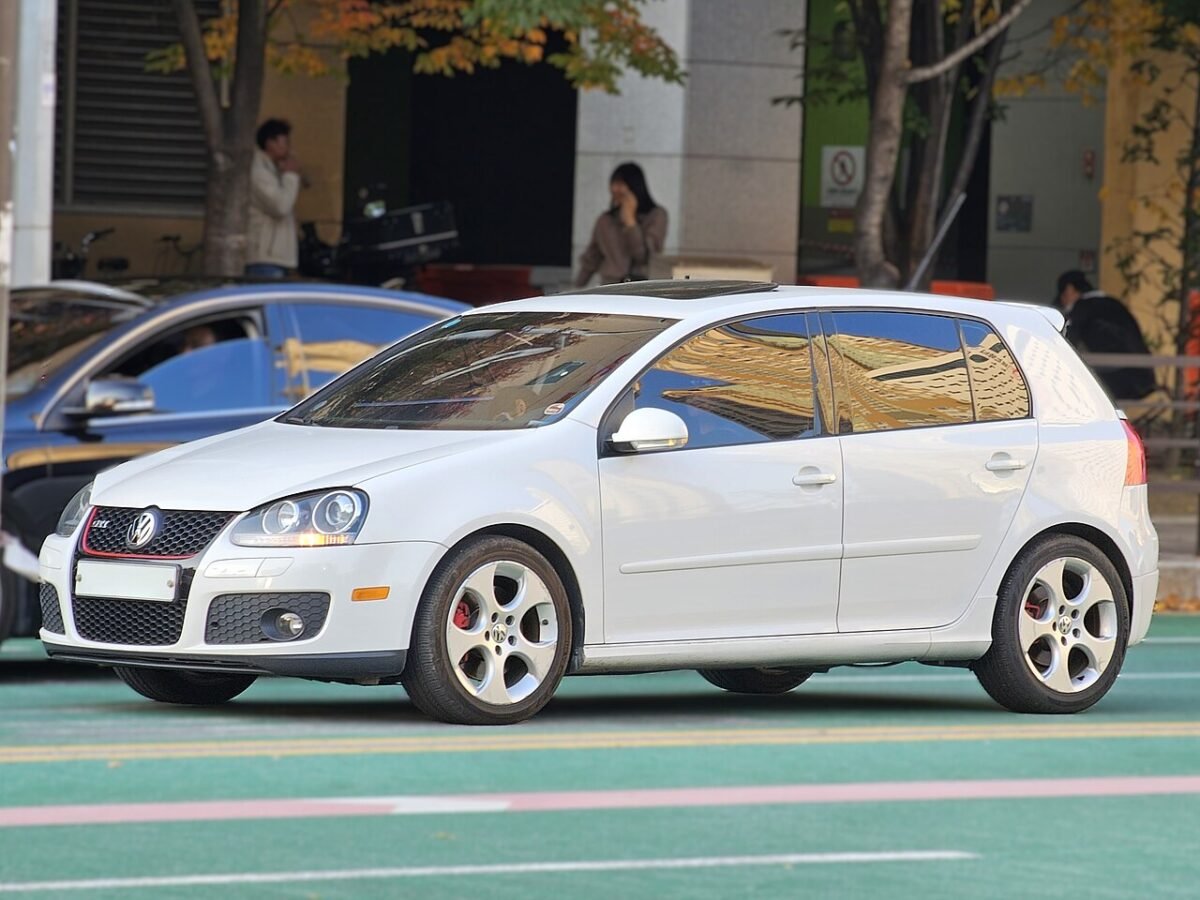
The reason Volkswagen held the Golf GTI wheel offset at ET51 for so long is the MacPherson strut. On the PQ35 (Mk5, Mk6) and MQB (Mk7, Mk8) platforms, the strut body sits close to the inner face of the tire. A 7.5J ET51 wheel leaves only a small gap between a 225-section tire and the strut.
Go to a wider wheel without lowering the offset and that gap closes fast; go to a lower offset without widening the wheel and the tire pokes past the fender. The table below shows both movements for the most common upgrade sizes, calculated against the stock 7.5J ET51 wheel.
| Wheel | Outer edge vs stock | Inner edge vs stock (toward strut) | Backspacing | Where it lands on a Mk5–Mk8 GTI |
|---|---|---|---|---|
| 7.5J ET51 (stock) | 0 mm | 0 mm | 159 mm | Factory position |
| 8J ET48 | +9.3 mm | +3.3 mm | 162 mm | OEM-plus, no rubbing at stock height |
| 8J ET45 | +12.3 mm | +0.3 mm | 159 mm | Fills the arch, strut gap unchanged |
| 8.5J ET45 | +18.7 mm | +6.7 mm | 166 mm | Flush reference for a stock or mildly lowered car |
| 8.5J ET40 | +23.7 mm | +1.7 mm | 161 mm | Flush with a 235 tire; fender roll advised when lowered |
| 9J ET40 | +30.0 mm | +8.0 mm | 167 mm | Check strut clearance; usually needs camber |
| 9J ET35 | +35.0 mm | +3.0 mm | 162 mm | Maximum aggressive; expect rubbing under compression |
The formula is simple: every half inch of extra width adds 6.35 mm to each side, and every 1 mm of lower offset moves the whole wheel 1 mm outboard. Run your own numbers in the wheel offset and backspacing calculator, then confirm them with the forged wheel fitment verification checklist before you order.
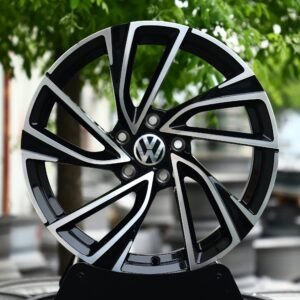
Owners who want the OEM-plus look at 8J ET45 usually pick a design close to the factory wheel, such as our gloss black machined directional forged wheel for the Golf, which we machine to 5x112 with a 57.1 mm bore so it seats on the hub without rings.
For the 8.5J ET45 flush setup, a lip design hides the extra width well: the black mesh forged wheel with a white ring lip is a common choice on Mk7 and Mk8 cars. Need a quote for a specific size? Send us your year, trim and ride height and we will confirm the offset before cutting metal.
Brake clearance: the spec the offset table does not show
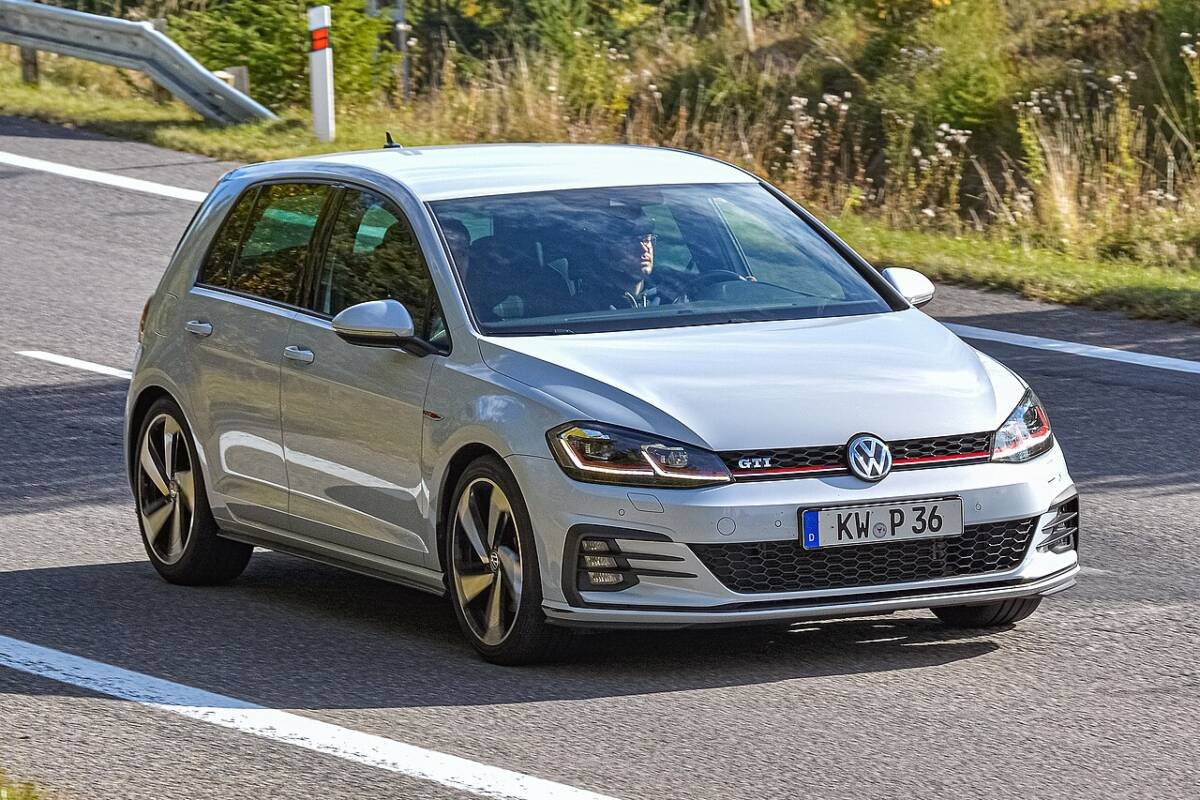
Offset decides where the tire sits; spoke profile decides whether the wheel clears the caliper. The Mk7 GTI Performance Pack uses a 340 mm front rotor with a larger caliper than the standard 312 mm setup, and the Golf R uses the same 340 mm rotor (FCP Euro's Mk7 brake guide lists both), so a 17-inch wheel that clears a base GTI may not clear a Performance Pack car.
Our Golf R fitment page lists the same 5x112 and ET51 numbers but with the larger brake in mind.
Three checks avoid most returns. First, measure from the hub face to the outermost point of the caliper and compare it with the wheel's inner spoke depth at that radius. Second, on 17-inch wheels, verify a minimum of 3 mm clearance to the caliper with the wheel bolted and rotated a full turn. Third, if the car has aftermarket big brakes, send the caliper dimensions with your enquiry; a forged wheel can be machined with a deeper spoke pocket, which a cast wheel cannot.
Hub bore, bolts and spacers on a 5x112 GTI
Every GTI from Mk1 to Mk8 has a 57.1 mm hub bore, and every 5x112 GTI uses M14x1.5 ball-seat bolts from the factory. Aftermarket wheels usually need cone-seat bolts of the same thread, and the bolt length must change with any spacer: a 5 mm spacer needs bolts roughly 5 mm longer to keep the same thread engagement. A wheel bored larger than 57.1 mm needs a hub-centric ring; without it the car is lug-centric, which we explain in our hub-centric vs lug-centric guide.
Spacers are the quickest way to move a factory wheel outboard, but they do nothing for the strut gap. A 10 mm spacer on the stock 7.5J ET51 wheel behaves exactly like a 7.5J ET41 wheel: the outer edge moves 10 mm out, the inner edge moves 10 mm away from the strut.
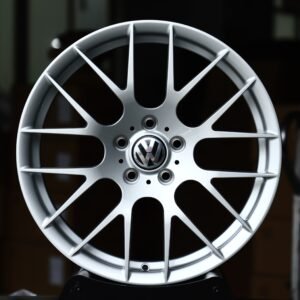
If the goal is a wider tire, a wider wheel with the right offset is the better path, and it removes one more joint from the hub stack. Classic mesh designs such as our hyper silver mesh forged wheel for the Golf are available in 8J and 8.5J widths for exactly this reason.
Which offset should you pick for your GTI?
The right Golf GTI wheel offset depends on generation and ride height. For a daily-driven Mk5 to Mk8 GTI at stock height, 8J ET45 is the safe upgrade: it fills the arch, keeps the strut gap and needs no fender work. For a car lowered 20–30 mm, 8.5J ET45 with a 235/35R19 or 235/40R18 tire is the usual flush setup, and the fender lip should be rolled.
Anything at ET40 or below on a 9J wheel is a show fitment that trades tire clearance for stance. Mk1 to Mk4 owners should stay within ET35–42 on a 6.5J to 7.5J wheel and treat the strut gap as the limit.
The GTI's 57.1 mm bore and conservative factory offset make it one of the easiest hot hatches to fit forged wheels to, which is why the 5x112 bolt pattern is one of the first specs we machine for any new design. If you drive a different Volkswagen or Audi on the same pattern, the same Golf GTI wheel offset table applies with the usual caution about brake size and arch depth.
Honda owners can find the equivalent generation-by-generation breakdown in our Civic Type R wheel specs guide.
FAQ
What is the stock Golf GTI wheel offset?
ET51 on a 7.5J wheel for every GTI from the Mk5 (2004) to the Mk8.5 (2026) in 17 and 18 inches; the 19-inch factory wheel is 8J ET50. The Mk4 is ET38–42 on 5x100, and the Mk1, Mk2 and Mk3 are ET38 on 4x100 or 5x100.
What bolt pattern does a Golf GTI have?
5x112 from the Mk5 onward (2004–2026), 5x100 on the Mk4, and 4x100 on the Mk1 and Mk2. The Mk3 uses 4x100 on the 2.0 8V and 5x100 on the 16V and VR6. The hub bore is 57.1 mm on all generations.
Will Mk7 GTI wheels fit a Mk8 GTI?
Yes. Both are 5x112 with a 57.1 mm bore and the same ET49–ET51 factory offsets, so Mk7 wheels bolt straight onto a Mk8. Check caliper clearance if the Mk8 has the larger 340 mm front brake.
What is the best offset for an 18x8.5 wheel on a GTI?
ET45 for a flush look on a stock or mildly lowered Mk5–Mk8 GTI. It moves the tire's outer edge 18.7 mm outboard and the inner edge 6.7 mm closer to the strut compared with the stock 7.5J ET51 wheel, which still clears a 235-section tire.
Do I need hub-centric rings on a GTI?
Only if the wheel's bore is larger than 57.1 mm. A wheel machined to 57.1 mm, as ours are for 5x112 Volkswagen fitments, centres on the hub without rings.
Can I use the same wheels on a Golf R and a GTI?
Yes, both share 5x112, 57.1 mm and ET50–51. The Golf R's 340 mm front brake needs an 18-inch wheel or a 17-inch design with enough spoke clearance.
Related forged wheels for the Golf GTI

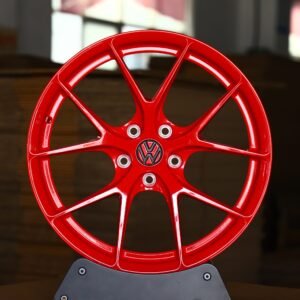
Browse the full range of one-piece forged wheels or open the Golf GTI fitment guide for year-by-year factory specs.
Frequently Asked Questions
What is the stock Golf GTI wheel offset?
ET51 on a 7.5J wheel for every GTI from the Mk5 (2004) to the Mk8.5 (2026) in 17 and 18 inches; the 19-inch factory wheel is 8J ET50. The Mk4 is ET38–42 on 5x100, and the Mk1, Mk2 and Mk3 are ET38 on 4x100 or 5x100.
What bolt pattern does a Golf GTI have?
5x112 from the Mk5 onward (2004–2026), 5x100 on the Mk4, and 4x100 on the Mk1 and Mk2. The Mk3 uses 4x100 on the 2.0 8V and 5x100 on the 16V and VR6. The hub bore is 57.1 mm on all generations.
Will Mk7 GTI wheels fit a Mk8 GTI?
Yes. Both are 5x112 with a 57.1 mm bore and the same ET49–ET51 factory offsets, so Mk7 wheels bolt straight onto a Mk8. Check caliper clearance if the Mk8 has the larger 340 mm front brake.
What is the best offset for an 18x8.5 wheel on a GTI?
ET45 for a flush look on a stock or mildly lowered Mk5–Mk8 GTI. It moves the tire's outer edge 18.7 mm outboard and the inner edge 6.7 mm closer to the strut compared with the stock 7.5J ET51 wheel, which still clears a 235-section tire.
Do I need hub-centric rings on a GTI?
Only if the wheel's bore is larger than 57.1 mm. A wheel machined to 57.1 mm, as ours are for 5x112 Volkswagen fitments, centres on the hub without rings.
Can I use the same wheels on a Golf R and a GTI?
Yes, both share 5x112, 57.1 mm and ET50–51. The Golf R's 340 mm front brake needs an 18-inch wheel or a 17-inch design with enough spoke clearance.
Need answers from the manufacturing side instead of just sales copy?
Contact ANKUSI through WhatsApp or WeChat for discussions on forged wheel customization, fitment, finishes, and project feasibility.