
Beadlock Drag Wheels: Do You Need Them? 700 HP, 10 PSI & NHRA Rules
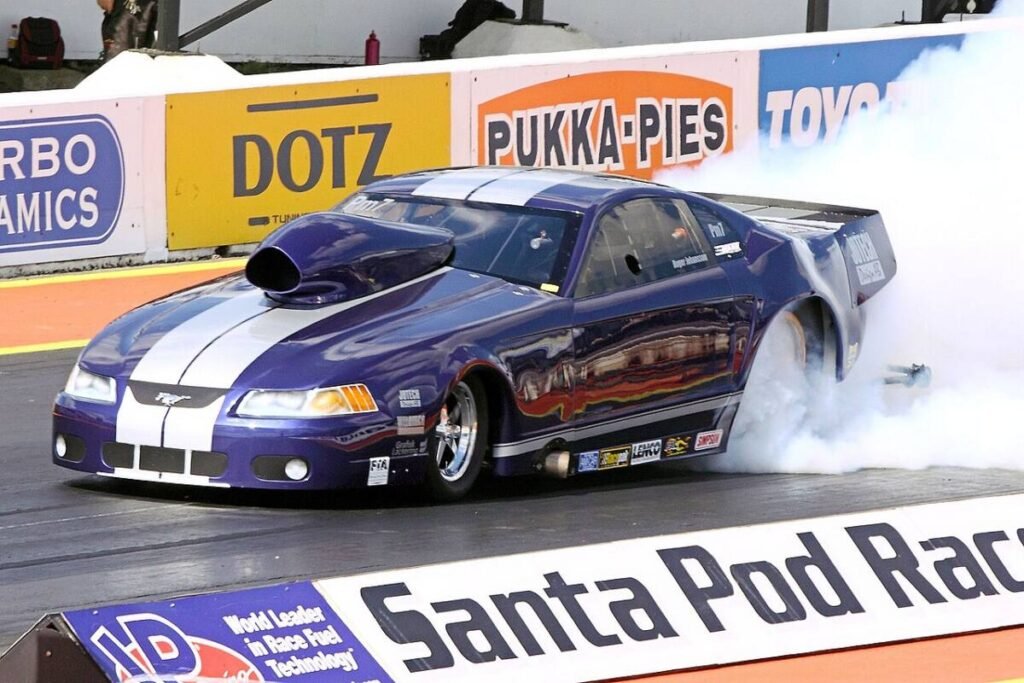
Most street/strip cars do not need beadlock drag wheels until they make roughly 700–800 horsepower or run big slicks below about 10 psi. Past that point, a single beadlock stops the tire from spinning on the rim at the hit. Above about 1,200–1,300 horsepower, a double beadlock is the safer choice. Many faster NHRA classes do not leave it up to you at all. They require beadlocks by rule.
This guide explains when beadlock drag wheels are worth their extra weight and cost, how single and double designs differ, and which classes require them. It also covers the fitment data you need before ordering a set for a Mustang, Corvette or Challenger. For the wider picture on chassis setup, see our pillar guide to track and drag wheel setup.
Do You Need Beadlock Drag Wheels?
You need beadlock drag wheels when torque at the launch is strong enough to rotate the tire on the rim, or when tire pressure is so low that the bead can unseat. In practice, that means high-horsepower cars on slicks, anything running very low pressure, and any class whose rulebook requires them.
The thresholds below are the working guidelines racers and wheel makers use most often. Treat them as starting points, not laws of physics. Launch style, tire compound and track prep all move the line.
| Your setup | Typical recommendation | Why |
|---|---|---|
| Street car, under ~700 hp, drag radials at street pressure | No beadlock needed | Bead friction holds the tire; extra rotating weight only slows you down |
| ~700–800 hp, slicks or soft radials | Consider a single beadlock (rear) | Launch torque starts to slip the tire on the rim, which throws off the valve stem and balance |
| Slicks run under ~10 psi | Single beadlock recommended | Low pressure means low bead clamping force |
| ~1,200–1,300 hp and up | Double beadlock | Both beads need to be locked so the sidewall loads evenly |
| Class above 210 mph or a class that mandates them | Beadlock (or liner) required by rule | High centrifugal force can pull the bead off its seat |
What a Beadlock Actually Does on the Launch
A beadlock clamps the tire bead between the wheel flange and a bolted ring so the tire cannot rotate or unseat. Friction alone keeps a normal tire in place. A beadlock replaces that friction with a mechanical clamp.
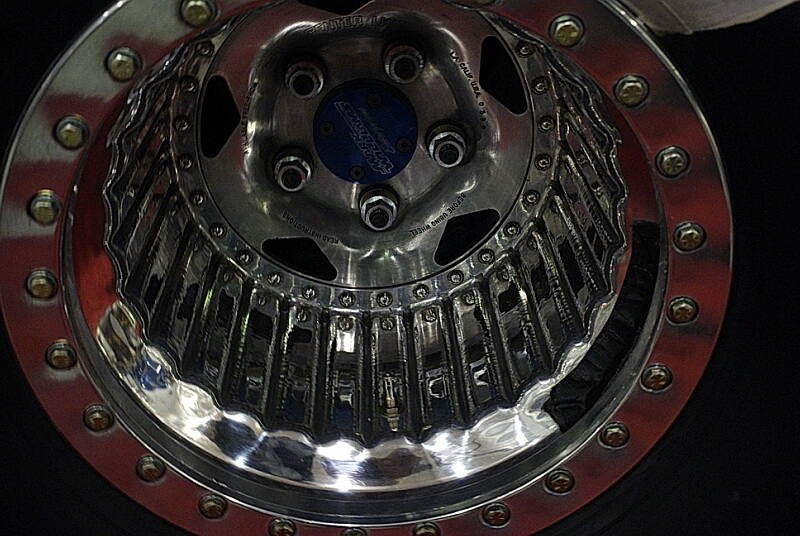
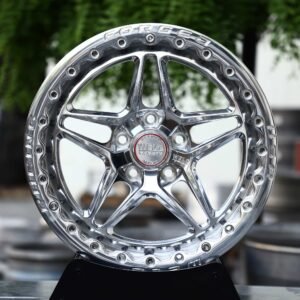
The close-up above shows the ring bolted around the outer flange. Most rings use 16 to 32 evenly spaced bolts, depending on the design. That clamp matters for two different reasons:
- Tire slip at the hit. A sticky prepped surface and a hard launch can spin the rim inside the tire. You will see the valve stem move, the balance goes out, and in the worst case the stem tears.
- Bead retention at speed. At the big end of the track, centrifugal force pulls the bead away from its seat. When that happens, the tire deflates almost instantly. This is the main reason fast classes require beadlocks. Weld Racing's technical team explains the point in this NHRA interview on drag racing wheels.
The trade-off is weight and cost. A ring plus its bolts adds rotating mass. If your car does not need beadlocks, they will not make it quicker.
Single vs Double Beadlock: Which One Fits Your Build?
A single beadlock locks only the outer bead and suits most builds up to roughly 1,200 horsepower. A double beadlock locks both beads, so the tire is loaded evenly from both sides. That is why it becomes the standard choice for the most powerful cars.
| Single beadlock | Double beadlock | |
|---|---|---|
| Beads locked | Outer only | Inner and outer |
| Typical power range | ~700 to ~1,200 hp | ~1,200–1,300 hp and up |
| Sidewall behavior | The locked side is stiffer than the free side | Even on both sides, for a straighter launch |
| Weight and cost | Lower | Higher |
| Typical use | Radial and small-tire street/strip, bracket, test and tune | Pro-level radial, Pro Mod and nitro classes |
Racers moving from single to double often report a smoother, straighter launch. The reason is that torque now reaches both sides of the tire evenly, so the tire no longer gets pulled harder on one side. Not sure which one your build needs? Send us your horsepower, tire size and launch style and we will recommend single or double before quoting.
Which Drag Racing Classes Require Beadlocks?
In NHRA competition, beadlocks are mandatory in Top Fuel, Funny Car, Pro Stock and Factory X. Beadlocks or liner wheels are also required on any car that exceeds 210 mph, which covers classes such as Top Sportsman, Top Dragster and Comp. Pro Mod racers may choose to run them.
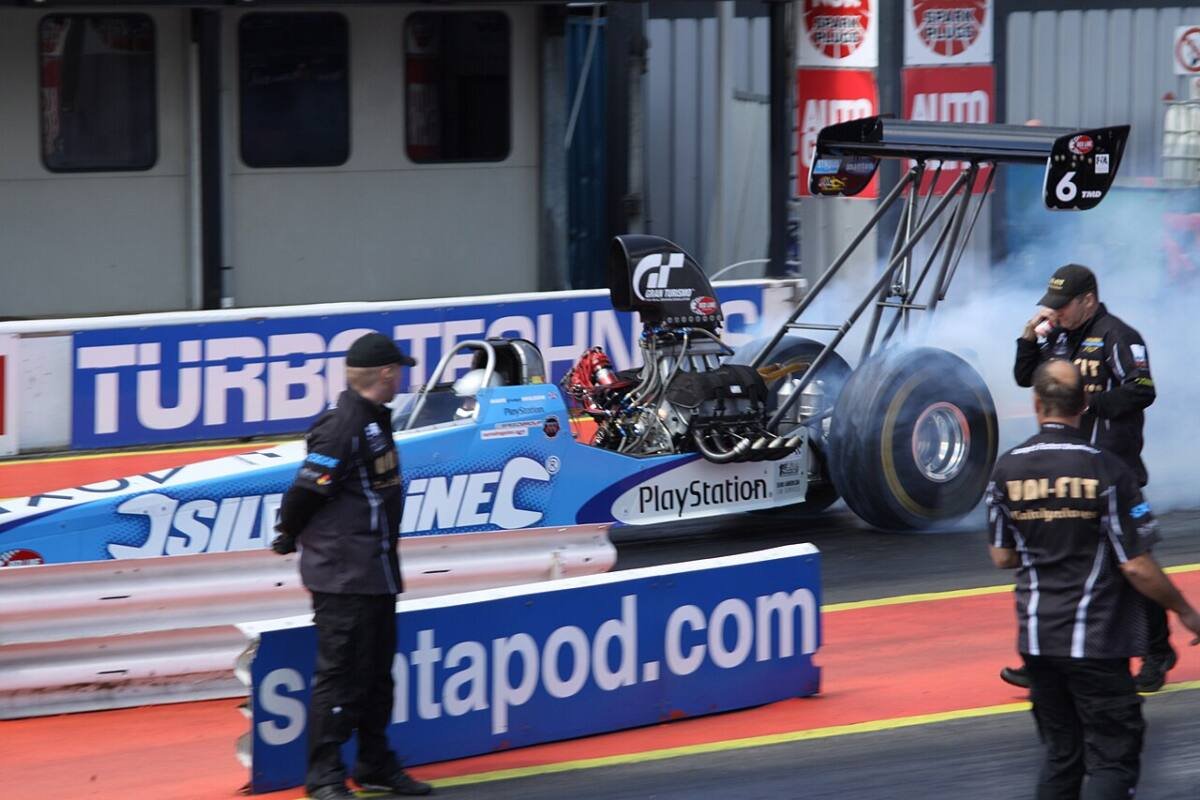
Other sanctioning bodies set their own rules. PDRA requires beadlocks for every car in Extreme Pro Stock. In Pro 632, it requires beadlocks or liners for cars that run 170 mph or faster, or 4.10 seconds or quicker in the 1/8 mile. Radial vs The World and X275 racers are strongly advised to run them.
Many classes also require wheels certified to an SFI Foundation specification. Rules change every season, so always check the current rulebook for your class before you buy. ANKUSI custom forged beadlock wheels are built for street/strip, bracket and test-and-tune use. They are not SFI-certified, so if your class requires an SFI-certified wheel, buy one that carries that certification.
Beadlock vs Rim Screws vs Glue
Rim screws and bead glue are lighter and cheaper ways to stop tire slip, but they do nothing for bead retention at high speed. A beadlock is the only one of the three that mechanically holds the bead on its seat.
| Method | Stops slip at the launch | Holds the bead at speed | Downsides |
|---|---|---|---|
| Rim screws | Yes, at moderate power | No | Screws go into the bead, which can create leak points; holes strip over time |
| Bead glue | Partly | No | Messy tire changes; results vary |
| Beadlock wheel | Yes | Yes | Heavier and more expensive; ring bolts need regular checks |
Tire Pressure, Slicks and Radials
Tire pressure is the easiest beadlock signal to check. Once a big slick runs below about 10 psi, the air pressure pushing the bead onto its seat is too low to be relied on. At that point a beadlock is cheap insurance.
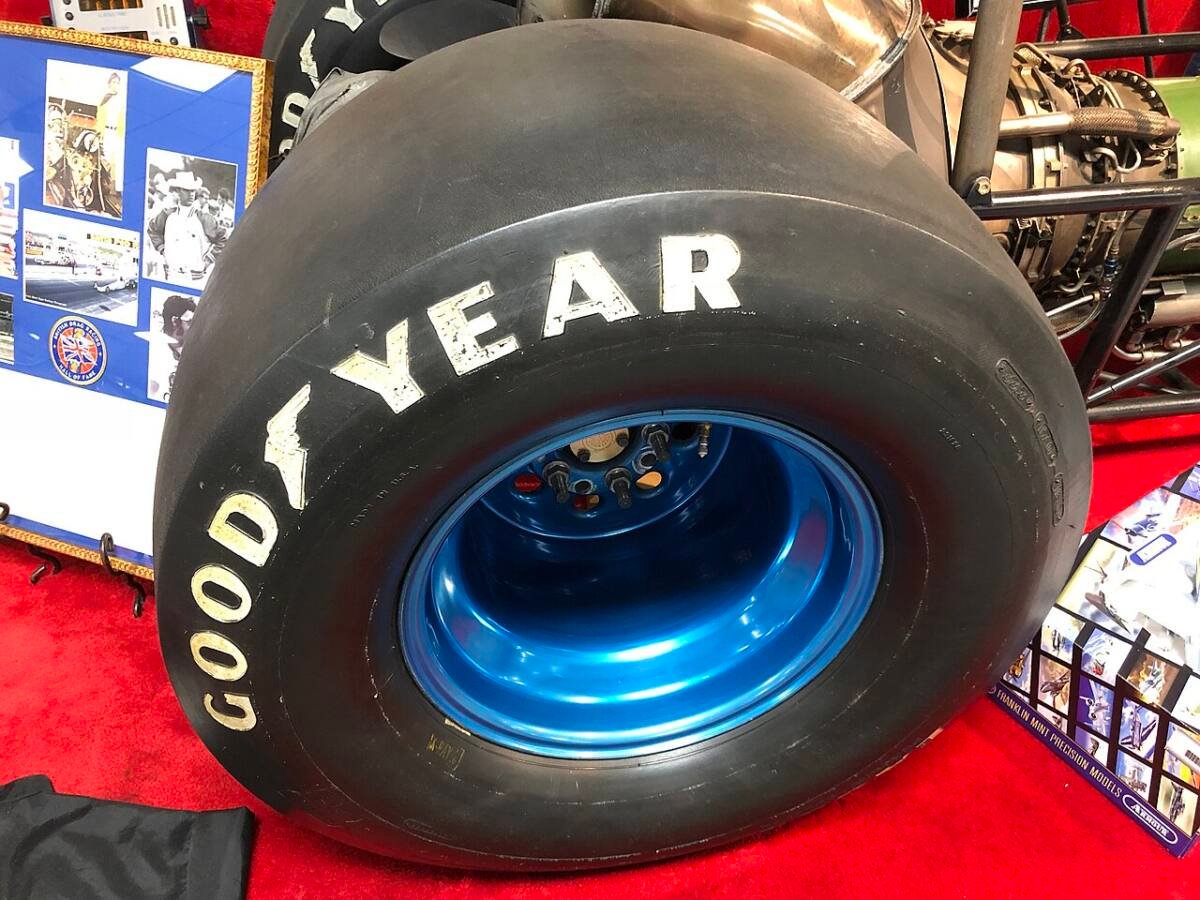
Drag radials usually run higher pressure than slicks, but they transfer huge torque through a stiffer sidewall. That is why fast radial classes still use beadlocks. On a mild street car running radials at normal pressure, most of the benefit disappears and you simply carry extra weight.
Before you order, measure the backspace you need using your actual tire, not the wheel alone. Our offset, backspacing and tire diameter calculator converts between the numbers.
Fitment Data for Popular 5-Lug Drag Cars
Bolt pattern and center bore come first, because a beadlock wheel is machined to one exact hub. The table uses the factory specifications from our fitment database, cross-checked against a second published source.
Before ordering, check clearance with our drag wheel backspacing guide, which covers measuring backspacing and sizing 15x10 rears and 15x3.5 fronts.
| Platform | Bolt pattern | Center bore | Full fitment page |
|---|---|---|---|
| Ford Mustang (S550 and S650) | 5x114.3 | 70.5 mm | Ford Mustang wheel fitment |
| Chevrolet Corvette C7 (2014–2019) | 5x120.65 | 70.3 mm | Corvette C7 Stingray wheel fitment |
| Dodge Challenger (2008–2020) | 5x115 | 71.5 mm | Challenger SRT Demon wheel fitment |
Some sources list later Challenger model years at 71.6 mm, so confirm the hub on your own car before machining. A wheel that is hub-centric to the correct bore centers on the hub rather than on the studs. Our guide to hub-centric vs lug-centric wheels explains why that matters at the launch.

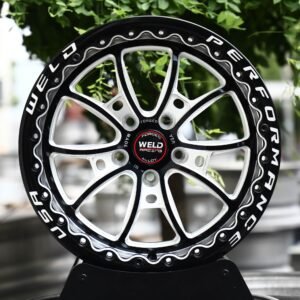
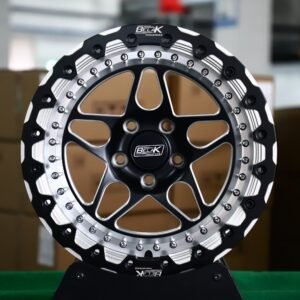
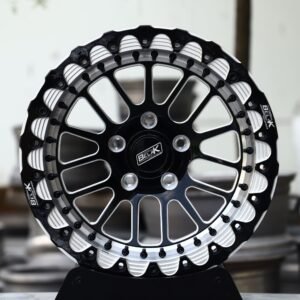
For 5-lug platforms, current ANKUSI forged options include the mirror polished 5-star beadlock, the bronze 5-star beadlock in the Belak style shown above and the black machined 10-spoke beadlock. The full range is in our drag racing wheels collection.
What We Ask Before Machining a Beadlock Wheel
A beadlock wheel is only right if it is machined around your exact tire and hub, so we confirm six details before any order goes to the CNC line. Most fitment problems we see come from one of these being guessed rather than measured.
- Tire make, model and size. The ring and bead seat are sized to the tire, not just to the wheel diameter.
- Measured backspace with that tire mounted. Clearance to the leaf springs, ladder bars or 4-link, and to the inner wheel tubs, decides the barrel width.
- Brake package. Race brakes and street calipers need very different spoke clearance.
- Power level and launch style. Trans-brake, two-step or footbrake launch, plus horsepower, tells us whether a single or double lock makes sense.
- Street use or trailer only. The legality of beadlocks on public roads varies by state, so we flag it up front.
- Class rules. If your class requires SFI-certified wheels, we tell you before quoting.
The most common mistake is ordering the front runners and rears as a matching "set" of widths. Drag cars want narrow fronts to cut weight and rolling drag, and wide rears for grip. Send us your vehicle, tire size and measured backspace, and we'll confirm fitment before forging. Request a quote.
Beadlock Maintenance Checklist
A beadlock only protects you if its ring bolts stay at the correct torque. Treat it like a safety part and inspect it before every event.
- Torque the ring bolts to the maker's specification in a crisscross pattern, in two or three passes.
- Re-check the torque after the first few passes on a freshly mounted tire, then before every event.
- Replace any ring bolt with damaged threads or signs of stretch. Never mix bolt grades.
- Inspect spokes, the barrel and the ring flange for cracks. Aluminum racing wheels have a service life.
- Clean with soap and water only. Harsh acidic cleaners can attack anodized and clear finishes.
Getting power to the ground also depends on offset, tire stretch and suspension setup, which our wheel setup guide covers in detail.
Weld Racing-Style and Belak-Style Beadlock Wheels
For the exact front and rear sizes on a 2015+ Mustang, see our Mustang drag wheel sizes guide for the S550 and S650.
Frequently Asked Questions
Are beadlock wheels street legal?
It depends on your state and on the wheel. Some states have no specific rule, others require DOT-compliant wheels for road use, and many beadlocks are sold for race or off-road use only. Check your local rules before driving on the street; ANKUSI flags street use when quoting.
How much horsepower do you need before running beadlocks?
As a working guideline, consider a single beadlock at around 700 to 800 horsepower or when slicks run below about 10 psi, and a double beadlock above roughly 1,200 to 1,300 horsepower. Class rules can require beadlocks regardless of power.
Do beadlocks make a drag car slower?
The ring and bolts add rotating weight, so if your car does not need beadlocks they will not make it quicker. When the tire is slipping on the rim, a beadlock usually improves consistency and protects the valve stem.
Can you run drag radials on beadlock wheels?
Yes. Fast radial classes such as Radial vs The World and X275 commonly use beadlocks, and racers in those classes are strongly advised to run them.
How often should beadlock ring bolts be checked?
Before every event, and again after the first few passes on a newly mounted tire. Torque them to the wheel maker's specification in a crisscross pattern, in two or three passes.
Need answers from the manufacturing side instead of just sales copy?
Contact ANKUSI through WhatsApp or WeChat for discussions on forged wheel customization, fitment, finishes, and project feasibility.