
Dodge Charger (2015) Wheel Fitment
Dodge Charger (2015): 5x115 bolt pattern, 71.5mm center bore. Factory wheels: 18x7.5J F/R. Reference fitment ranges.
Wheel Size & Offset at a Glance
| Configuration | Wheel Size & Offset |
|---|---|
| Factory (OE) | 18x7.5J F/R |
| Flush Fitment | 20x9.5J at ET22 offset |
| Maximum Aggressive | 20x10.5J at ET20 offset |
How to Read Wheel Offset & Measurements
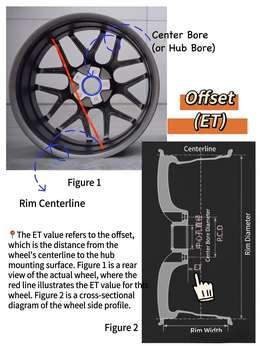
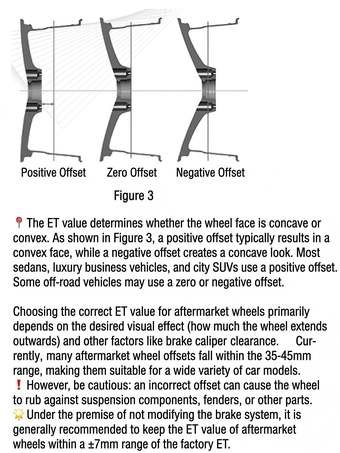
Use these two references before ordering: the left diagram shows where each spec (PCD, center bore, offset, width and diameter) is measured on the wheel; the right diagram shows how positive, zero and negative offset shift the wheel face relative to the hub centerline.
Dodge Charger OE Wheel Specs
The 2015 Dodge Charger (Sedan) uses a 5*115 bolt pattern with a 71.5mm center bore. Factory wheels are 18x7.5J F/R.
Why the factory spec works for most owners:
- Balances ride comfort with everyday fuel efficiency
- A widely used size in this segment, so tire and wheel availability stays strong
- Keeps unsprung weight low for stable, predictable handling
- Maintains clearance for the factory brake calipers and suspension components
Flush Fitment
For a flush look with minimal rubbing, F/R 20x9.5J ET22 is the recommended starting point on a stock or mildly lowered Dodge Charger.
Maximum Aggressive Fitment
F/R 20x10.5J ET20 is a more aggressive reference setup. Beyond this, expect rubbing under compression without fender rolling or camber correction.
5-Tier Configuration Options
A Factory-Style 18x7.5J ET24
Recommended setup: 18x7.5J ET24 | Economy impact: Negligible | Best for: Daily commuting, family use
Appearance: 7/10 | Comfort: 9.5/10 | Install difficulty: ★☆☆☆☆
Estimated cost: $450-800 (wheels + tires + install)
B Comfortable Upgrade 19x8.5J ET23
Recommended setup: 19x8.5J ET23 | Economy impact: -2 to -4% | Best for: Daily / street
Appearance: 8/10 | Comfort: 9/10 | Install difficulty: ★☆☆☆☆
Estimated cost: $1,950-2,550 (wheels + tires + install)
C Balanced / Flush Fit 20x9.5J ET22
Recommended setup: 20x9.5J ET22 | Economy impact: -4 to -6% | Best for: Street
Appearance: 8.5/10 | Comfort: 8/10 | Install difficulty: ★★☆☆☆
Estimated cost: $2,600-3,400 (wheels + tires + install)
D Aggressive 20x10.0J ET21
Recommended setup: 20x10.0J ET21 | Economy impact: -6 to -9% | Best for: Show / occasional track
Appearance: 9/10 | Comfort: 6.5/10 | Install difficulty: ★★★☆☆
Estimated cost: $3,900-5,000 (wheels + tires + install)
E Max Aggressive 20x10.5J ET20
Recommended setup: 20x10.5J ET20 | Economy impact: -8 to -12% | Best for: Show only
Appearance: 9.5/10 | Comfort: 4/10 | Install difficulty: ★★★★☆
Estimated cost: $4,800-6,200+ (wheels + tires + install)
Performance Comparison Matrix
| Metric | Tier A | Tier B | Tier C | Tier D | Tier E |
|---|---|---|---|---|---|
| Wheel Spec | 18x7.5J ET24 | 19x8.5J ET23 | 20x9.5J ET22 | 20x10.0J ET21 | 20x10.5J ET20 |
| Economy Impact | Negligible | -2 to -4% | -4 to -6% | -6 to -9% | -8 to -12% |
| Appearance | 7/10 | 8/10 | 8.5/10 | 9/10 | 9.5/10 |
| Comfort | 9.5/10 | 9/10 | 8/10 | 6.5/10 | 4/10 |
| Install Difficulty | ★☆☆☆☆ | ★☆☆☆☆ | ★★☆☆☆ | ★★★☆☆ | ★★★★☆ |
| Cost Range | $450-800 | $1,950-2,550 | $2,600-3,400 | $3,900-5,000 | $4,800-6,200+ |
| Best For | Daily commuting, family use | Daily / street | Street | Show / occasional track | Show only |
Real-World Reference Cases
The examples below are compiled from typical ANKUSI customer configurations and are labeled as reference cases, not individually verified real-world builds.
Case 1: Daily Driver (Factory-Style)
Profile: Everyday driving, prioritizes comfort and low running cost.
Setup: 18x7.5J ET24
Cost: ~$620
Outcome: Minimal visual change, ride and fuel economy essentially unaffected.
Case 2: Balanced Enthusiast (Balanced / Flush Fit)
Profile: Wants a sportier stance without sacrificing daily usability.
Setup: 20x9.5J ET22
Cost: ~$3,000
Outcome: Noticeable visual upgrade, fuel economy drop within the expected range.
Case 3: Show Build (Max Aggressive)
Profile: Built primarily for shows or occasional track/show use.
Setup: 20x10.5J ET20
Cost: ~$5,500
Outcome: Maximum visual impact; daily comfort and fuel economy are heavily compromised, physical test fit required before production.
Decision Guide
Offset & Backspacing Reference
Backspacing is calculated as wheel width (in) ÷ 2 + offset (mm) ÷ 25.4 + 0.5 (flange allowance):
- OE: 18x7.5J ET24 → ~5.19″ backspacing
- Flush: 20x9.5J ET22 → ~6.12″ backspacing
- Max: 20x10.5J ET20 → ~6.54″ backspacing
Want to check a different width or offset before you order? Use our Offset & Backspacing Calculator to solve the numbers yourself, or looking for your exact Dodge spec, or want a wheel built to a custom offset for your Dodge Charger? Contact ANKUSI with your bolt pattern and offset target and we will confirm the correct forged wheel spec for your build.