
RAYS Wheels: Design DNA & a Custom Forged Alternative
Quick answer: A RAYS-style six-spoke is a forged monoblock: one piece of aluminum with no assembly hardware. ANKUSI forges the same construction from 6061-T6 billet on a 10,000-ton press and machines each set to the car's bolt pattern, center bore, width and offset, including cars that no catalog lists.
When people shop rays wheels, they are usually chasing two things: the six-spoke look that has defined Japanese performance wheels for two decades, and the obsessive weight reduction that makes a forged wheel feel different the first time you drive on it. Both of those come from the same place — forging. As a forged wheel factory, we build the same core engineering that made that design language famous, and we cut it to fit cars a catalog will never list. This is an honest look at what the RAYS design DNA actually gets right, and where a factory-direct custom forged wheel is the smarter buy.
What the RAYS design language actually gets right
Strip away the paint colors and the model names and the reason a wheel like the RAYS TE37 became an icon is engineering, not fashion. It is a forged monoblock — one piece of forged aluminum, machined into a wheel — and the whole design is built around removing mass without losing stiffness. A forged one-piece wheel has no bolt hardware joining a barrel to a face, so there is nothing to loosen, nothing to seal, and no weight penalty from a joint. That is exactly how we build our one-piece monoblock line: aircraft-grade 6061-T6 billet, pressed under a 10,000-ton forging press so the grain runs continuous through the spoke, then finished on multi-axis CNC.
The reason lightweight forged wheels feel so sharp is unsprung and rotating mass. Every kilogram you take off a wheel is mass the dampers no longer have to control and the engine no longer has to spin up. On a track car that shows up as quicker turn-in and better bump compliance; on the street it shows up as a ride that feels tied-down instead of busy. You do not get that from a heavy cast wheel wearing a six-spoke face — you get it from the construction underneath.
Why the six-spoke works — and where the concave hides weight
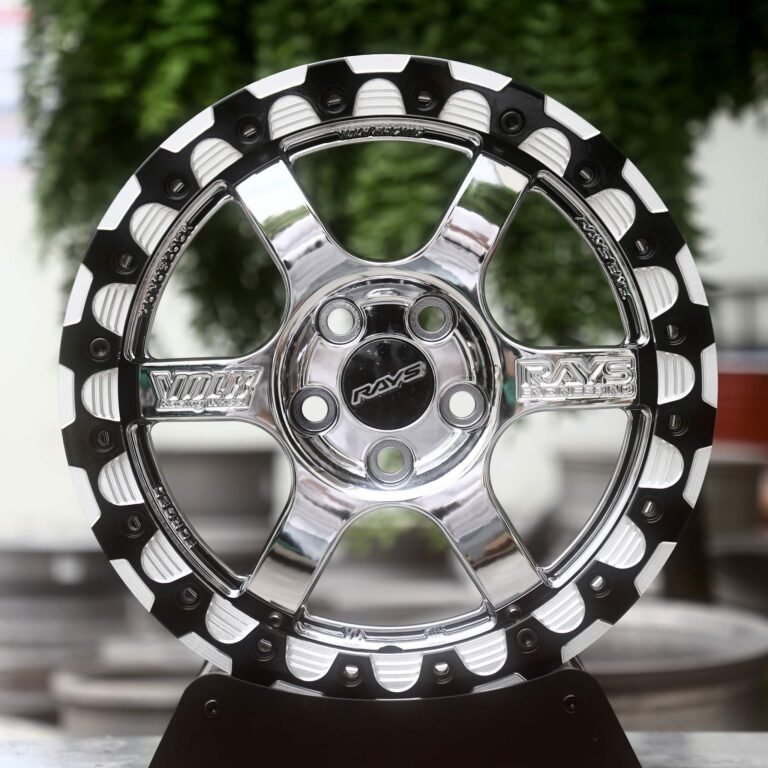
A six-spoke is not just a styling choice. Fewer, thicker spokes let you put material into deep, straight load paths from the hub to the rim, which is a structurally efficient way to carry cornering and impact loads. That is why so many RAYS rims — from the TE37 family to the G025 — lean on low spoke counts. Because we machine from billet, we can take that further: we cut the back of each spoke down to remove metal exactly where the stress map says it is not working, which is how a properly forged wheel ends up both stiff and light. A concave face adds visual depth, but on a forged wheel it is also a place to manage where the mass sits relative to the mounting face.
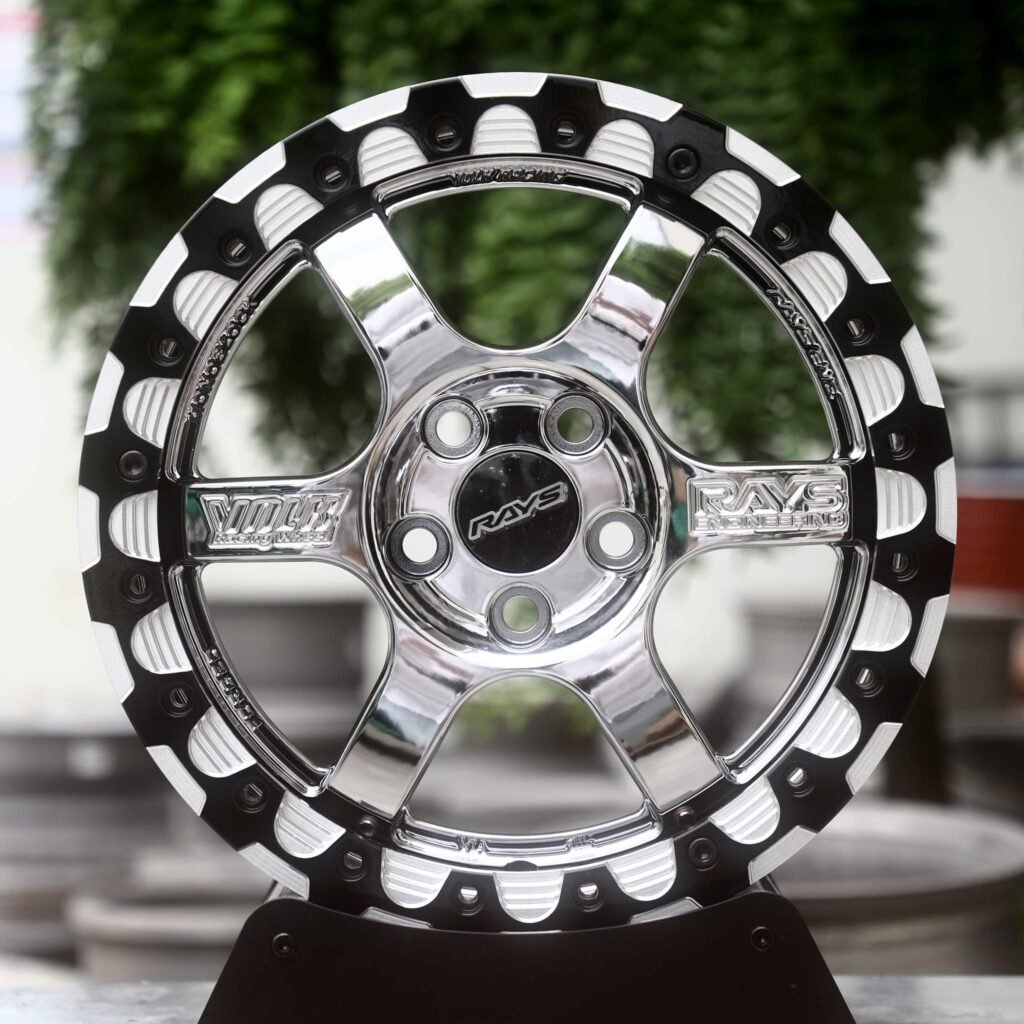
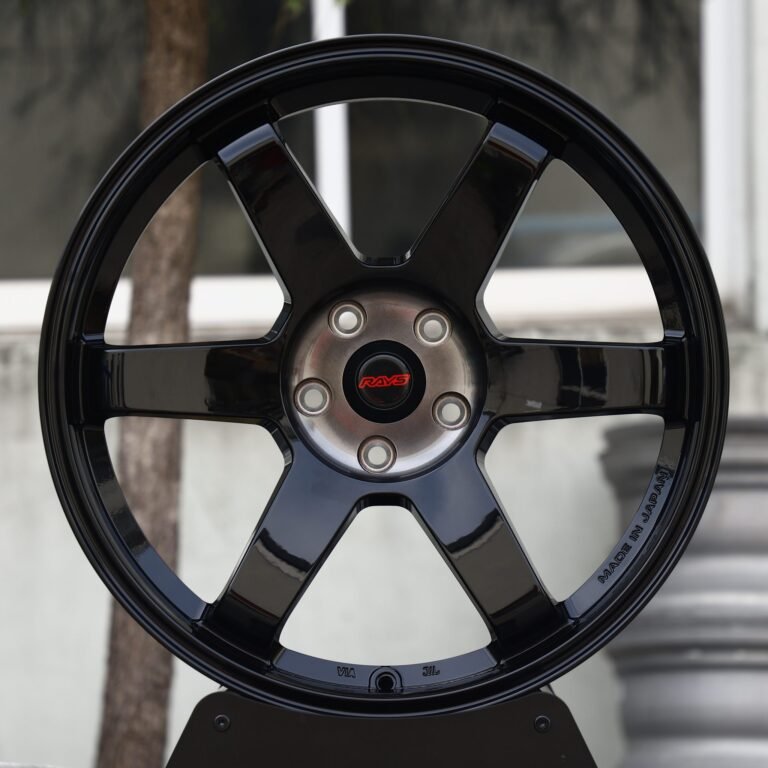
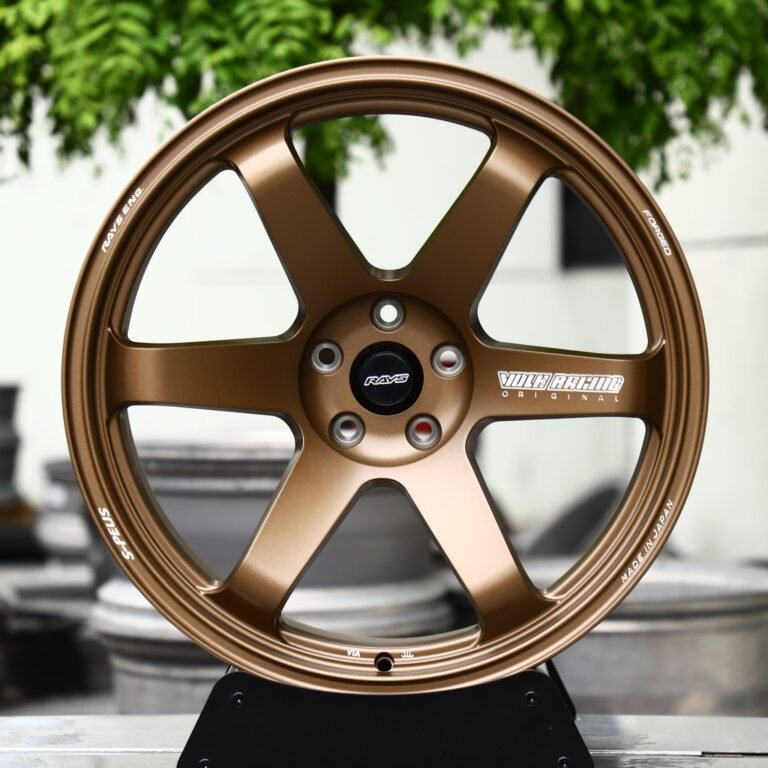
If you want that six-spoke look on a forged monoblock, our current options include the gloss black 6-spoke forged wheel, the bronze 6-spoke forged wheel and, for drag builds, the mirror polished 6-spoke beadlock wheel. Each is cut to your bolt pattern, center bore and offset.
Forged is not the same as flow-formed — don't get sold the cheaper story
This is where a lot of "lightweight" wheels quietly cut corners. Flow-formed (also called rotary-forged) wheels start life as a low-pressure casting, then the barrel is spun and stretched under rollers. It is a real improvement over a plain cast wheel and it makes the rim section stronger, but the spoke face and hub — where a wheel actually cracks — are still cast, with the porosity and random grain that comes with casting. A fully forged monoblock is a different animal: the entire wheel starts as solid billet and is pressed to shape, so the grain is continuous and dense through the face, the spokes and the mounting pad, not just the barrel. When you are comparing a big-name forged wheel to a bargain "forged-look" alternative, that distinction is the one worth checking. Everything we build is fully forged from 6061-T6 billet, not flow-formed, because on a performance wheel the face is exactly where you do not want a casting.
Where a factory-direct RAYS wheels alternative makes sense
Buying a big-name JDM wheel usually means taking whatever sizes, offsets and drillings that brand decided to produce, then hunting for the one that is closest to your car. Ordering direct from a forge flips that. We are not a reseller marking up someone else's catalog — we forge in-house, so we cut the diameter, width, offset and bolt pattern to your car instead of the other way around. If your build needs a 5x114.3 in a width and ET that nobody stocks, or a staggered fitment that keeps the tire flush without rubbing, that is a normal order for us. For split-look or stepped-lip builds we also run a two-piece line, and for dedicated track sets the racing range is where the spoke section is designed purely around weight and stiffness targets.
It also means the finish is ours to control. Because forging, machining, our automated dust-free paint line, QC and packaging all happen under one roof with nothing outsourced, the bronze, gunmetal or two-tone you want is applied and inspected in the same building the wheel was forged in — and the center cap ships with a proper logo, not blank.
Off-road and heavier builds need the forged version even more
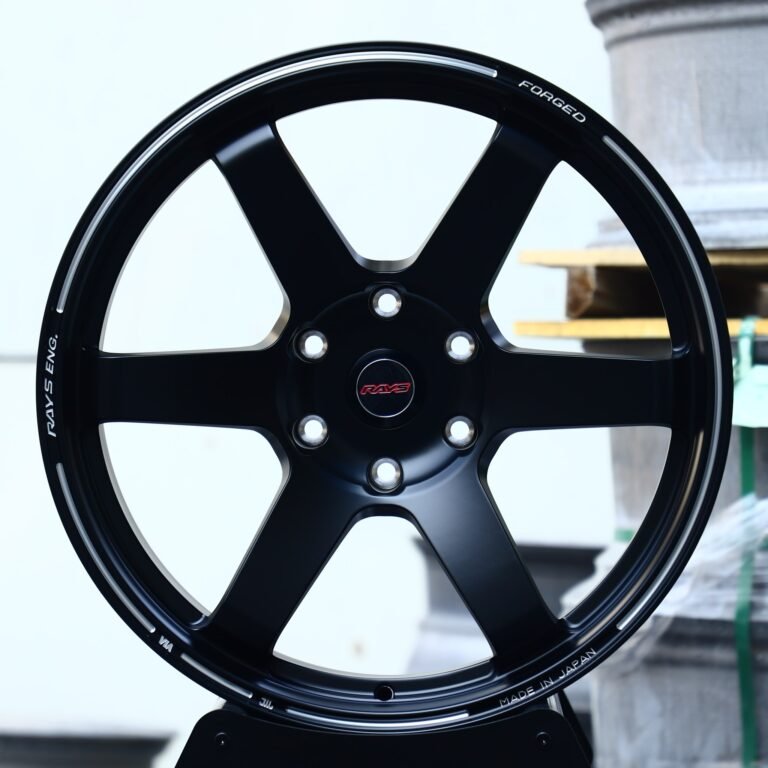
RAYS itself splits its range for a reason: the offroad and truck-oriented wheels are a different engineering bracket from the lightweight track models, because a loaded 4x4 or overlanding rig feeds far higher impact loads into the wheel. If you are building something heavy, the case for forged over cast gets stronger, not weaker — the continuous forged grain is what shrugs off the sharp hits that crack cast wheels at the spoke root. We treat off-road forged wheels as their own design bracket, with the barrel and spoke sized for the vehicle's real weight and load rating rather than a widened car wheel. The matte black 6-spoke off-road forged wheel is one example built for 6-lug trucks. Every wheel we build is engineered to meet JWL/VIA and DOT load and impact standards.
Fitment: confirm these before you order
Whatever wheel you land on, the fit comes down to bolt pattern, center bore and offset, and those depend on your exact chassis and even the specific trim — performance variants of the same model sometimes use a different bolt pattern than the base car. The Honda Civic Type R is a clear case: our Civic Type R wheel specs by generation table shows the switch from 5x114.3 to 5x120. We do not guess these from a model name. Tell us your exact vehicle, year and trim, your ride height and your tire plan, and we will confirm the real numbers and cut the wheel to them. If you are not sure what your car runs, contact us to verify it rather than ordering off a forum thread.
Getting RAYS wheels engineering, cut to your car
The look people want from rays wheels is the easy part; the value is in the forged monoblock engineering underneath and in getting a size that actually fits your build. As a factory, that is exactly what we sell — the same core construction, cut bespoke, with no middleman. We do it for one-off sets and for Wholesale, OEM, ODM and private-label runs alike. Contact us for a factory-direct quote or to confirm the exact fitment for your car.
Building around the Volk Racing TE37 look specifically? Our Volk wheels guide covers six-spoke sizing for track, drift and street builds.
Related Six-Spoke Forged Wheels
Frequently Asked Questions
Are RAYS wheels forged or flow-formed?
The flagship RAYS models like the TE37 family are fully forged monoblock wheels, which is exactly why they are so light and stiff. Be careful comparing them to cheaper 'forged-look' wheels that are actually flow-formed (rotary-forged): those start as a casting and only the barrel is spun, so the spoke face is still cast. We forge fully from 6061-T6 billet, face included.
Can you make a custom alternative to RAYS wheels for my car?
Yes. We are a forged wheel factory, not a reseller, so we cut the diameter, width, offset and bolt pattern to your exact vehicle instead of forcing you into a catalog size. Send us your car, year, trim, ride height and tire plan and we will spec a fully forged monoblock set and quote it factory-direct.
Why is a six-spoke wheel so popular for performance?
Fewer, thicker spokes let you route material into deep, straight load paths from the hub to the rim, which is a structurally efficient way to carry cornering and impact loads. Combined with forged construction, that is how a six-spoke wheel ends up both light and stiff rather than just good-looking.
Do lighter forged wheels really make a difference?
Yes, because wheel weight is unsprung and rotating mass. Taking weight off each wheel is mass the dampers no longer have to control and the engine no longer has to spin up, so you get quicker turn-in, better bump compliance and a more tied-down ride. The gain comes from the forged construction, not the spoke pattern.
Need answers from the manufacturing side instead of just sales copy?
Contact ANKUSI through WhatsApp or WeChat for discussions on forged wheel customization, fitment, finishes, and project feasibility.