
Wheel Fitment Basics: Offset, Bolt Pattern and Backspacing
The Three Numbers That Actually Matter
Every wheel fitment question eventually comes down to three specs: bolt pattern (also called PCD, or pitch circle diameter), offset, and backspacing. Get any one of them wrong and the wheel either won't bolt on, rubs on the fender or suspension, or throws the car's stance off in a way that looks wrong even if it technically fits.
Bolt Pattern (PCD)
Bolt pattern is written as two numbers, like 5x114.3. The first number is how many lugs there are; the second is the diameter, in millimeters, of the circle that passes through the center of each lug hole. It has to match your hub exactly — there's no such thing as "close enough" on bolt pattern, though some wheels are drilled with dual patterns to fit multiple applications, and hub-centric adapters exist for genuinely mismatched patterns in specific cases.
Offset (ET)
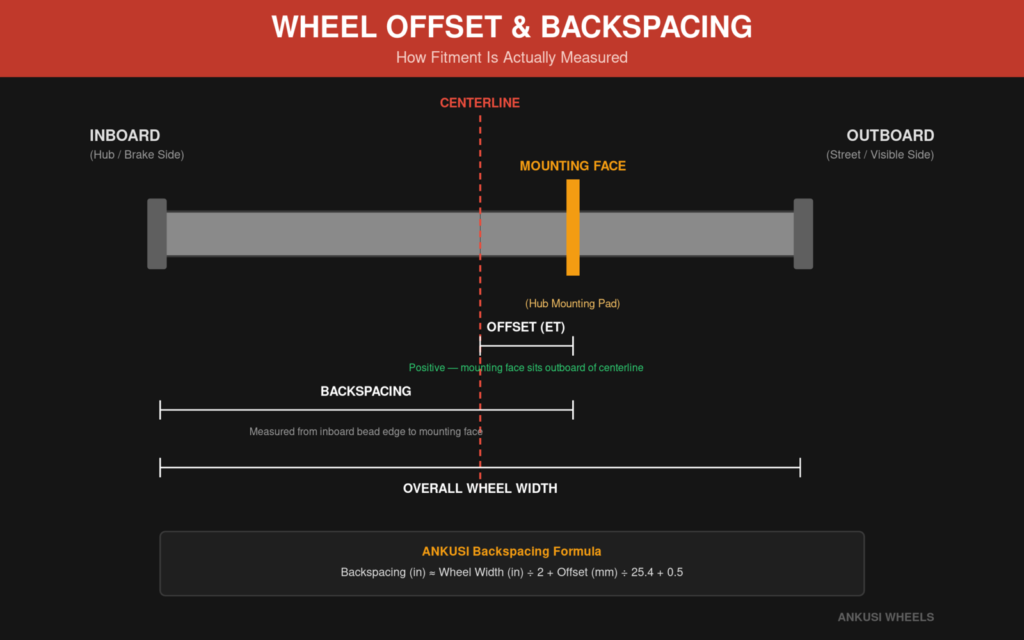
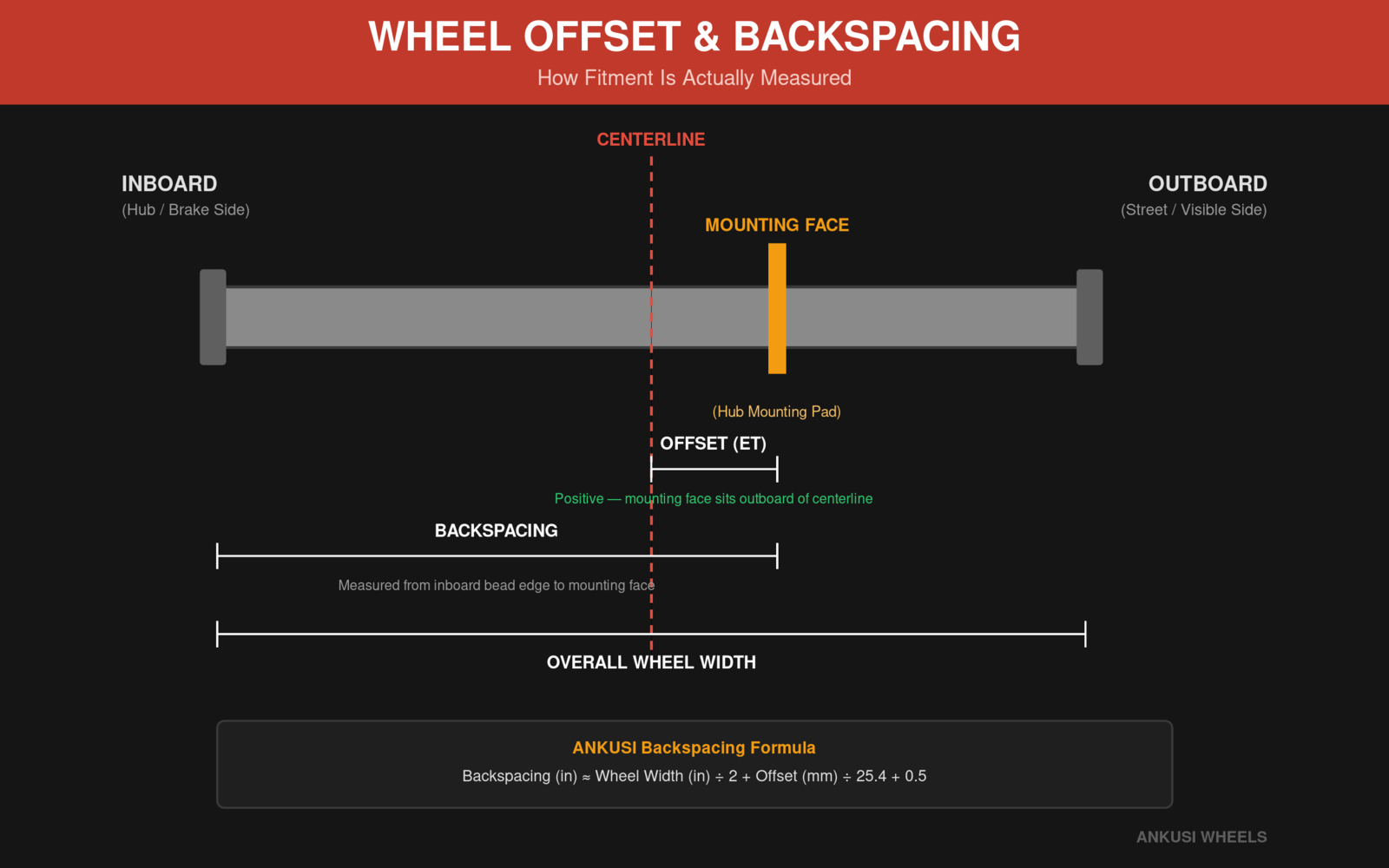
Offset — often marked ET, from the German Einpresstiefe — is the distance in millimeters between the wheel's true centerline and its mounting surface. Positive offset means the mounting surface sits toward the outside of the wheel, tucking the wheel further in under the fender. Negative offset means the mounting surface sits toward the inside, pushing the wheel further out. Most modern front-wheel-drive and crossover platforms run moderate-to-high positive offset (ET35-ET50) from the factory; trucks, older RWD platforms, and deliberately aggressive builds often run lower or negative offset for a flush or poke stance.
As a rule of thumb, every 1mm you reduce offset pushes the wheel roughly 1mm further out from the fender — the relationship is linear and exact, which is what makes offset the main lever for dialing in stance.
Backspacing
Backspacing measures the same physical relationship as offset but from a different reference point: the distance from the wheel's inner mounting edge to the back lip of the rim, in inches rather than millimeters. It's the number that actually determines whether the wheel clears the strut, caliper, or control arm on the inside. The conversion is:
Backspacing (in) = (Wheel width in inches ÷ 2) + (Offset in mm ÷ 25.4) + 0.5
The 0.5" constant accounts for the wheel's flange thickness at the back lip. If you already know your car's stock backspacing and want to keep inner clearance identical while changing width or offset, this formula lets you solve for any one variable if you know the other two.
Center Bore
Center bore is the diameter of the hole in the middle of the wheel that centers it on the hub — it's a fitment detail people overlook until the car develops a vibration at speed. If the wheel's center bore is larger than the hub, the wheel is being centered entirely by the lug bolts under clamping force, which works but is more prone to vibration than a hub-centric fit. Hub-centric rings solve this cheaply and are worth using any time there's a bore mismatch.
Reading a Fitment Spec Like a Shop Does
A full fitment spec reads like this: 19x8.5J ET38 5x114.3 CB67.1 — a 19-inch diameter, 8.5-inch-wide wheel with a J-type bead hump, ET38 offset, a 5-bolt pattern on a 114.3mm circle, and a 67.1mm center bore. Every number in that string does a different job, and changing one without checking the others is how people end up with a wheel that bolts on but doesn't actually fit.
Quick Reference
| Spec | What it controls | Get it wrong and... |
|---|---|---|
| Bolt pattern (PCD) | Whether it bolts on at all | Wheel physically won't mount |
| Offset | How far in/out the wheel sits | Fender rub or excessive poke |
| Backspacing | Inner clearance to suspension/brakes | Strut or caliper rub |
| Center bore | How the wheel centers on the hub | High-speed vibration |
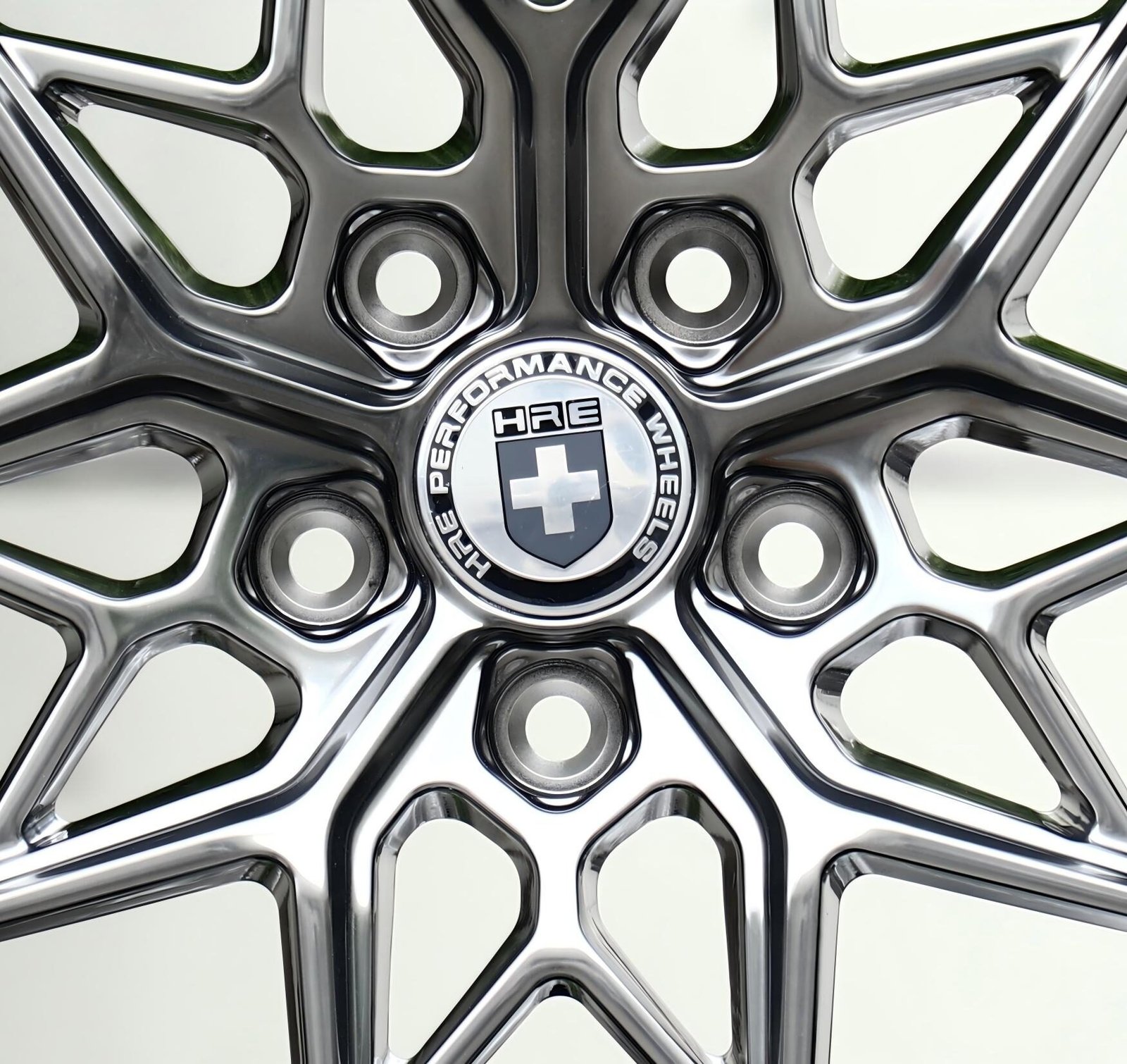
Once you know your bolt pattern, offset and center bore, any of our forged designs can be machined to match, for example a gloss black machined twin multi-spoke forged wheel, a champagne gold multi-spoke forged wheel or a bronze chrome Y-spoke mesh forged wheel.
FAQ
Can I run a wheel with the wrong center bore?
Yes, as long as the wheel's bore is equal to or larger than the hub's, and you use a hub-centric ring to fill the gap. A bore smaller than the hub simply won't fit.
Does a lower offset always mean a more aggressive look?
Generally yes, since lower or negative offset pushes the wheel outward, but width matters just as much — a wider wheel at the same offset also sits closer to the fender lip.
What's the difference between fitment and clearance?
Fitment is whether the wheel bolts on correctly per its specs; clearance is whether it physically avoids rubbing through the full range of suspension travel and steering lock, which depends on tire size too, not just the wheel.
Not sure what spec your car needs? Check our Fitment Guide or contact us with your vehicle and we'll confirm the right forged wheel spec.
For a model-specific example, read our Audi RS3 bolt pattern and center bore guide, which covers the 8L, 8P, 8V and 8Y generations.
Related forged wheels
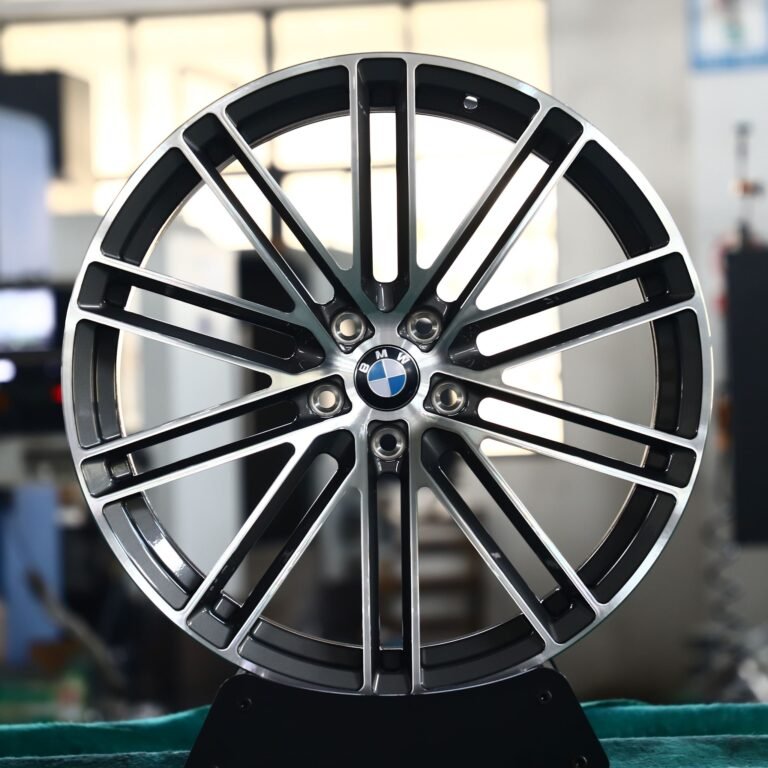
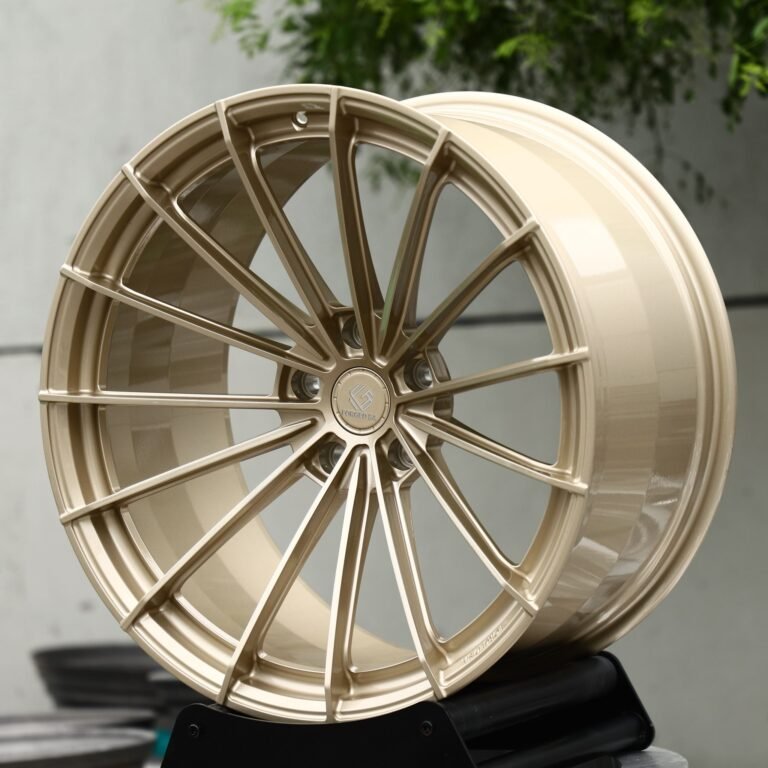
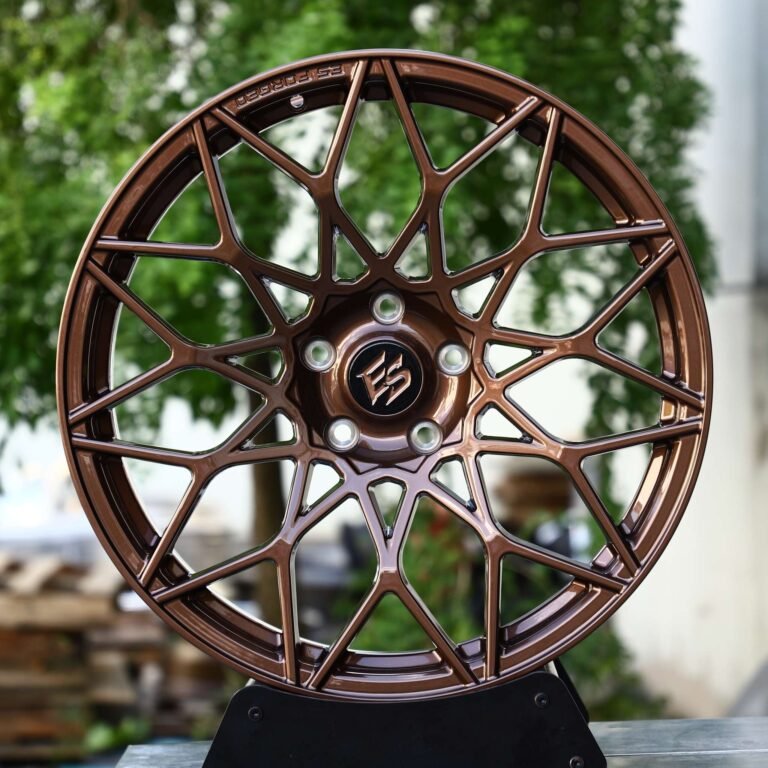
See more designs in our one-piece forged wheels range.
Need answers from the manufacturing side instead of just sales copy?
Contact ANKUSI through WhatsApp or WeChat for discussions on forged wheel customization, fitment, finishes, and project feasibility.