
24 Inch Forged Wheels: Truck & SUV Fitment Guide and Forged Options
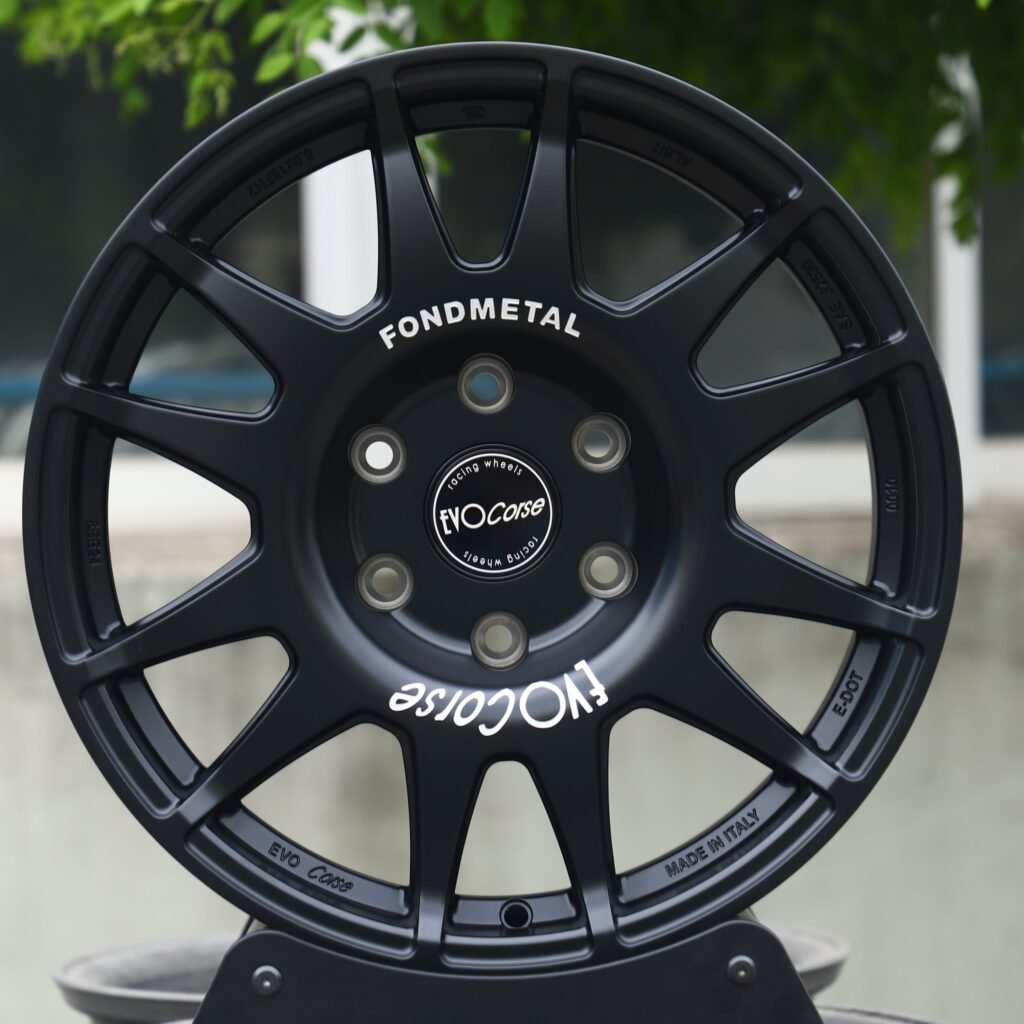
Quick answer: On 2019-and-newer GM full-size trucks and SUVs (Silverado 1500, Sierra 1500, Tahoe, Suburban, Yukon, Escalade), a 24-inch forged wheel must be drilled 6x139.7 (6x5.5") with a 78.1 mm hub-centric bore; the offset then has to be matched to the exact truck and suspension height.
24 inch forged wheels live in a different world than an 18-inch track wheel: you're putting a huge diameter on a two-and-a-half-ton truck, and the two things that decide whether it works are honest fitment and honest load rating. Get the bolt pattern, center bore and offset right and a 24 sits clean and rolls straight; get the construction wrong and a cast rim that big becomes heavy, brittle, and a liability. As a factory that forges wheels in-house from 6061-T6 billet, here's how we look at the problem — the real numbers for full-size GM trucks and SUVs, and why diameter this large is exactly where forging earns its keep.
Why Forge a Wheel This Big at All
Diameter is the enemy of weight. Every inch you add to a rim adds material at the largest radius, so a cast 24 gets heavy fast, and cast aluminum carries porosity that becomes a real problem once the leverage of a 24-inch lever arm is working on a pothole. Forging fixes both. Compressing a solid 6061-T6 billet under our 10,000-ton press aligns the grain and eliminates the voids, so the metal is stronger per gram. That lets us machine weight out of the spoke faces and barrel while keeping the strength in the bead seats and mounting pad — the areas that actually take the hit. On a heavy truck that means a 24 you can lift with one hand relative to a comparable cast piece, less unsprung mass beating up the suspension, and a barrel that won't crack when the tire slams a curb. That is the entire case for spending on forged instead of cast at this size.
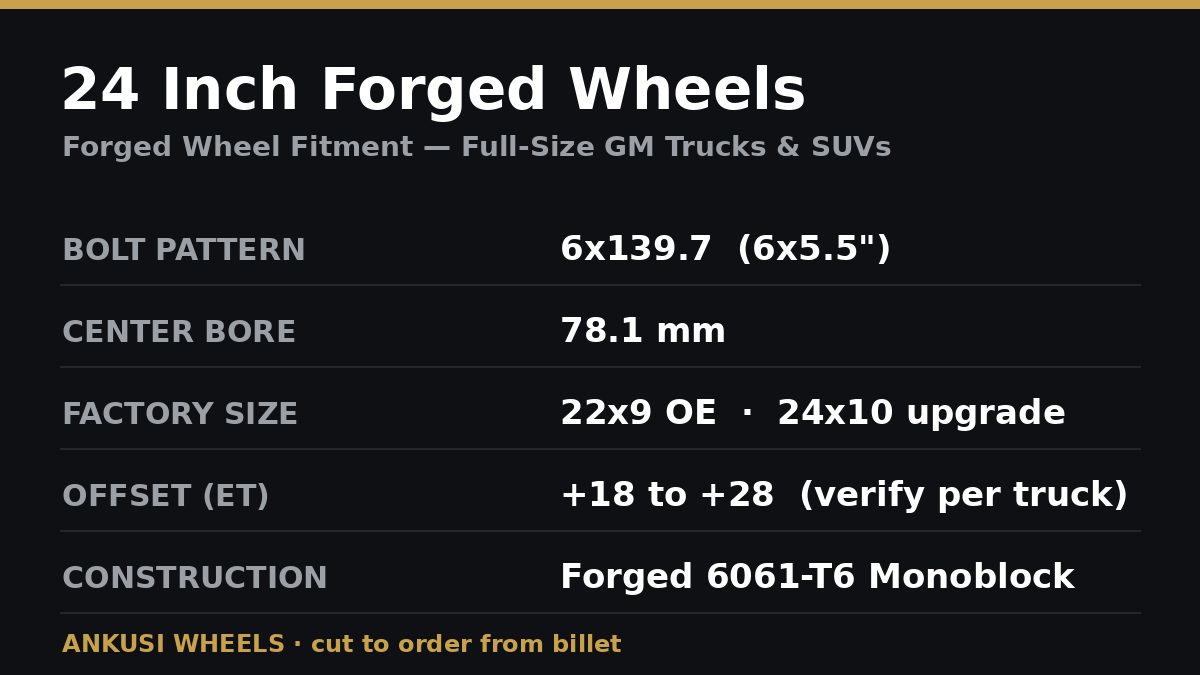
Fitment Numbers for 24 Inch Forged Wheels on GM Trucks and SUVs
The most common home for a 24 is the full-size GM family — Silverado 1500, Sierra 1500, Tahoe, Suburban, Yukon and Escalade. From the 2019 (T1 platform) generation on, they all share a 6x139.7 (6x5.5") bolt pattern and a 78.1mm center bore. Those two numbers are non-negotiable: the 6x139.7 pattern bolts it on, and the 78.1mm hub-centric bore is what actually carries the load and kills vibration. A wheel that relies only on the lug seats to center a 24 will shake — we machine the bore to the hub, not to a generic ring.
Factory wheels on these trucks top out around 22x9 with an offset near +24mm. Step up to a 24x10 and the offset window that sits clean on a stock-to-leveled truck is roughly +18 to +28mm, which pulls the wheel face out slightly for a fuller look without hammering the fender or the steering geometry. That's a starting range, not a promise — a leveling kit, a 2-inch lift, or a wider tire all move the target. If you're not certain what your exact truck and suspension want, don't let a chart decide it for you; send us your year, cab, trim and any lift, and we'll confirm the specs before we cut anything.
Offset and Backspacing: Why Big Wheels Punish Guesswork
On a small car a few millimeters of offset is cosmetic. On a 24, it's the difference between clearing the upper control arm and grinding it. Backspacing is the number that actually tells you inboard clearance, and you can convert it: backspace in inches is roughly the wheel width in inches divided by two, plus the offset in millimeters divided by 25.4, plus half an inch. Run that math on a 24x10 at +20mm and you get about 6.3 inches of backspacing — enough to check against your brake caliper and control-arm clearance before ordering, not after. This is the kind of thing a re-brander pulling from a fixed catalog can't help you with, because they didn't machine the wheel and can't change its offset. Because we cut to order, we build the offset your truck needs instead of the nearest one on a shelf. Whether you want a street-clean stance from our one-piece monoblock wheels or a wider staggered look from a two-piece forged build, the fitment is a variable we set, not one you compromise on.
Load Rating Is Not Optional on a Full-Size Truck
Here's the part the show-wheel crowd skips: a half-ton truck can put well over 1,600 pounds of static load on a single corner before you add cargo, a trailer tongue, or the shock loading of a pothole at speed. A 24 has to be rated above that with margin, or it has no business under a truck. We build to JWL/VIA and DOT standards and run IATF 16949 and ISO 9001 quality systems, and we rate the wheel to the application rather than to a catalog average. If your build is heavy — big-body SUV, towing, off-road duty — tell us, and we'll spec the barrel and spoke section for the actual load. For genuinely trail-driven trucks, our off-road forged wheels carry that thinking further; even a lighter racing forged wheel starts from the same load-first logic, just tuned for a different job.
Fitting 24-inch wheels to a Jeep? Start with the Jeep bolt pattern by model guide to confirm the hub specs for your generation.
Getting Your 24 Inch Forged Wheels Right
The short version: 24 inch forged wheels only work when the fitment is verified and the construction is genuinely forged, not cast and marketed as strong. Nail the 6x139.7 pattern, the 78.1mm bore and an offset dialed to your actual suspension, and demand a load rating that matches your truck's weight. Send us your platform and setup and we'll confirm the numbers, then contact us for a factory-direct quote — cut to order from billet, no middleman between the forge and your truck.
Frequently Asked Questions
What bolt pattern and center bore do 24 inch wheels use on full-size GM trucks?
From the 2019 (T1) generation on, the Silverado 1500, Sierra 1500, Tahoe, Suburban, Yukon and Escalade all use a 6x139.7 (6x5.5") bolt pattern with a 78.1mm hub-centric center bore. Both have to match for a 24 to run smooth.
What offset works for a 24x10 on a stock or leveled truck?
A rough starting window is +18 to +28mm, which pulls the face out slightly for a fuller stance without hammering the fender. It's a starting point, not a promise — a leveling kit, lift or wider tire moves the target, so confirm your exact setup before ordering.
Are forged 24s really worth it over cast?
At 24 inches, yes. Forging a 6061-T6 billet aligns the grain and removes the porosity cast wheels carry, so the wheel is stronger per gram. That means less unsprung weight beating your suspension and a barrel far less likely to crack when a big diameter slams a pothole.
How do I know a 24 is rated for my truck's weight?
A half-ton can put over 1,600 lb of static load on one corner before cargo or towing, so the wheel has to be rated above that with margin. We build to JWL/VIA and DOT standards and rate the wheel to your actual application — tell us if you tow or run heavy and we'll spec accordingly.
Need answers from the manufacturing side instead of just sales copy?
Contact ANKUSI through WhatsApp or WeChat for discussions on forged wheel customization, fitment, finishes, and project feasibility.