
Concave Forged Wheels in 2026: How Deep Is Too Deep for Your Car
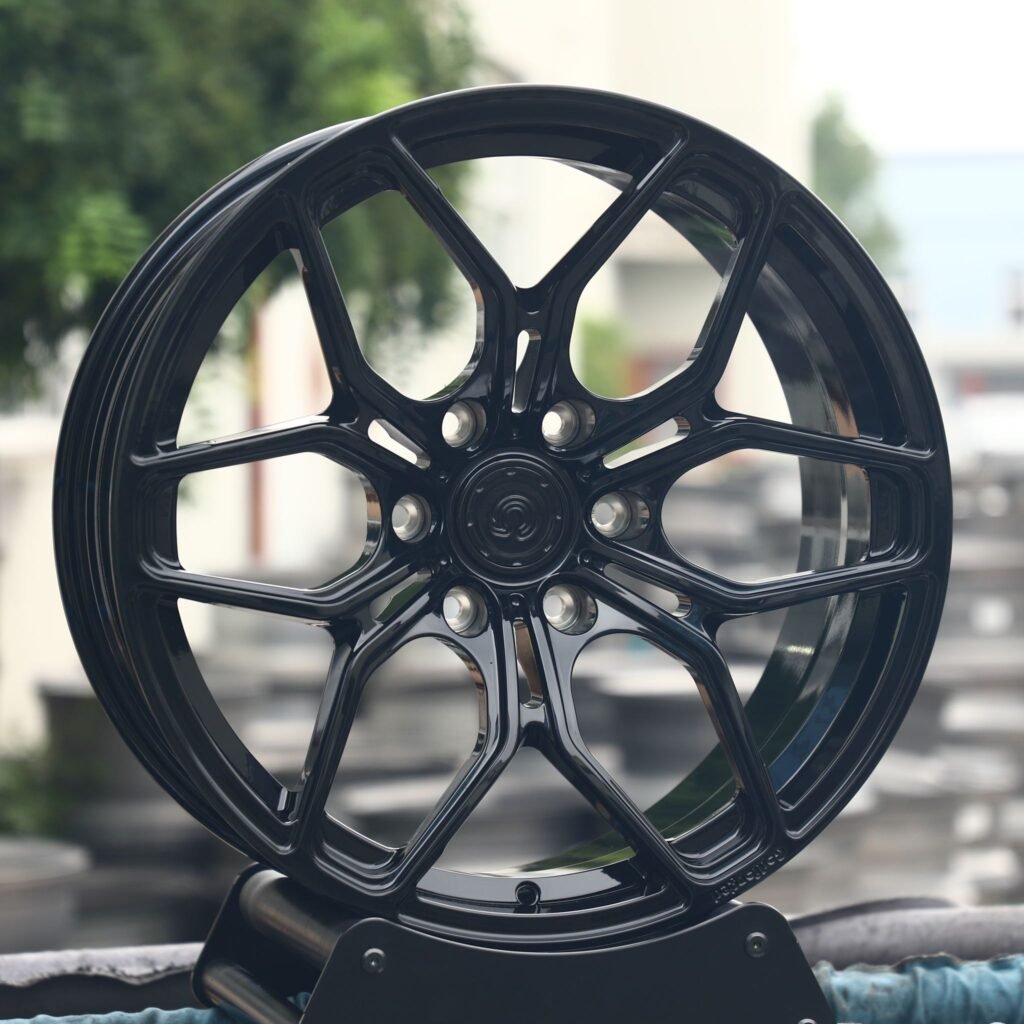
Quick answer: How deep a concave you can run is decided by the offset (ET) calculated for your exact car, not by the face depth itself. A deep concave puts more load on the spoke roots, so it needs forged construction and a correctly dialed offset, or the wheel rubs the fender at full lock or tucks too far in.
A concave forged wheel that survives a pothole at 70 mph and one that only survives a photo shoot look almost identical on Instagram. The difference is never the depth of the face — it is whether the offset (ET) was calculated for your exact car or borrowed from a size chart. For 2026 the aftermarket has rallied hard around this silhouette: spokes sweeping inward from the lip toward a recessed hub, so the barrel reads wider and the whole car sits like it means it. Here is what actually separates a concave profile that holds up from one that does not, and how we build ours.
What "concave" actually measures
Concavity is the distance the spoke face travels from the outer lip down to the hub mounting pad. A mild concave drops a few millimeters and reads as clean, OEM-plus. A deep concave pulls the spokes back dramatically, which is what creates that stretched, structural look on staggered setups where the rears run wider than the fronts. The catch is geometry, not style: the deeper the face, the more load rides on the spoke roots, and the more precisely the offset has to be dialed in for that specific car. Get the ET wrong and a deep concave wheel either rubs the fender at full lock or tucks so far it kills the stance you paid for. We treat concavity as a per-fitment engineering decision, not a catalog option. A BMW M5 Competition and an M3 CS both run 5x112, but the concave depth that clears the M5's larger front brakes is not the depth that suits the M3 — we calculate backspacing from the target width and ET for each build before a single spoke is drawn.
Why forging, not casting, earns a deep face
A deep concave removes material exactly where a wheel is weakest under impact. That trade is survivable in forged aluminum and risky in cast. Our wheels start as solid 6061-T6 billet, compressed under a 10,000-ton press so the grain flows continuously through the spoke instead of being poured and left with the microscopic voids casting leaves behind. The result is a wheel that can carry a more aggressive face at a lighter weight, because the metal is doing more structural work per gram. That strength-to-weight math is also why the industry is leaning forged and hybrid construction as EV platforms get heavier — a Taycan or an i7 carries battery mass that punishes a cheap wheel, and unsprung weight is the one place you can claw back both ride quality and range at the same time. We build the BMW i7 fitment in a Style 866M multi-spoke for exactly that reason: a forged face light enough to matter on a two-ton EV.
None of this happens at a trading company relabeling someone else's casting. ANKUSI forges, machines and finishes every wheel in-house at our own factory in Guangzhou — no subcontracted casting, no outsourced CNC step — under IATF 16949 and ISO 9001 quality systems, tested to JWL/VIA and DOT standards with TÜV and SFI compliance available on request. At a production capacity over 120,000 wheels a year, that in-house control is what lets us hold a deep concave face and its offset to spec across every car we build for, not just the ones in this guide.
Matching the profile to the construction
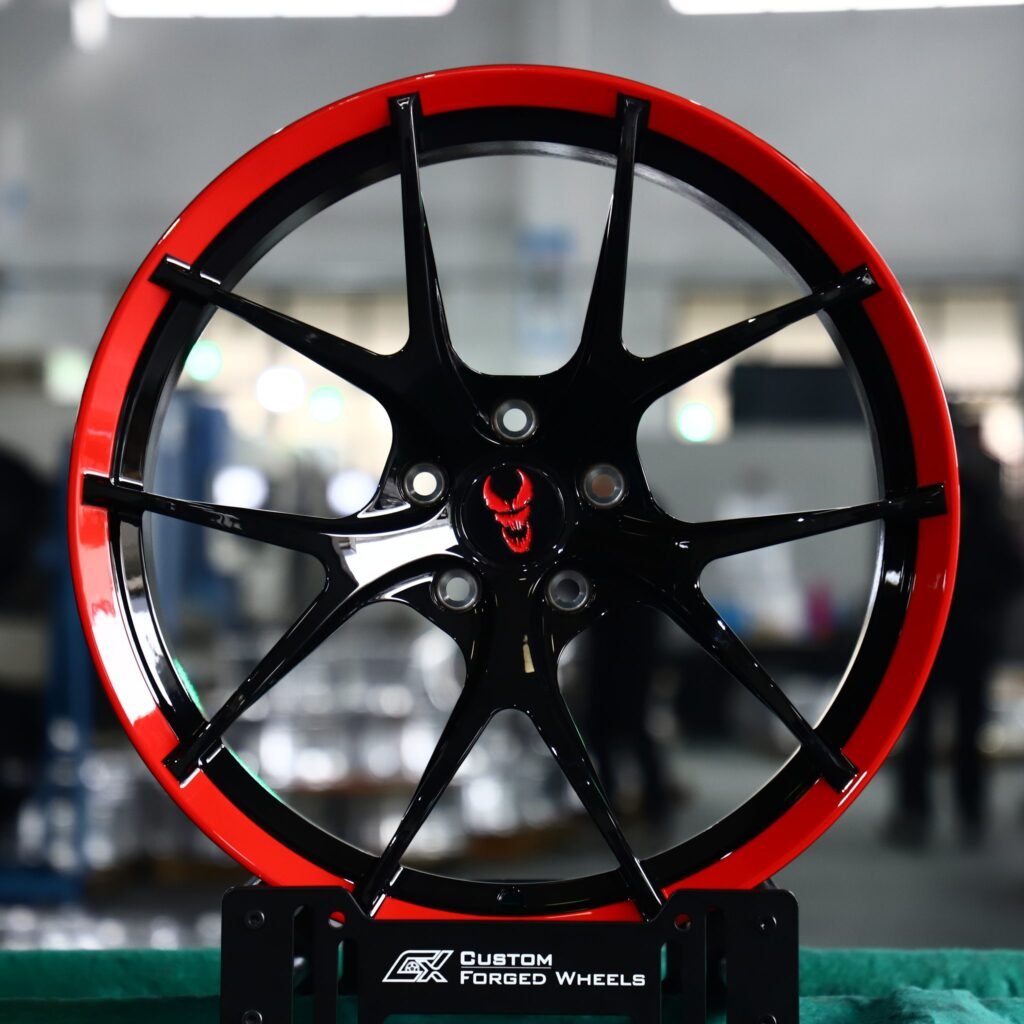
Concave is not one product. It changes character across construction types, and picking the right one is most of the job.
Monoblock for the daily aggressive look
A one-piece forged wheel gives you a clean, strong concave with no seams to maintain and nothing to reseal. It is the sweet spot for street cars that still want presence without added upkeep. Most of our Monoblock forged wheels live here, and it is where a first-time forged buyer should usually start.
2-Piece when you want depth and a real lip
Bolting a forged center to a separate barrel lets us push the face deeper and add a stepped lip that a monoblock cannot match. That is the territory of our 2-Piece forged line, favored on wide rear setups and show builds where the lip itself is the whole point.
Off-road, where concave has to earn its keep
On a lifted truck the concave face is not just styling. The valleys between spokes shed mud instead of packing it, and the extra barrel width swallows a taller tire. Our Off-Road forged wheels carry negative offsets and, in beadlock trim, the width to run low tire pressure on the trail without unseating a bead.
The three numbers that actually decide fitment
Bolt pattern (PCD), center bore (CB) and offset (ET) carry every concave build. A 5x112 Audi and a 5x112 Mercedes can share a bolt pattern and still need different center bores and offsets to sit right — this is the part most sellers hand-wave, and it is the part we publish. Every car we support gets its own worked-out fitment guide with bolt pattern, offset and backspacing, so you are choosing a concave depth that fits your car, not a generic size that fits a photo.
What we would want to know before we cut metal
Decide the stance first, then the finish. A deep concave face on the wrong offset looks worse than a mild one done right, and no finish hides a wheel that tucks or rubs. Send us the exact car, trim and brake package. Because every wheel is cut to order from billet, we set the concavity and ET to your build and confirm clearance before anything goes into production, instead of selling you the closest thing on a shelf. If you are weighing profiles for a specific car, contact us for a factory-direct quote and we will spec your concave forged wheels with you before anything goes into production.
Frequently Asked Questions
What does "concave" actually mean on a forged wheel?
It is the distance the spoke face travels inward from the outer lip to the hub mounting pad. A mild concave drops a few millimeters for an OEM-plus look; a deep concave pulls the spokes back sharply, which is what creates the wide, structural stance seen on staggered setups.
Will a deep concave wheel rub my fender or suspension?
It depends entirely on offset (ET) relative to your car's exact tire size and any brake or coilover changes, not on the concave depth alone. That is why we calculate backspacing per build before cutting rather than selling a fixed size off a shelf.
Is a deep concave wheel weaker than a flat-face wheel?
Only if it is cast. Removing material at the spoke face is where a wheel is most vulnerable to impact, so we build deep concave profiles from solid 6061-T6 forged billet, which keeps the grain continuous through the spoke instead of leaving the voids casting produces.
Should I choose a Monoblock or 2-Piece wheel for a concave build?
Monoblock suits a clean daily-driven look with no maintenance seams. 2-Piece lets us push the face deeper and add a stepped lip, which is why it is favored for wide rear setups and show builds where the lip itself is the focal point.
Need answers from the manufacturing side instead of just sales copy?
Contact ANKUSI through WhatsApp or WeChat for discussions on forged wheel customization, fitment, finishes, and project feasibility.