
15 Inch Rim: Fitment, Clearance & Forged Options
Quick answer: A 15-inch rim gives more tire sidewall and the widest choice of 200-treadwear and R-compound track tires, but many modern front calipers will not fit inside a 15-inch barrel. Measure caliper clearance before you order.
If you are shopping for a 15 inch rim in 2026, you are almost certainly one of two people: a track or autocross driver chasing tire choice and sidewall, or a truck/off-road owner who wants a real brake-clearance answer before buying. Either way the honest starting point is the same — at this diameter the wheel is a load-bearing structural part, not a fashion accessory, and how it is built matters more than it does at 20 inches. We forge ours from 6061-T6 billet on a 10,000-ton press, so this is the view from the factory floor, not a catalog.
Why 15 inch wheels are back for performance builds
The reason serious drivers keep coming back to 15 inch wheels is tire physics, not nostalgia. A smaller diameter leaves room for a taller sidewall inside the same overall rolling diameter, and that sidewall is compliance you can feel — it soaks up curbing on an autocross course and gives the contact patch time to load up. Just as important, the best DOT-legal 200-treadwear and R-compound track tires are still made in abundance in 15-inch fitments, often in widths and compounds you simply cannot get at 18 or 19 inches. That is why grassroots and time-attack cars still run 15s: the tire menu is wider and the rubber is cheaper to consume.
The second reason is rotating mass. A wheel is unsprung and rotating weight, so every gram you remove pays back twice — once in how quickly the suspension can react and once in how little energy it takes to spin the wheel up. A forged 15-inch face can be machined thinner in the low-stress zones than a cast blank ever could, because forging aligns the grain flow of the aluminum instead of leaving the random porosity you get from pouring molten metal into a mold. On our own 15 inch mag wheel style faces we routinely take material out of the spoke backs after FEA tells us where the load actually travels, and the finished wheel comes in lighter than a cast equivalent of the same width without giving up fatigue life.
What a 15 inch rim actually needs to clear
The most common reason a 15-inch build fails is brakes, and it is worth being blunt about it. Many modern cars ship with front brake packages that physically will not fit inside a 15-inch barrel — the caliper fouls the spokes. Before you commit to 15 inch car rims, measure your caliper's outer diameter and the clearance to the barrel, or tell us your car and brake setup and we will check it against real drawings. For dedicated track cars this is often solved by running a smaller big-brake-free spindle or the factory steel brakes, which is exactly why so many purpose-built cars run 15s and street cars with large brakes cannot.
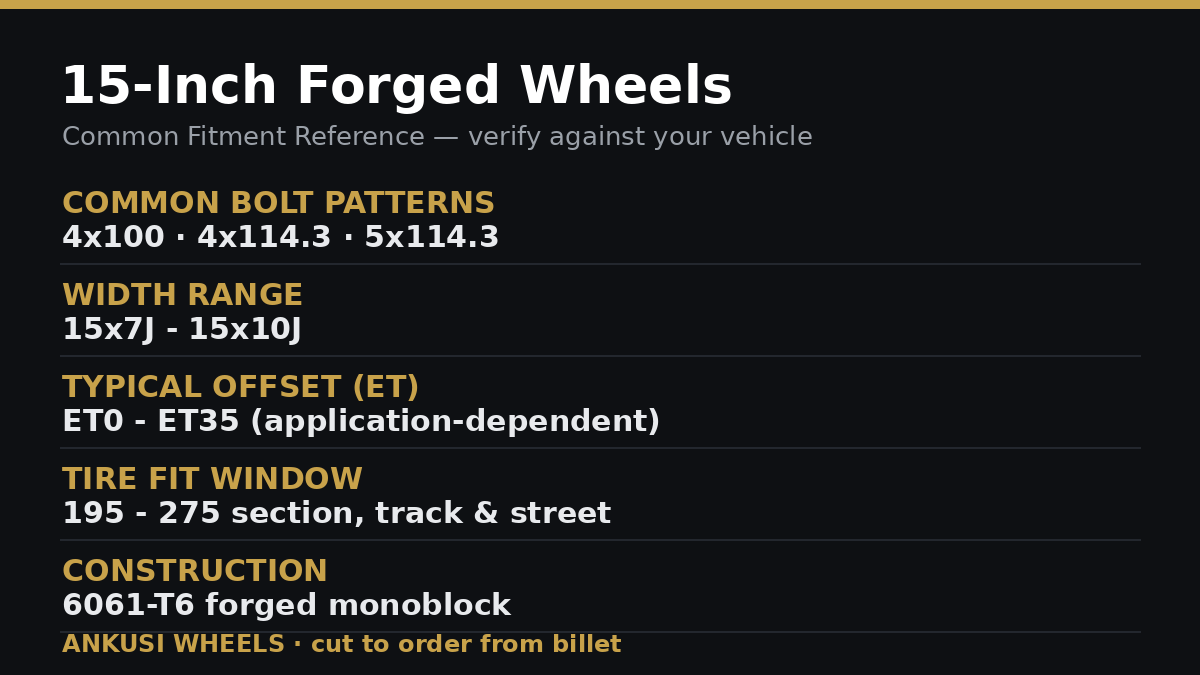
Width and offset are the other half of the equation. A 15x8J to 15x10J face covers most performance applications, but the offset has to keep the tire off the strut and the fender at full lock and full compression. This is where a forged program earns its keep: because we cut to order, we can build a 15 inch tire rims package at the exact width and offset your suspension and tire want, rather than forcing you to shim a mass-produced part with spacers. If you are not sure what your car needs, our wheel size and bolt pattern reference is a good place to sanity-check the numbers before you order.
15 inch 4x4 rims and truck fitments are a different problem
Trucks and off-road rigs come at 15 inches from the opposite direction. Here the appeal is not weight — it is the ability to run a genuinely tall, aired-down tire on a small wheel so the sidewall can do the work over rock and sand. For 15 inch 4x4 rims the structural priority flips to impact resistance and bead retention, which is why the forged process matters even more: a forged barrel resists the sharp, localized impacts that crack cast off-road wheels at the bead seat. Load rating is not optional on a truck wheel, and we rate every off-road design to the actual axle load, not a generic number.
Bolt pattern is where truck buyers get tripped up. A lot of light trucks and older 4x4s use 15 inch rims 6 lug patterns such as 6x139.7, while classic domestic trucks and vans run 5- or 6-lug patterns that overlap with passenger cars. We machine the bolt circle and center bore to your hub, so a set of 15 inch truck rims arrives hub-centric rather than lug-centric — the wheel is located by the hub, the way it should be, which kills vibration that spacer-and-ring setups never fully cure.
Where the domestic and VW crowd fits in
Two enthusiast groups keep the 15-inch market alive on the street. Air-cooled and older water-cooled owners looking for vw wheels 15 inch want a period-correct look with a modern, safe barrel, and the forged route lets us reproduce a classic face while meeting current load and fatigue standards. On the domestic side, buyers searching for 15 inch ford rims or ford 15 inch rims are usually building a Fox-body, a classic Mustang, or an older truck where the 15-inch look is part of the point. In every one of these cases the same rule holds: a custom face at the right width and offset beats a compromise off-the-shelf part, and forging lets us hit the spec without tooling up a whole production run.
Should you buy cheap 15 inch rims?
It is a fair question, because you will find cheap 15 inch rims everywhere and most of them are cast. For a trailer or a winter set that never sees load, a budget cast wheel is a defensible choice. For anything that gets driven hard — autocross, track, or a truck that actually leaves pavement — the failure mode of a cheap cast wheel is a crack at the spoke or bead under exactly the impact loads those uses generate. Forging costs more up front because the billet and the press time cost more, but on a wheel this small, working this hard, the strength-to-weight advantage is the whole reason to go 15 inches in the first place. Spending it on a stronger structure is the logical place to put the money.
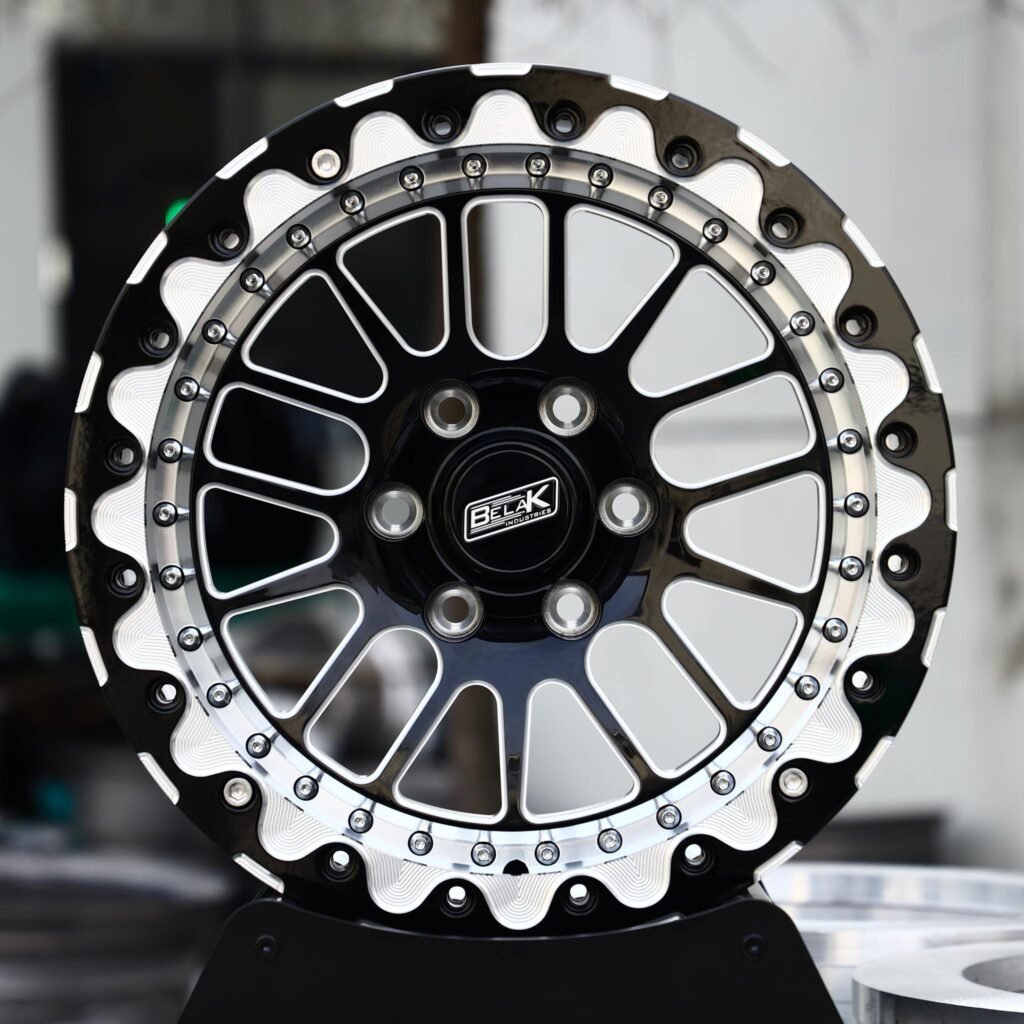
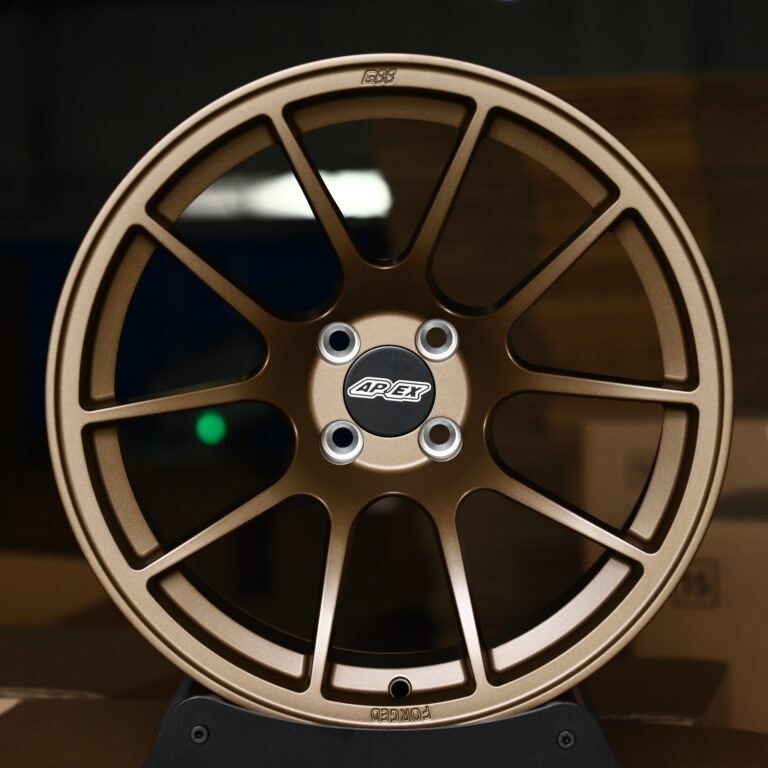
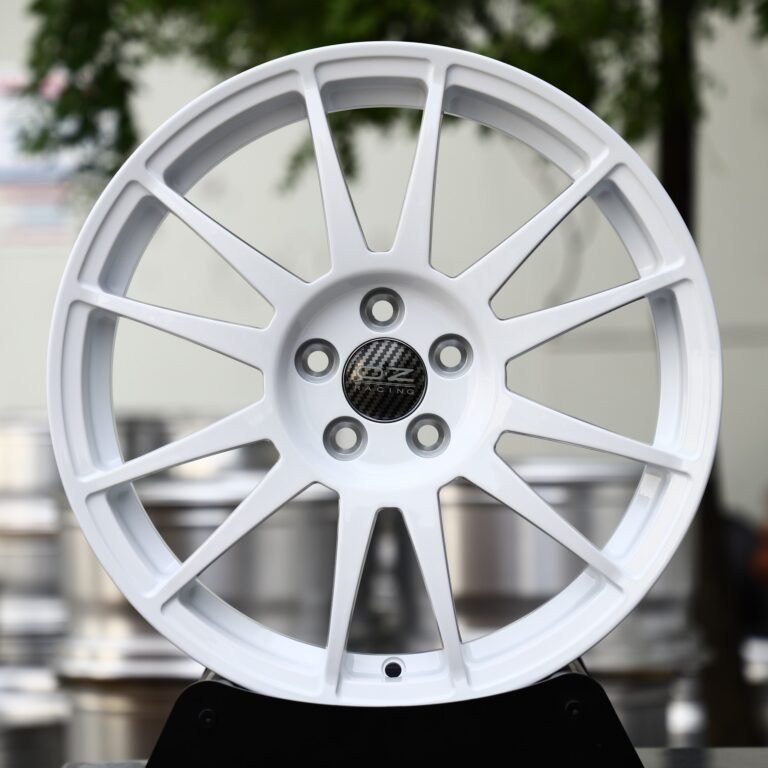
Popular 15-inch-friendly designs for light 4-lug cars include a matte bronze 8 Y-spoke forged wheel, a gloss white multi-spoke forged wheel and a gunmetal mesh forged wheel with polished riveted lip. Each is made to order, so diameter, width and offset are set for your car.
Getting the right 15 inch rim for your build
The short version: pick your tire first, confirm your brakes clear the barrel, then let the width, offset, and bolt pattern follow from there. Because we forge and machine everything in-house — billet to finished wheel, no outsourcing — we can build a 15 inch rim to your exact spec whether it is a set of lightweight track faces or a load-rated off-road pair. Send us your car, brake package, and tire, and we will confirm the fitment against real data and give you a factory-direct quote. If you want to see the range of one-piece forged designs we start from, browse our monoblock forged wheels or the dedicated racing wheel line, then contact us for a factory-direct quote and we will spec it around your build.
Related forged wheels
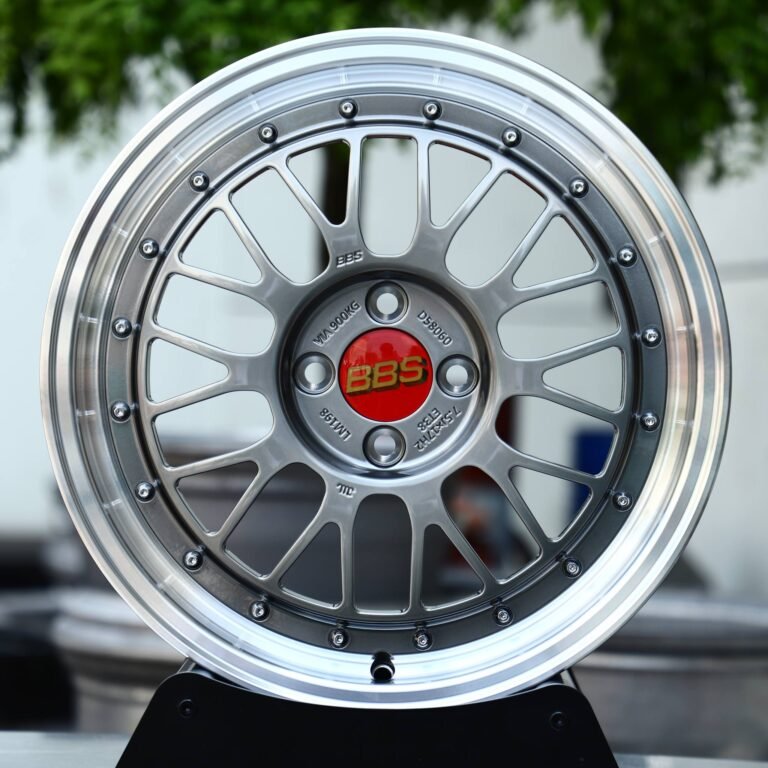
See more designs in our one-piece forged wheels range.
Frequently Asked Questions
Will a 15 inch rim clear my brakes?
Not always. Many modern cars have front brake calipers that are physically too large to fit inside a 15-inch barrel. Measure your caliper's outer diameter and clearance to the barrel first, or send us your car and brake package and we'll check it against real drawings before you order.
Are 15 inch wheels good for track and autocross?
Yes, and that's a big reason they're still popular. A 15-inch wheel leaves room for a taller sidewall and gives you access to the widest menu of 200-treadwear and R-compound track tires, often in sizes and compounds you can't get at 18 or 19 inches. Lower rotating mass also helps the suspension react faster.
What bolt patterns do you offer for 15 inch 4x4 rims?
We machine the bolt circle and center bore to your hub, so we cover common truck and 4x4 patterns including 6-lug 6x139.7 as well as 5-lug domestic patterns. The wheel arrives hub-centric to your vehicle rather than relying on rings, which keeps vibration out of the system.
Are cheap 15 inch rims worth it?
For a trailer or a winter set that never sees load, a budget cast wheel is fine. For autocross, track, or a truck that actually leaves pavement, cheap cast wheels tend to crack at the spoke or bead under impact. A forged 15-inch wheel is stronger for its weight, which is the whole point of going 15 inches on a performance build.
Need answers from the manufacturing side instead of just sales copy?
Contact ANKUSI through WhatsApp or WeChat for discussions on forged wheel customization, fitment, finishes, and project feasibility.